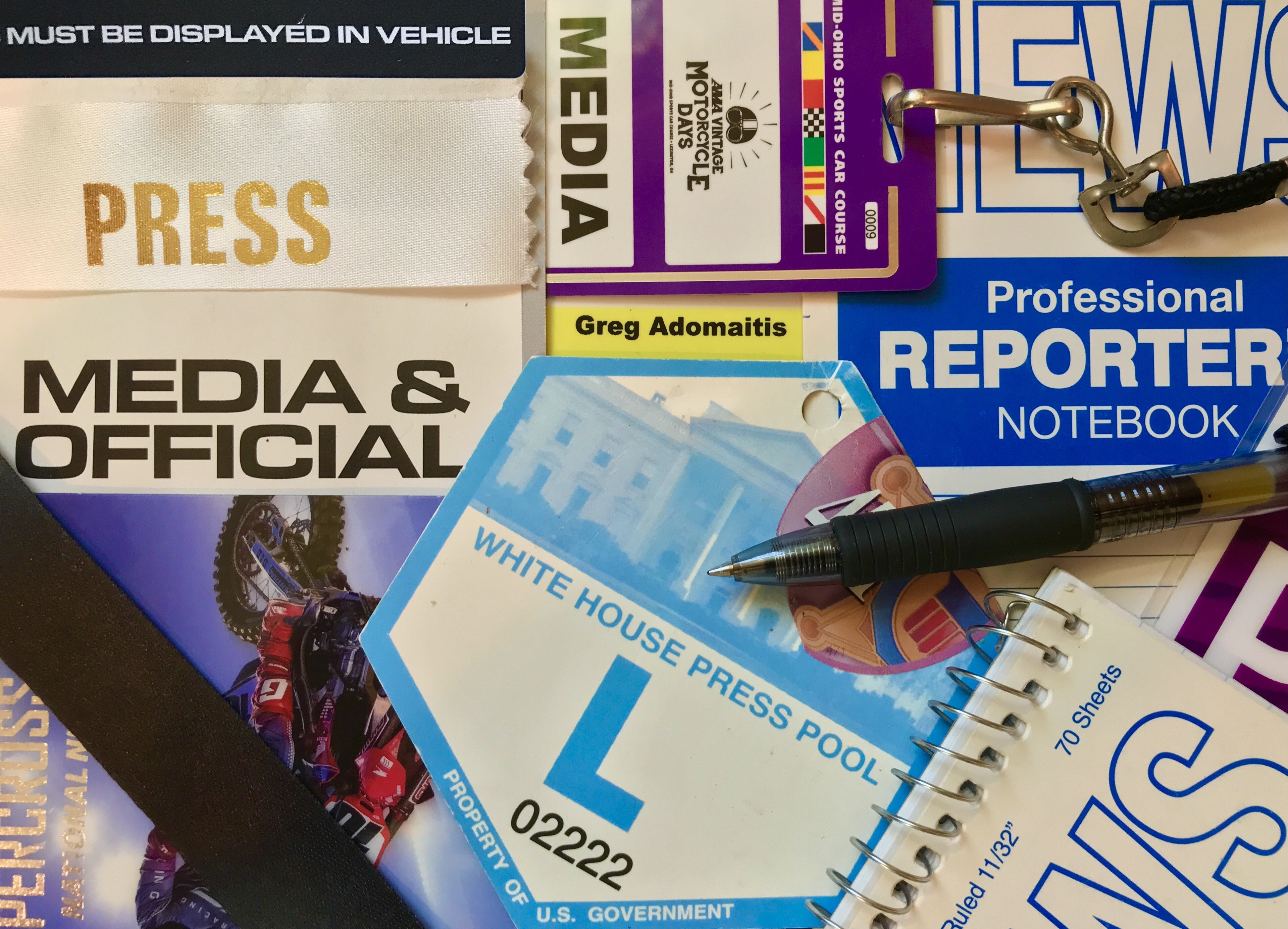
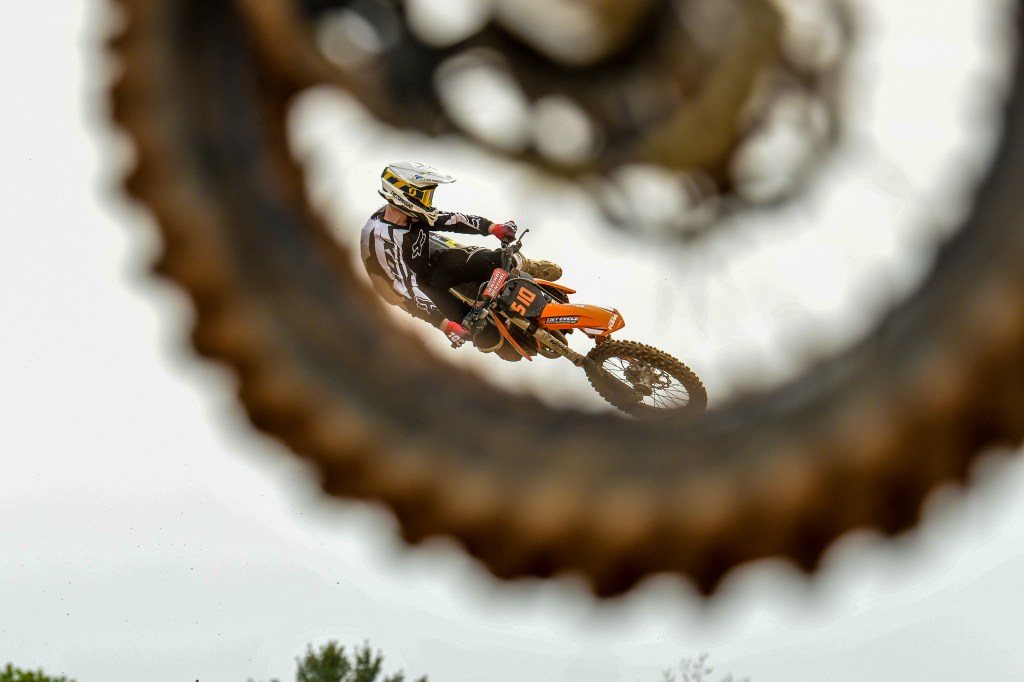
They’re the paparazzi of powersports, the shutterbugs of speed, the documentarians of dirt.
These shooters on the hunt with media pass lanyards dangling will hump up and down hills for half a day searching for the perfect perspective on a blink-and-you’ll-miss-it moment. Best of all, you (yes, you) are their muse.
It’s the local motorsport and motocross photographers who help tell your tale. Visual evidence of a visceral pass on a blown-out berm is eternal – and it costs about as much as a good cup of coffee. So what drives ’em to suffer for their art, and then log hours upon hours editing tens of thousands of photos so they’re prepped for public view?
“Spending all day in the sun, skipping a meal or eating fast, surviving on the edge of dehydration is all worth it when we look down at the back of our cameras and see that we caught the one photo we all never thought we could,” said Brad Adell, who I met through a previous story on MX Rewind at Unadilla. “And it all started with just picking up a camera.”
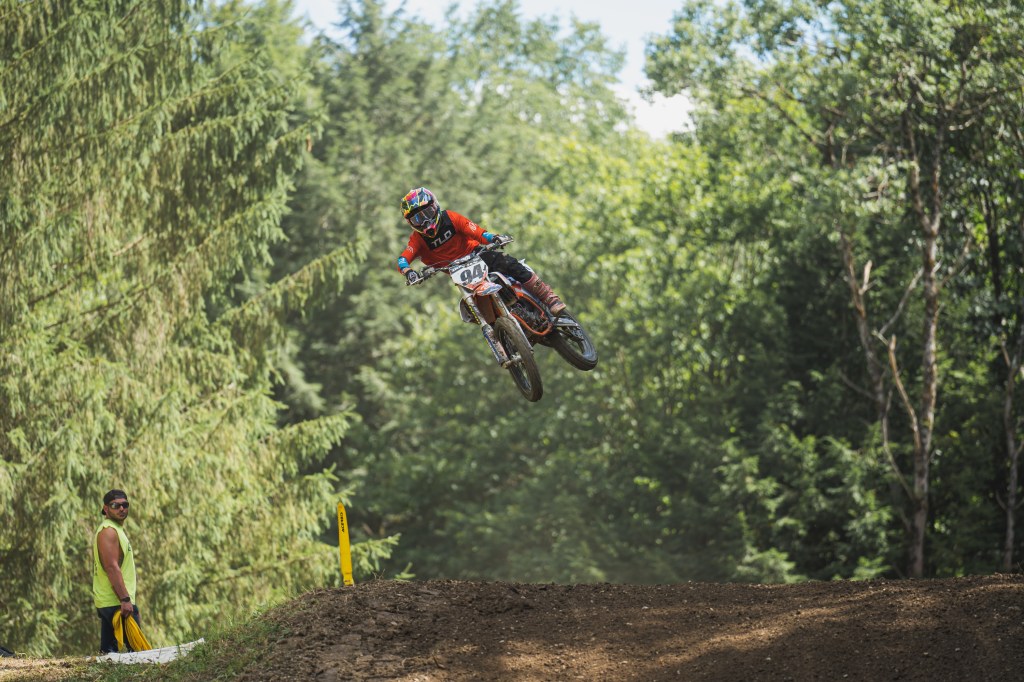
Photographic Memories
The path to glory has many origins, but still has to start somewhere.
- Karl Cin, of Lexington Park, Maryland, enjoyed photography as a teenager, “but never had any money to go beyond a disposable camera.” He returned to the dirt in his 20s and picked up a camera in the process, shooting friends and then local races and eventually it became an all-consuming hobby. “I’ve come and gone from motorsports, but I’ve never stopped shooting.”
- Adell, from Otego, New York, was like countless other kids who found photography during high school. Some graduate from “photographing leaves and sunsets like all your classmates” and turn it into a “small obsession,” he said. It wasn’t until 2020, though, when a friend launched a moto-specific social media photo account that Adell saw an opening. “I was hooked in seconds. I hit eBay immediately and scooped up a few camera bodies with some lenses and hit the tracks,” he said. “The rest is history.”
- Dan Gardner, of Syracuse, New York, picked up a Nikon D3200 with a kit lens “and was on my way, learned everything on YouTube.” Don’t we all? Anyway, he moved on from sneakerhead territory into motocross and started riding and shooting local races while meeting a very welcoming community and accepting a few cash tips here and there. “Eventually I monetized my photos and was able to at least pay for my travel and gas to races.”
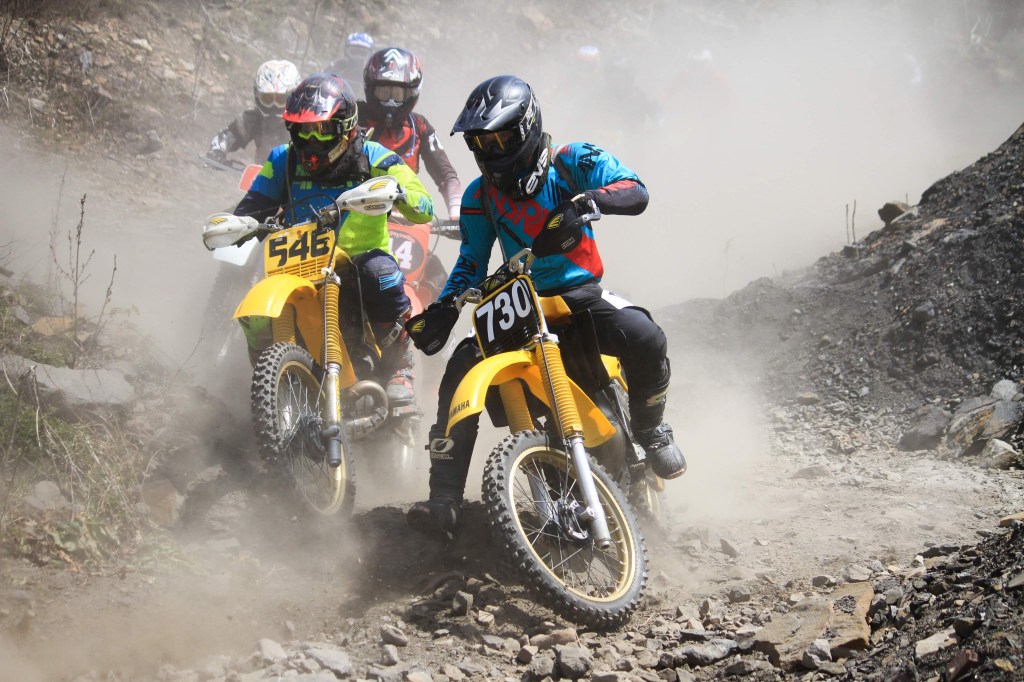
OK, but why racing?
There’s surely more lucrative gigs, but exciting ones? We think not.
- Bill Taylor, of Oswego, New York, took to photography 15 years ago, shooting high school sports and then the local oval dirt tracks. He later discover how big motocross was in his area. “I went to my first race and was hooked. I never realized how many motocross tracks were within a two-hour radius of Oswego,’ he said. “I started to go to every race on Sunday and haven’t missed many in the last seven years.”
- Sarah “Montesa” Lane, of Tunkhannock, Pennsylvania, had a point-and-shoot camera at a young age, but tagging along as a high schooler with her dad to local vintage races helped move things forward. “It was there that I took my first photograph at the track, which was used for an event poster. My interest was piqued and I started to attend more races with my father. My love for the sport grew.”
- Becky Schreckengost, of Tyrone, Pennsylvania, started taking photos when her kids were young, later teaching the local public school’s yearbook class and only falling into vintage MX territory after attending a race with a friend. “I by no means am a professional photographer. I love taking pictures of the racers.” She added that American Historic Racing Motorcycle Association (AHRMA) members are are an awesome group. “They are there to race, but also have fun on a dirt bike. They will help anyone at any time before, during or after the races.”
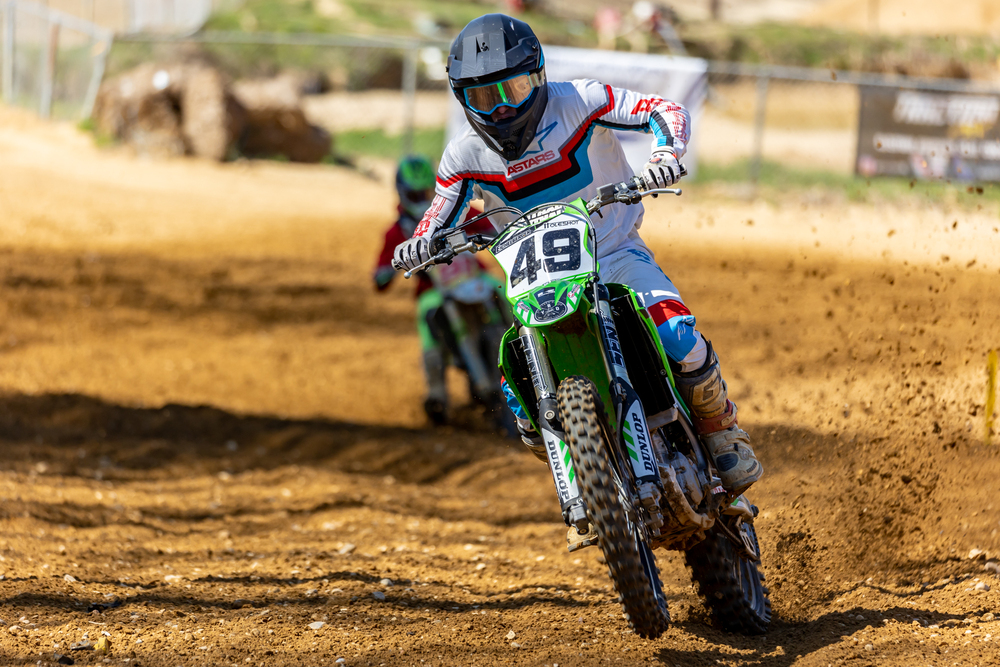
The Highs…
We heard it from multiple people interviewed for this piece: there’s just something about capturing the shot long considered impossible.
- KC: It’s all about perspective, Cin says, be it from the track to the pits to all the places the general public can’t access. “It’s having an unobstructed view or proximity to the subject that allows you to frame the image the way you want instead of what is available.”
- SL: It won’t surprise anyone who has attended a vintage event, but just being close to the action and the people are high points for Lane. “Over the years on track, the riders have become like family. Always a joy to get off track and see everyone sharing stories,” she said.
- DG: “I’d say the best part about doing motocross photography is the atmosphere at the races; there is something about it that I really love. Also, the feeling of getting a perfect shot is unmatched.”
“People always think someone will be there to capture the moment… until there isn’t one.”

Those Lows…
It ain’t all wine and roses. Here’s some of the hurdles your favorite motocross photographer has to contend with.
- BT: On top of hiking around with a bag full of gear and sustenance, there’s the very real risk of on-track accidents. “The worst is you are close to the action and may get hit, which happened three years ago at MotoMasters MX when a rider was a good 25 feet off the track,” Taylor said. “Got me in the leg and I was hobbled for a good month.”
- KC: As one might expect, there’s little downtime when gates are dropping like clockwork. “So many times, there are amazing things happening around you, but you have to stay focused on the task at hand,” Cin said. “The option to find a shady spot, sit back and relax just isn’t possible.”
- BA: FOMO, or the fear of missing out, means Adell tries to be everywhere at once just in case someone asks if he got any shots of them. “Because of that, I’m constantly filling memory cards, and chasing the motos in the summer sun, just to capture it all. But I’m learning quality over quantity; slow down and enjoy the ride,” he said. “Some of my best photos have come from focusing on one rider and being patient with the shot.”

What you (yes, you) should know
Before you scream that question right as the 450 field roars past, consider the following.:
- KC: “Appreciate the photographers and videographers who show up and put in the work at events, regardless of their skill level. People always think someone will be there to capture the moment… until there isn’t one.”
- BA: “Screenshots aren’t cool. Luckily, I don’t see it a lot with my photos. But I see it a lot with other photographer’s photos. There’s a lot of time and money spent to get that shot, and the small amount of compensation we ask in return isn’t a lot compared to the time spent getting that photo. The photo looks way cooler without that watermark, too.”
- DG: “As someone who races myself, you come to appreciate just how difficult riding dirt bikes is. I will say, though, carrying around two camera bodies and two big zooms is tough on the body. “Another fun fact, he says, is that more novice riders “tend to crash a lot near me because they wanna show off for the camera.”
- BS: “As a spectator, just know that you are part of the track. Getting run over does happen. I was sitting down trying to get that perfect shot at the starting line when a racer slid on the wet grass and ran over my legs. I had two sprained ankles and a torn MCL, but I went to the next race and took pictures. I was very careful to make sure I was behind a tree to be safe.”
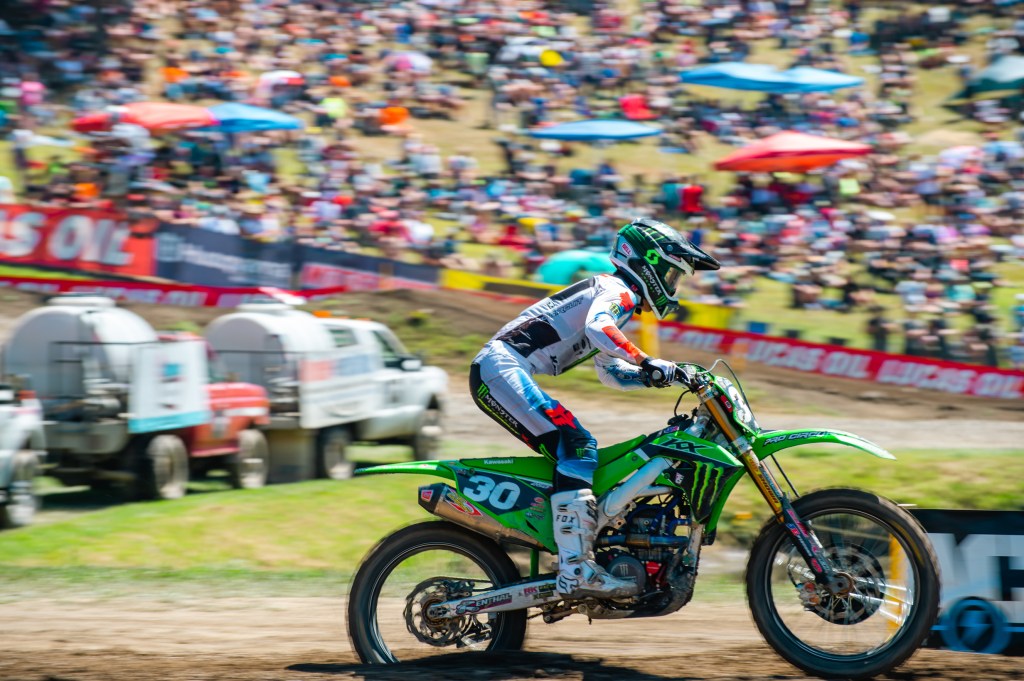
Parting Shots
There are lessons to be learned from these clearly committed individuals.
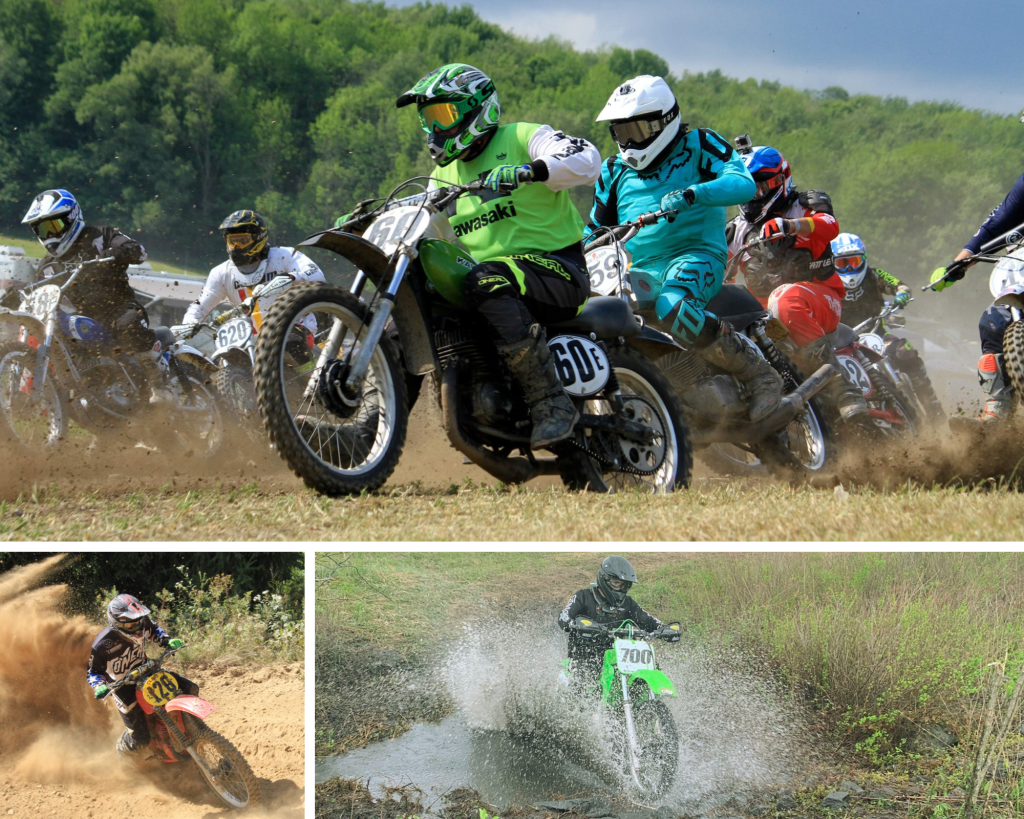
- SL: “The vintage races might not have as much speed or trick jumps as modern, but the beauty of them makes the shot. Some of these are rider’s dream bikes from when they are young so there is a lot of pride in them. The stories off track are about the fun of racing them and how they put them together – making the photographs have more meaning to the riders and myself.”
- DG: Nothing lasts forever. Motorcycles can offer a damn good run, but bones break and careers end – as Gardner knows all too well. “As a photographer, you provide racers with a memory of when they were at their best and I think that’s pretty cool.”
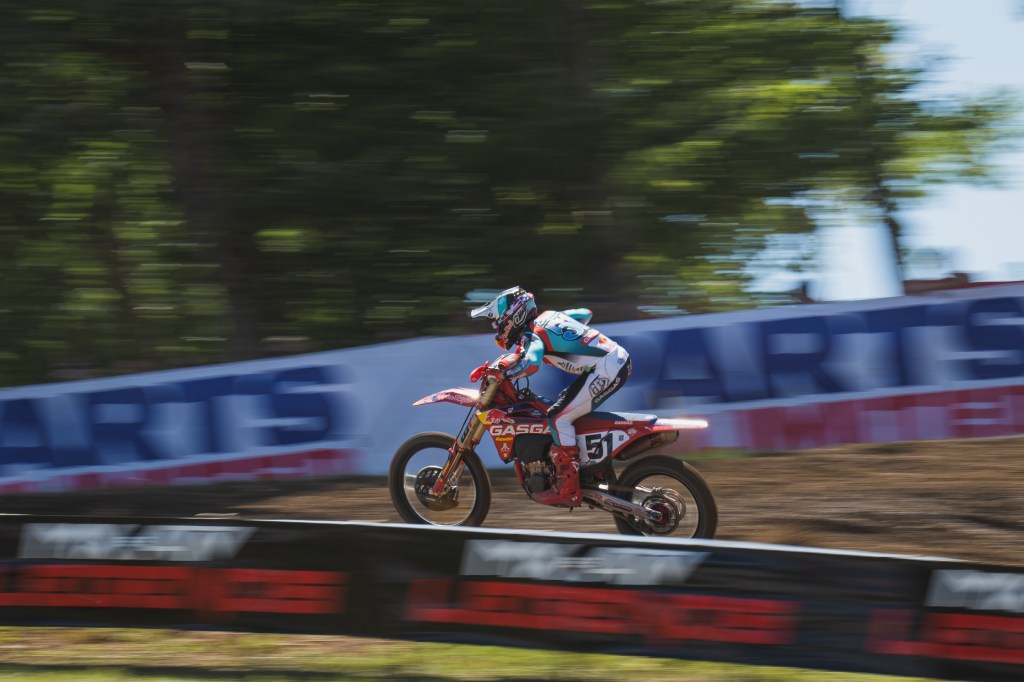
Starving Artists?
Admit it: you’ve combed through hundreds of photos looking for that one of you. It’s part of the fun of this thing of ours: a crowd-pleasing cross-up or, if you’re real unlucky, that cringe-worthy crash captured for all eternity. The shooters are there to enjoy the action, too, while practicing their craft and making some cash. Problem is, the latter aspect doesn’t always come easy.
It’s possible that Gardner has discovered the magic ratio. There could be five photogs at any given local race, he said, and they’re all vying for the best shots. “You’re in competition with people who enjoy the same thing as you and you’re doing it to try and make a living,” he said. “I’ve found it’s better as a photographer to expand your horizons; I’ve started to put a bigger focus on portrait photography and weddings to supplement income, and then just do moto for fun.”
‘I’ve been able to experience a level of excitement that is hard to capture from the other side of the fence.’
Adell’s day job in the construction industry offers travel opportunities that occasionally align with the work discussed in this piece. There are caveats, though. Not all missions are money-makers and he prefers the hobby aspect: “There’s ultimately no pressure, and I’m able to chase the art of the moment, rather than multiple photos of some kid that may not even buy a photo.”
Maybe you don’t always buy the $10 photo, but maybe you should. What’s another few bucks on top of gas, toll, gate fee, race fee, race gas, camping, concessions and heaven knows what other alleged necessities?
“Photography has taken me to some really cool places in the short time I’ve pursued it,” Adell continued. “I’ve been able to experience a level of excitement that is hard to capture from the other side of the fence. Who knows where I’ll get to visit next year, but I’ll definitely have some cool photos of it wherever I may be.”
 Greg Adomaitis