
There’s a scene in “Ferris Bueller’s Day Off” where our mischievous protagonist, behind the wheel of a borrowed Ferrari, drops the thing into gear just as the springy new wave soundtrack cuts into the clip.
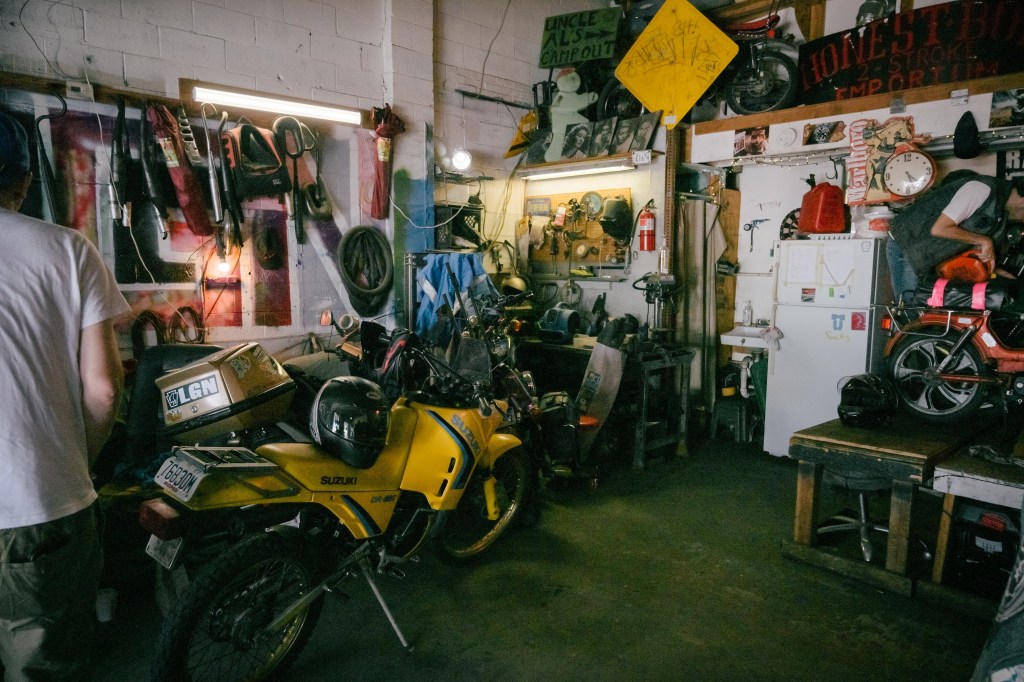
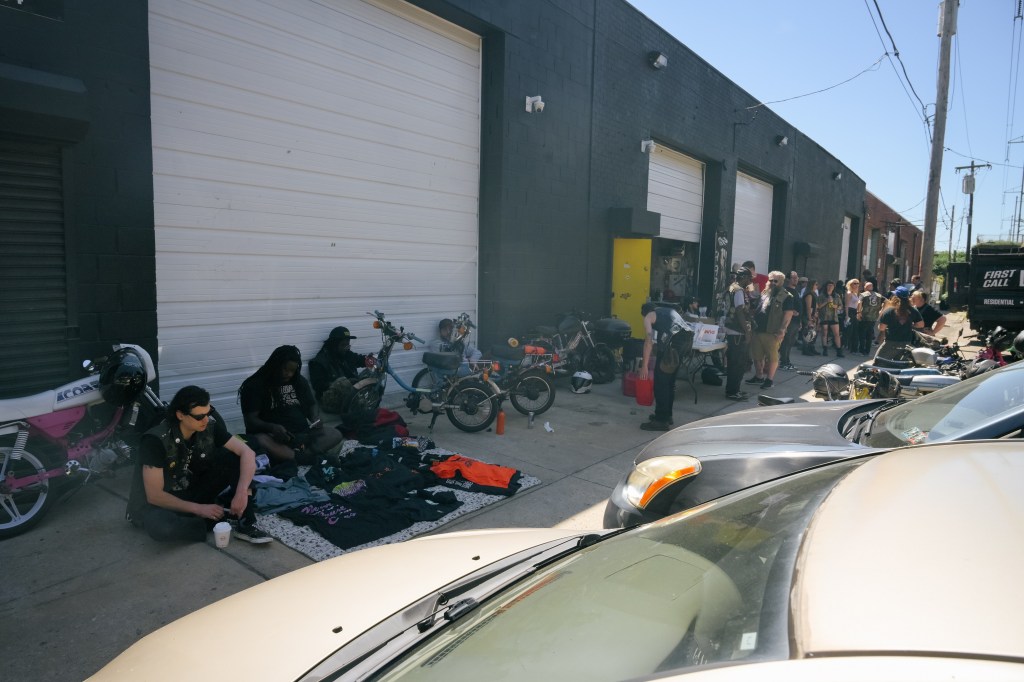
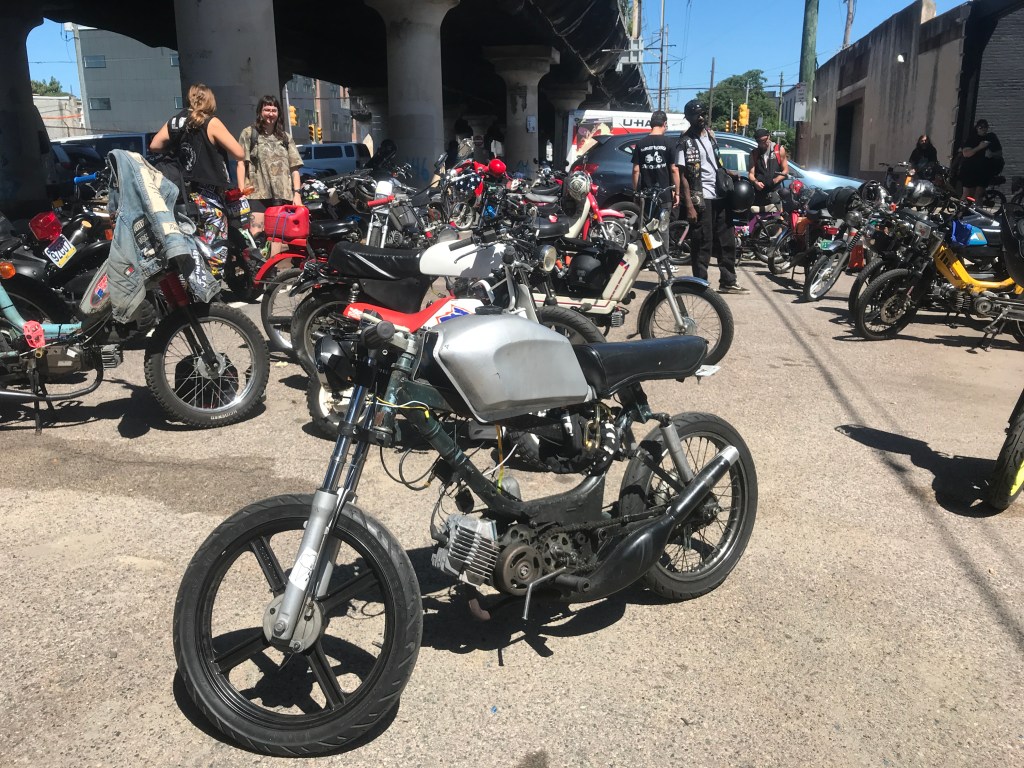
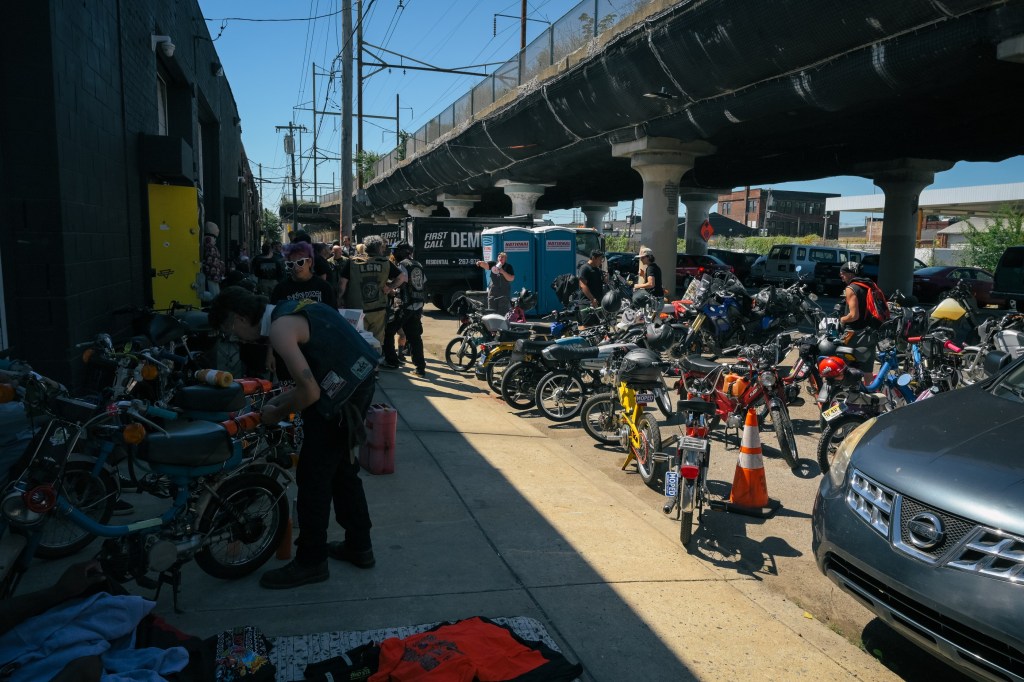
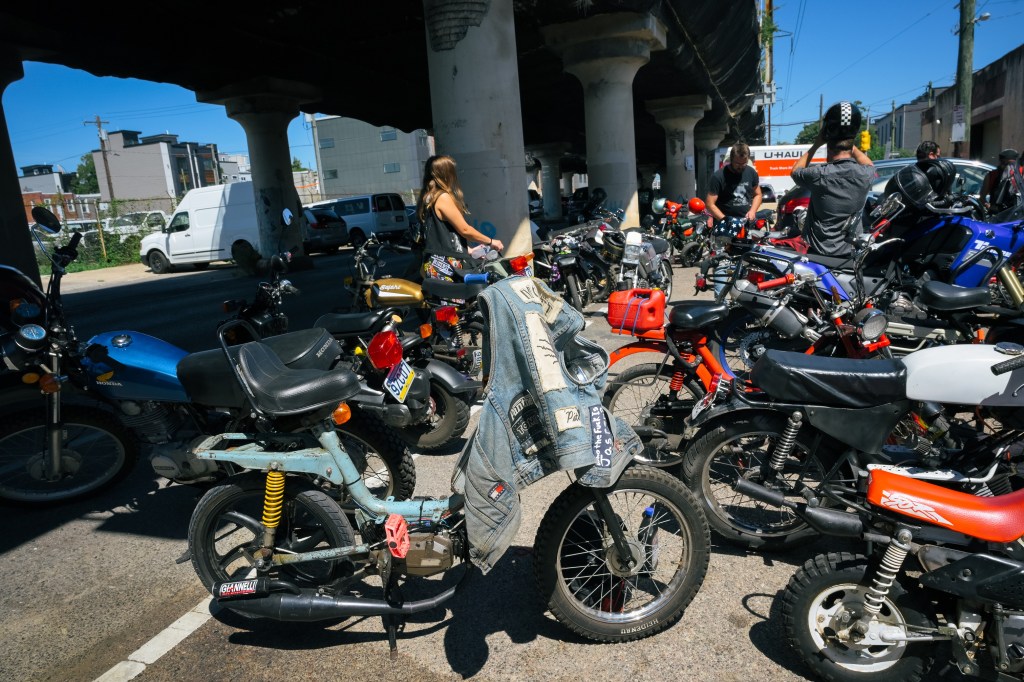
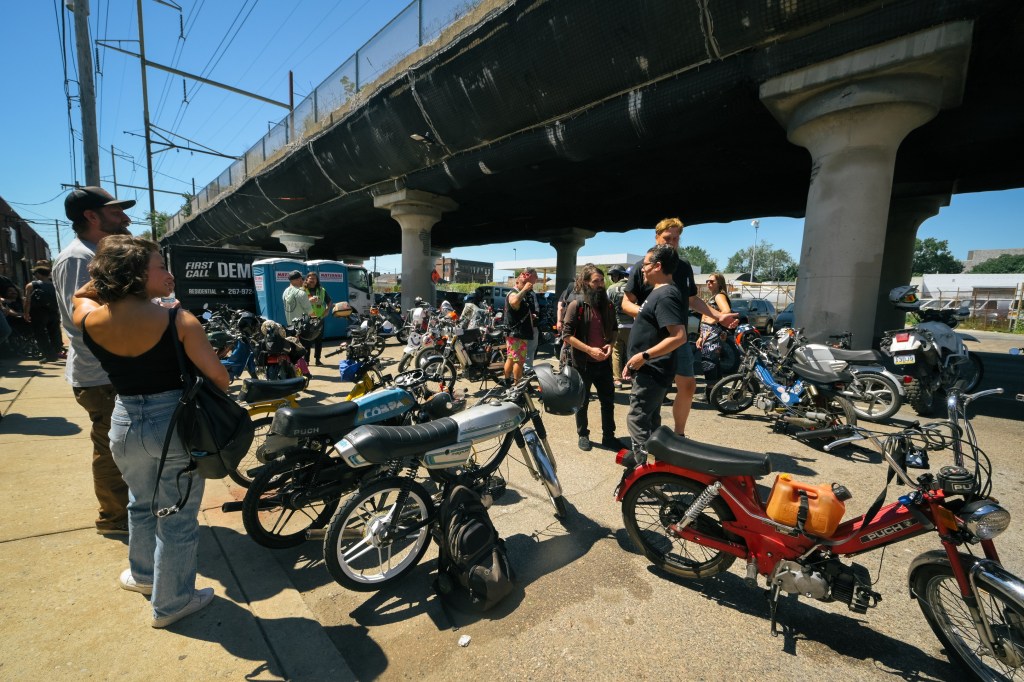
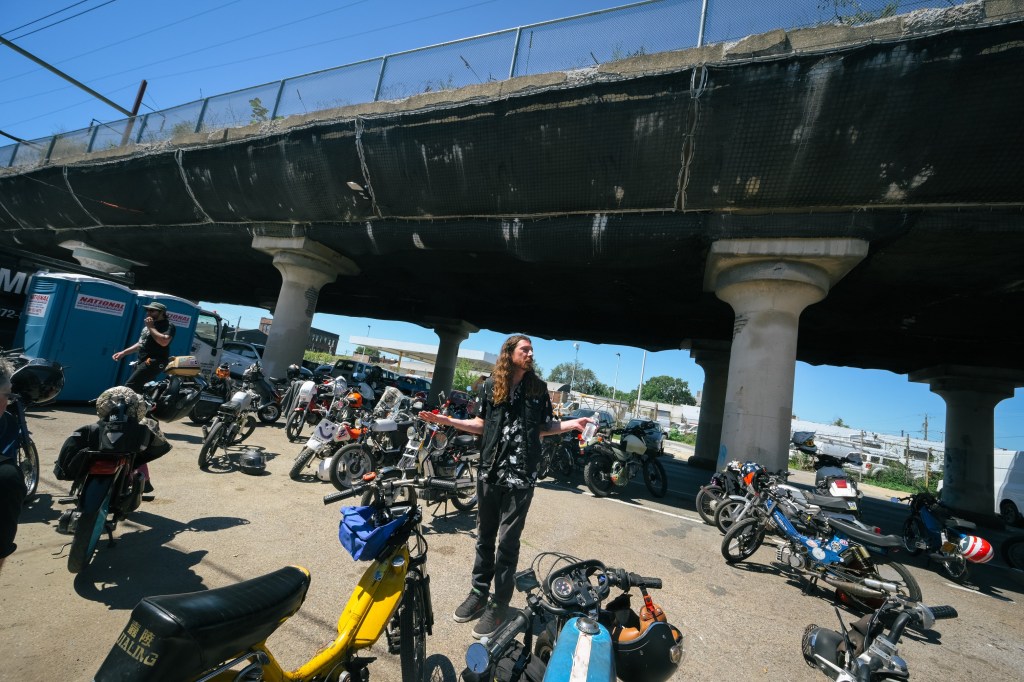
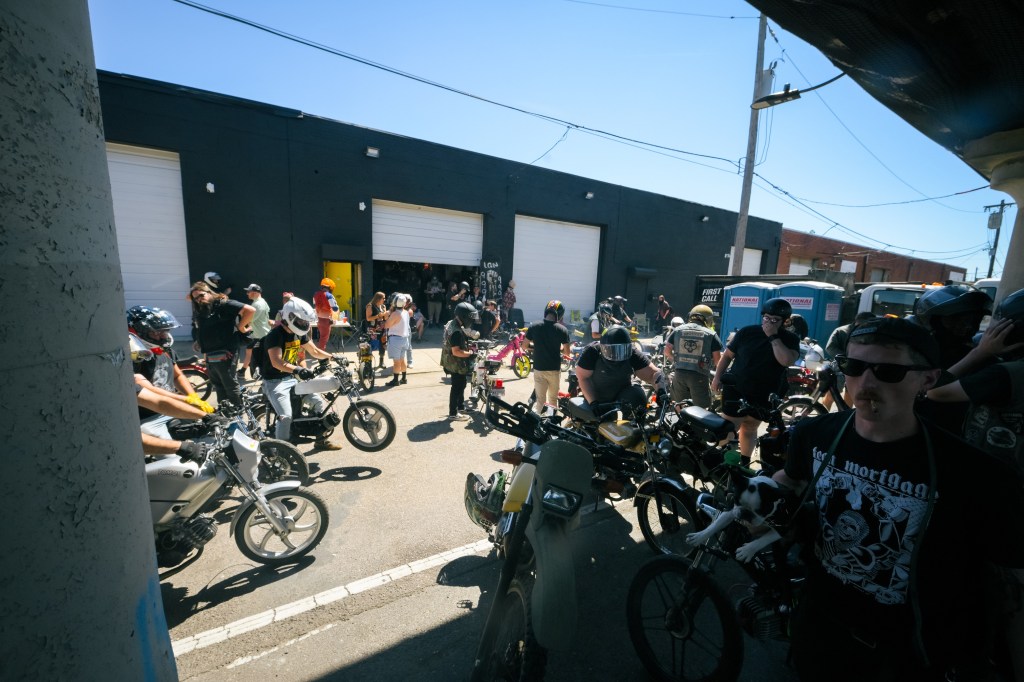
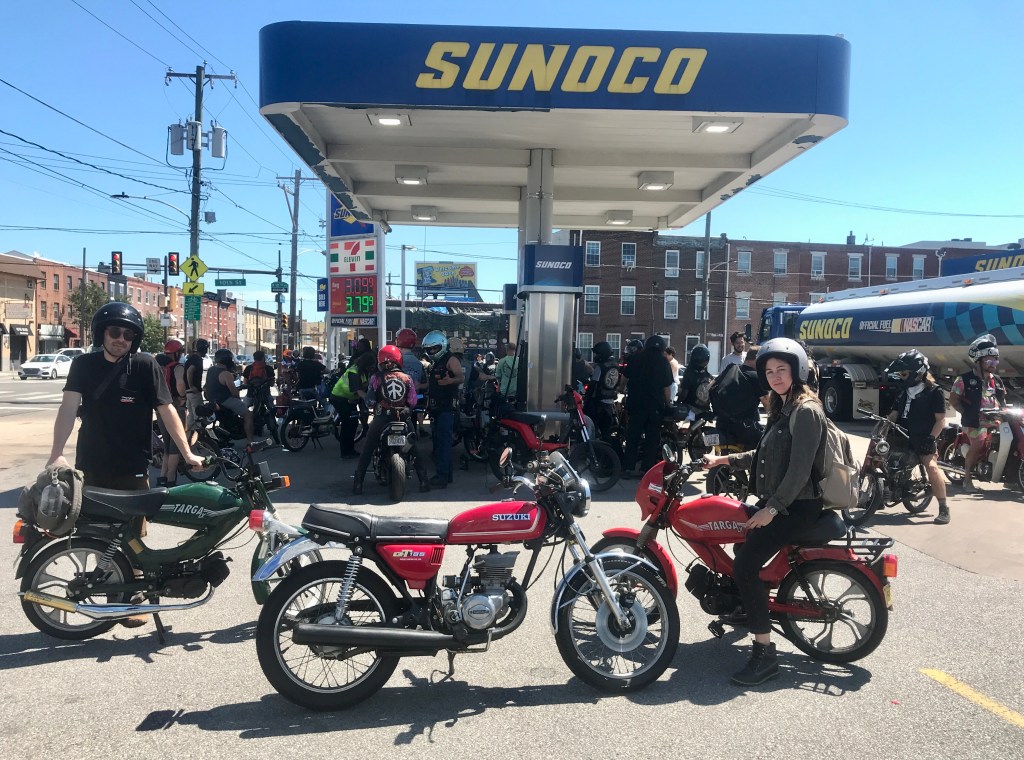
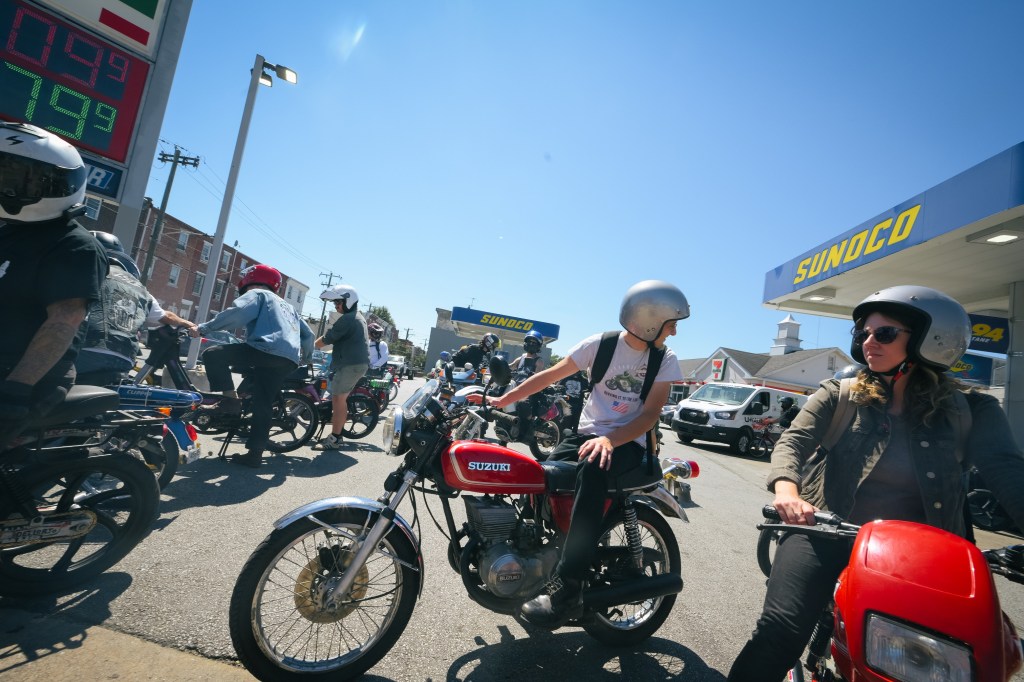
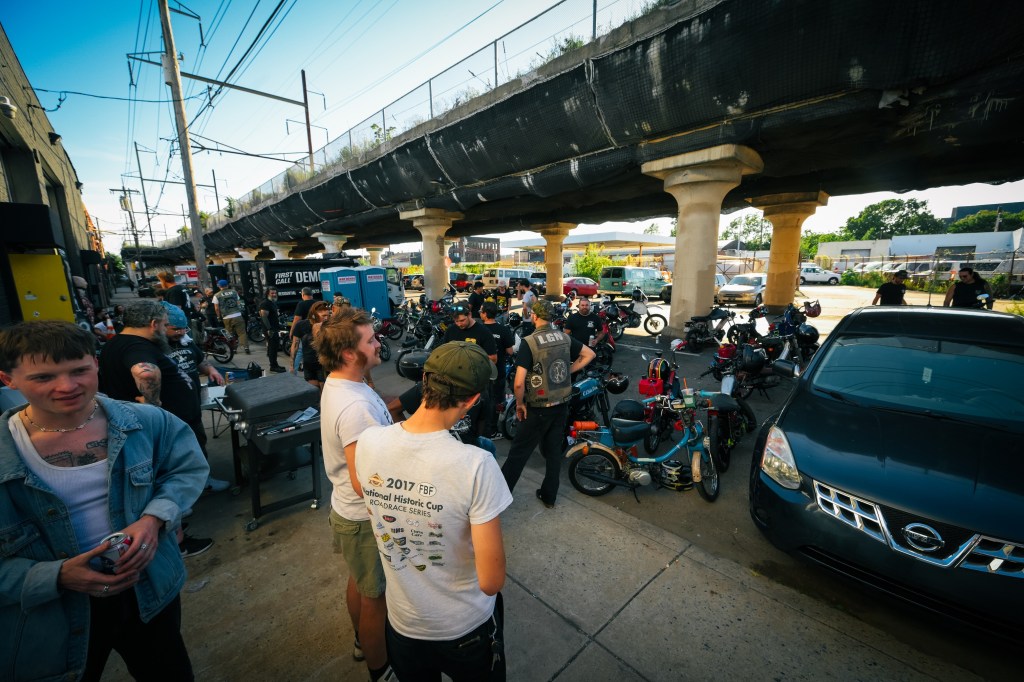
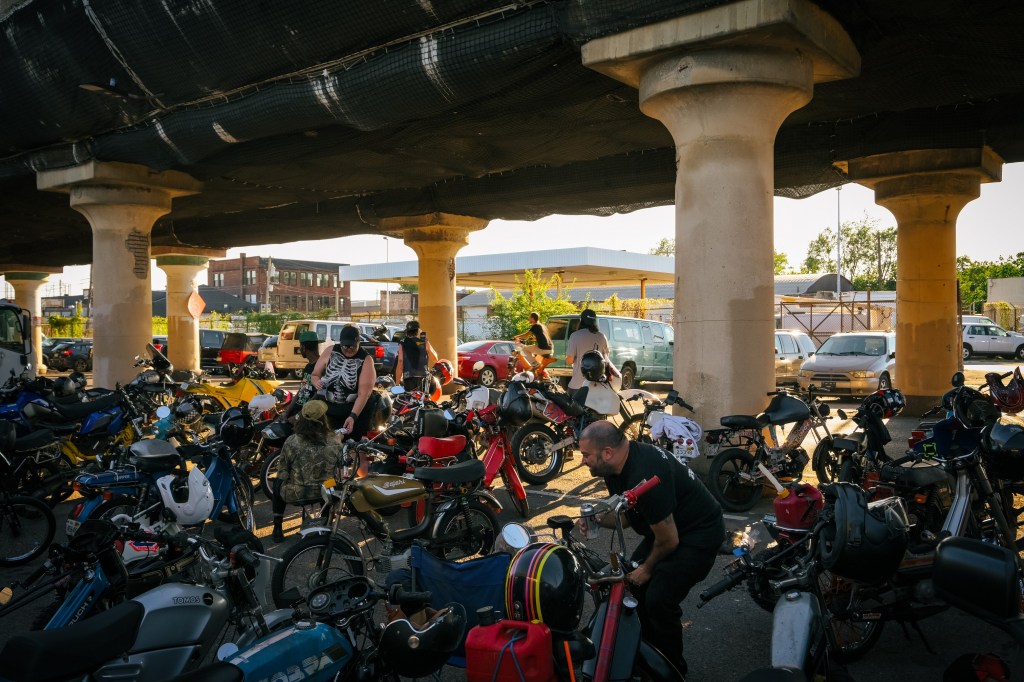
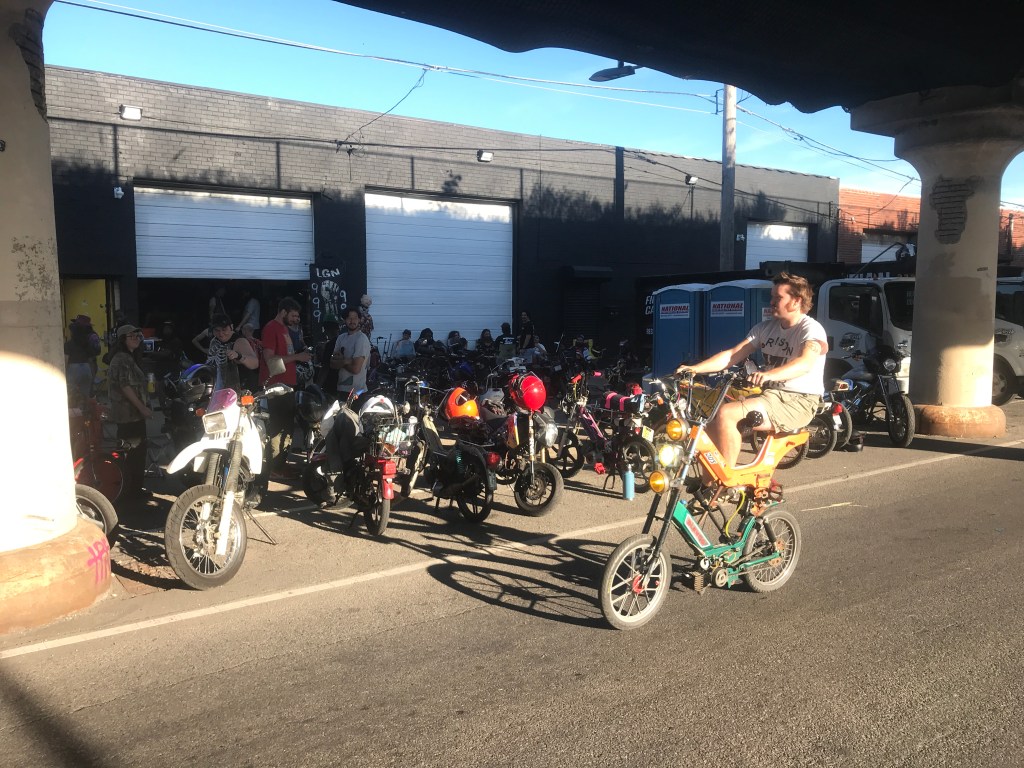
Navigating a labyrinth urban layout, the ever-scheming Bueller takes this 1961 classic and two close friends on what was likely the most memorable day of their formative years. My own hopes were riding similarly high as I crammed two top tank 1996 Tomos Targas, a ‘74 Suzuki GT185, three helmets, two spark plugs, a socket, my better half along with the partner-in-crime cousin into the van and aimed it at South Philly. The destination? LGN moped club shop and headquarters for their ninth rally, ride and all-around fun-fest. The itinerary after arrival? More or less a mystery.
“This is the best group of people I’ve ever met,” explained Alex “Uncle Al” Test, a longtime LGN-er. “We’re all each other’s emergency contacts. We’re all so different, but strong together as a legion. That’s what it’s all about.” For some backstory on the club, watch this 8-minute documentary. For a better perspective on what a five-hour group ride on 35-mile-per-hour mopeds is like, we’re going to try with words – but it’s something you just need to do to know.

‘So that’s how they do it in their family’
Mopeds, as history buffs and serious fans will tell you, entered the American consciousness in the 1970s as an answer to global conflict, gasoline rationing and skyrocketing prices at the pump. Getting 100 miles to the gallon is simply hard for some to turn down as European import mopeds etched their first domestic victory. Traditional motorcycling went through a similar transition during this era, as entry-level models from Japan offered relatively cheaper transportation that sparked a market boom the likes of which has never been replicated.
But mopeds took accessibility a step further. Generally lower speeds meant overall lower risk and bicycle-like pedals to kick the things to life helped reduce intimidation among those who never saw themselves as “bikers.” The typical two-stroke power-plant – a 49cc variety skirting engine displacement cut-offs where motorcycle license endorsements would usually be required – meant it sounded more like a pissed-off weed eater when weighed against the neighbor’s big bore up the street.
In Jim Bennett’s The Complete Motorcycle Book: A Consumer’s Guide, the author lays out the handful of advantages a moped might offer (cheap, easy to fix and the aforementioned gas mileage) but his list of downsides is a bit longer. He rattles through a few opinions (poor suspension, basic brakes, mechanical unreliability and cheap materials) to arrive at the final conclusion that “low status” mopeds are “generally acknowledged as the least desirable of the motorcycle kingdom.”
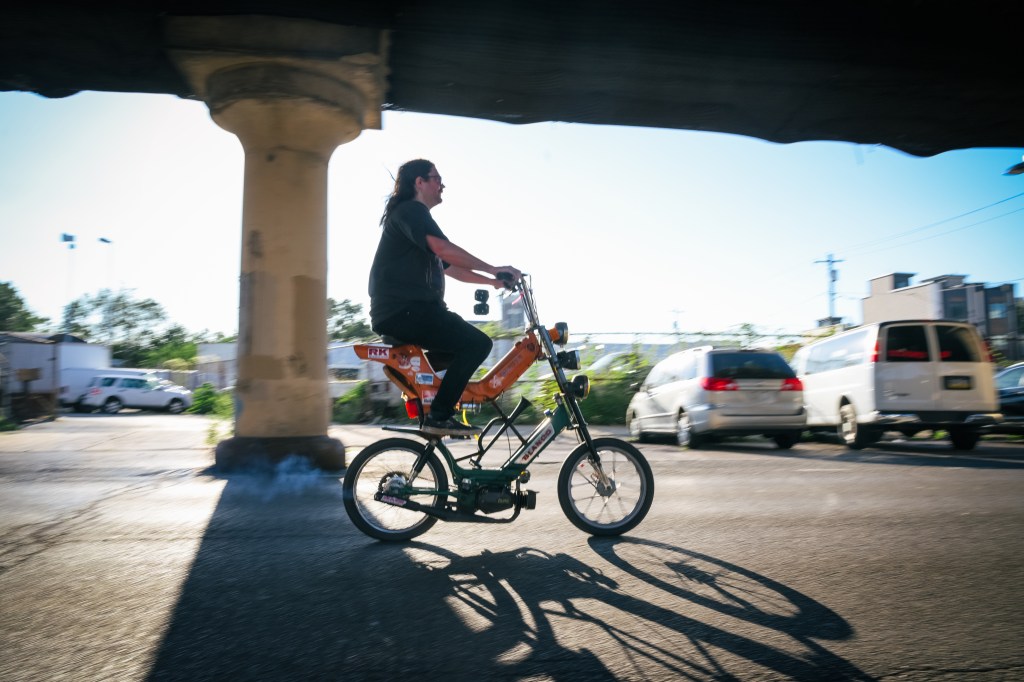
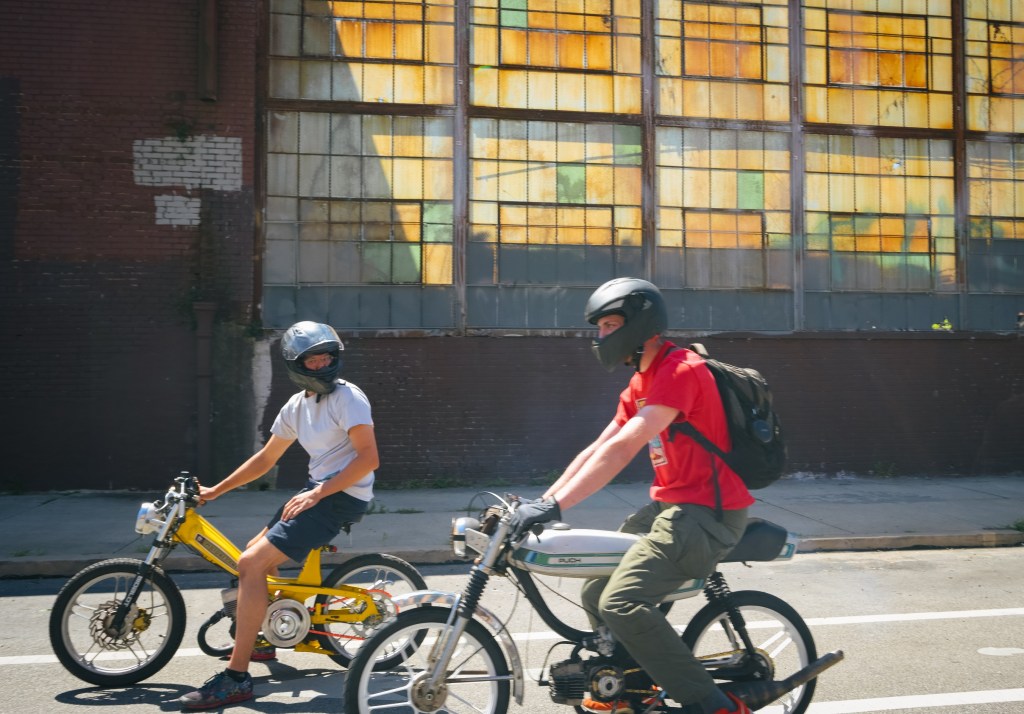
Not one word of this matters to the moped rider: this is mechanized freedom… which beats no freedom at all. “Some of us want to go 50 miles per hour on a paper clip,” Test said when asked why some opt for these chopped, screwed, hacked and welded pocket rockets over something more, well, adult-sized. Therein lies the difference between a home-built ‘ped and a big bike: you can flick and freestyle these things more than any motorcycle I’ve ever rode.
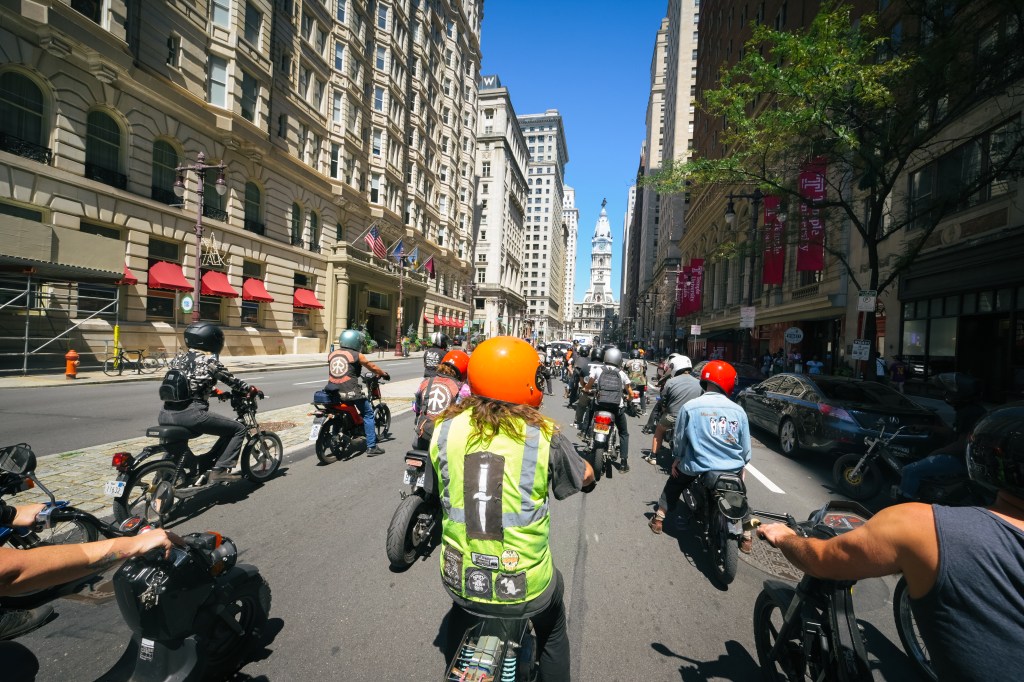
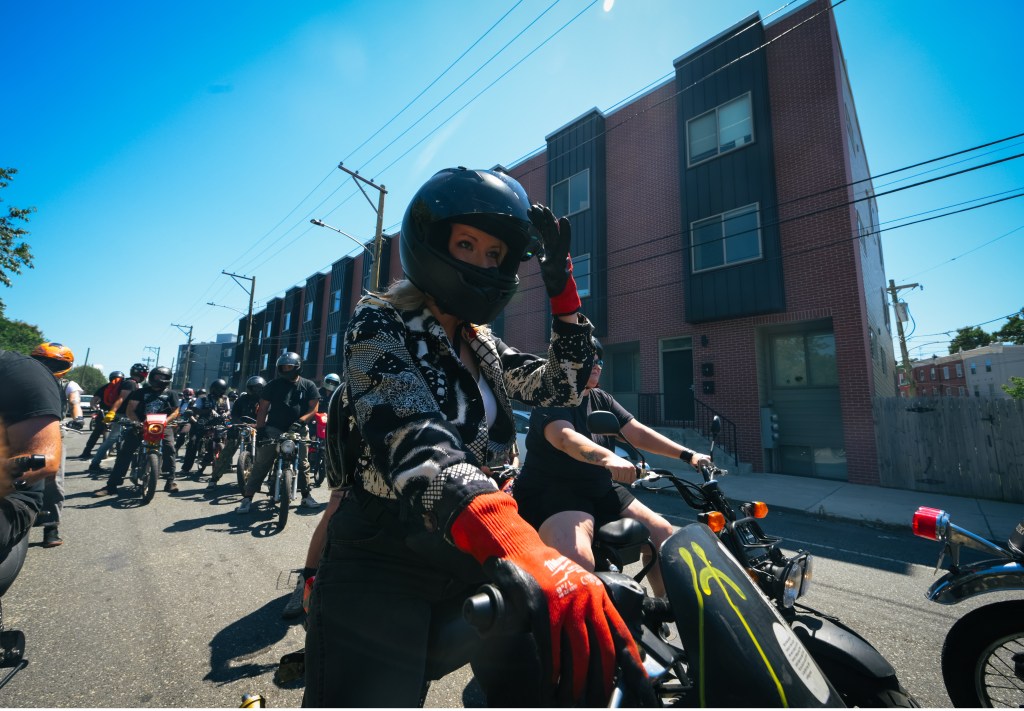
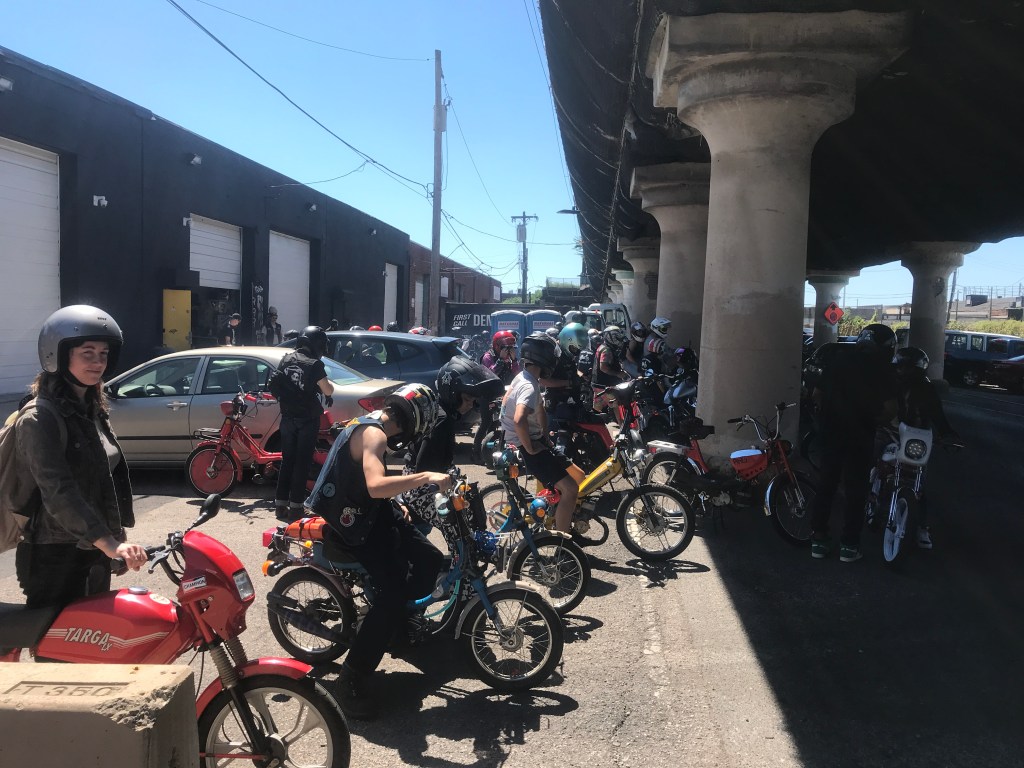
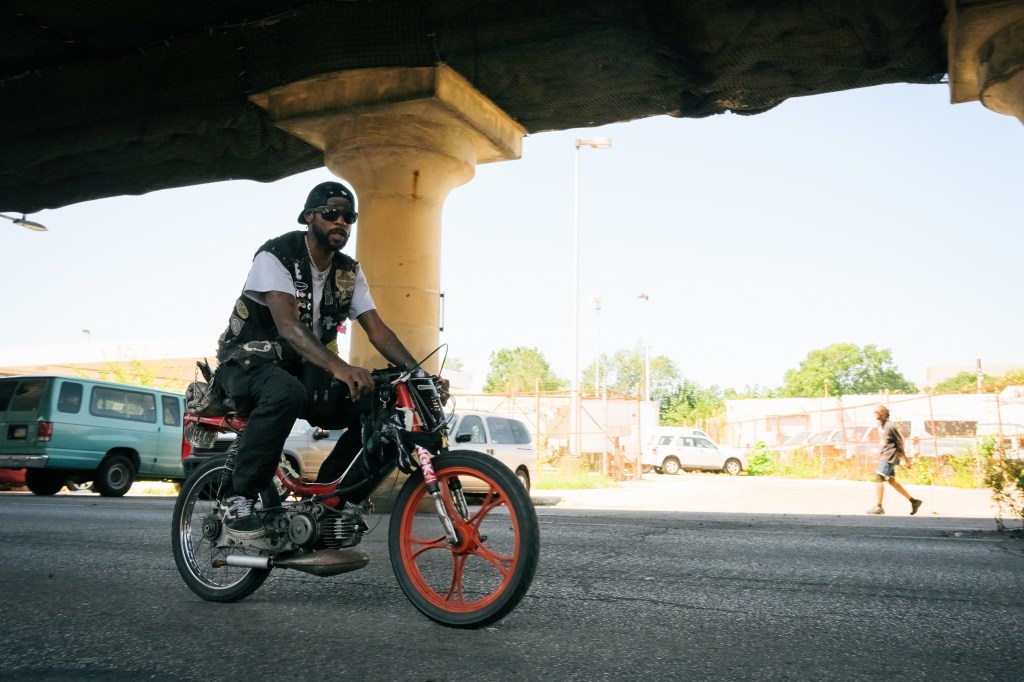
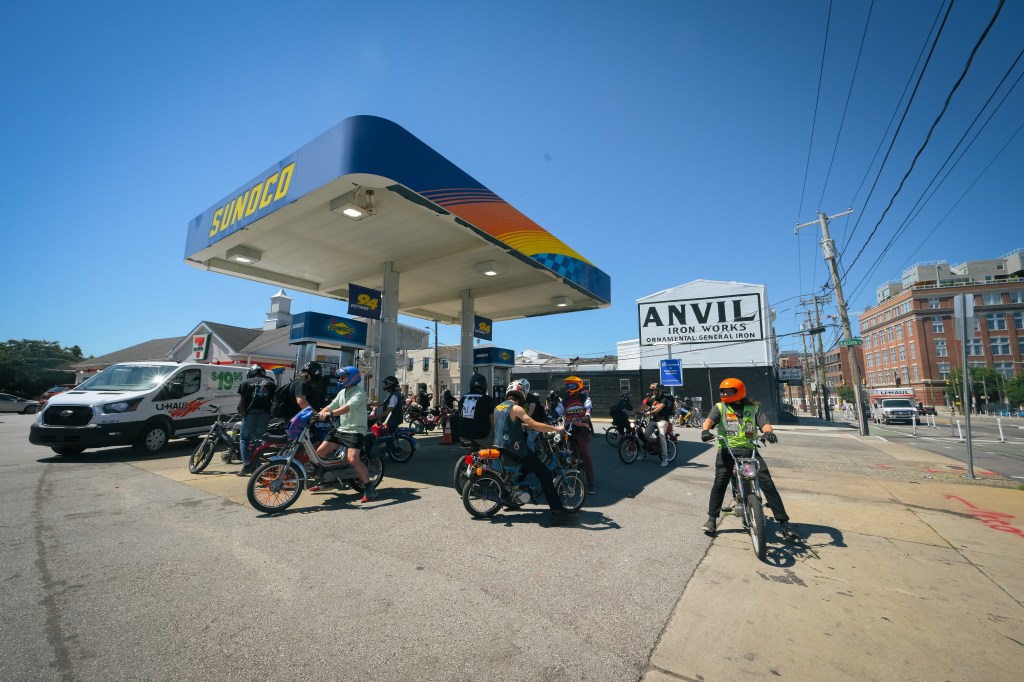
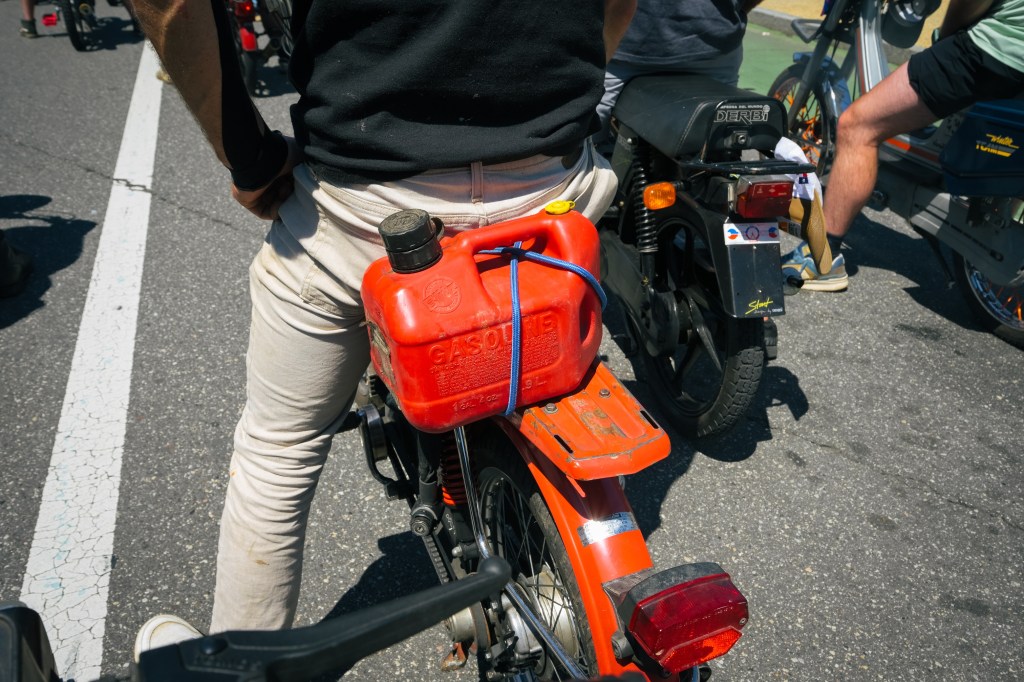
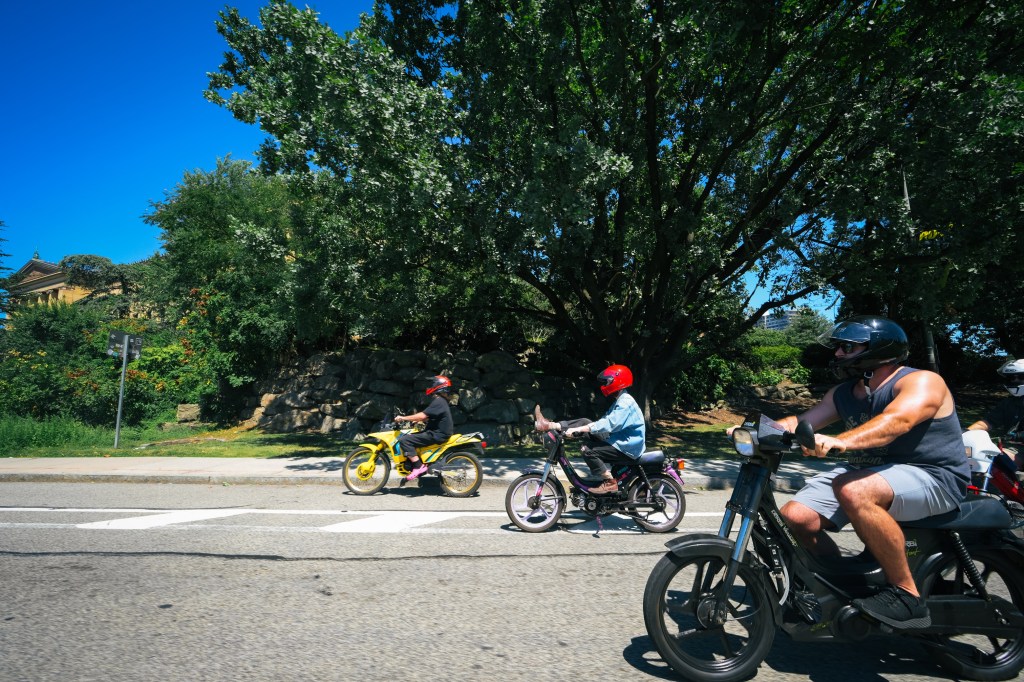
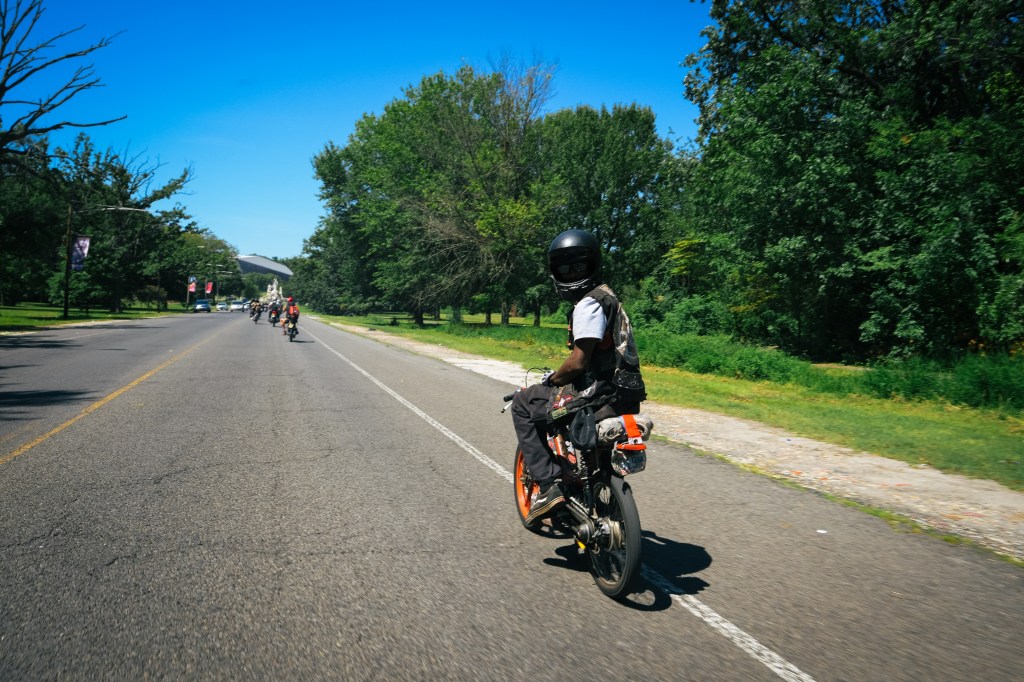
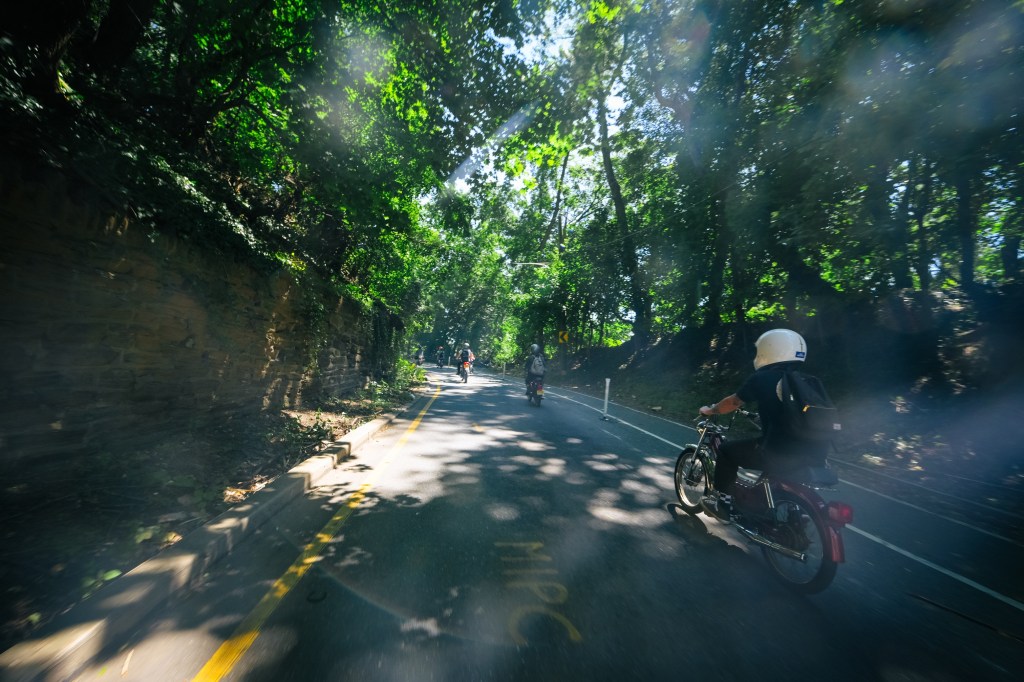
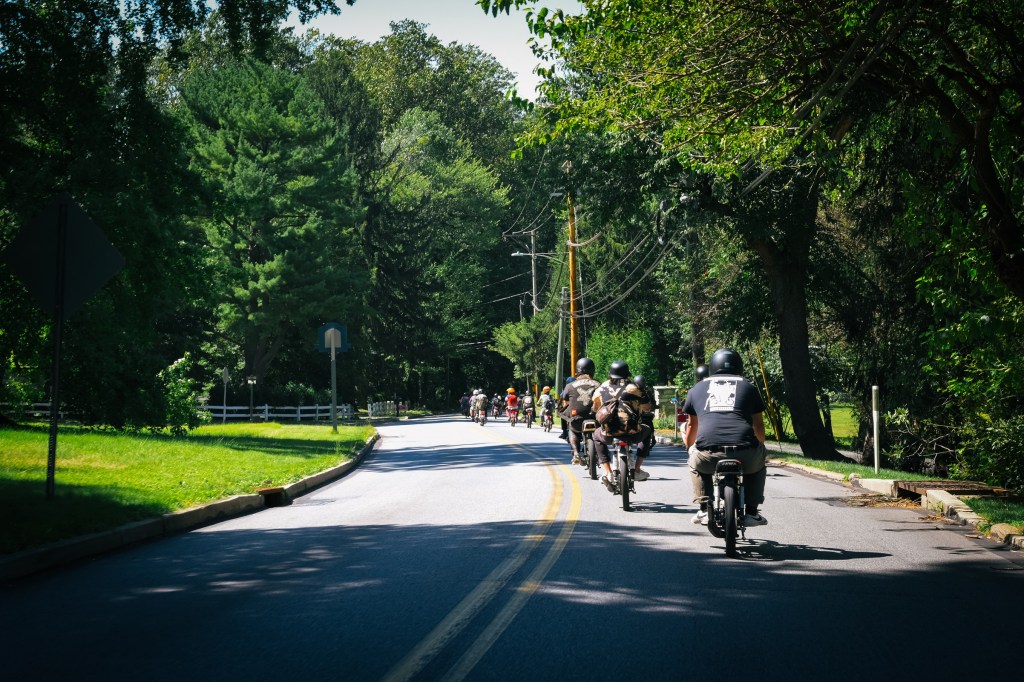
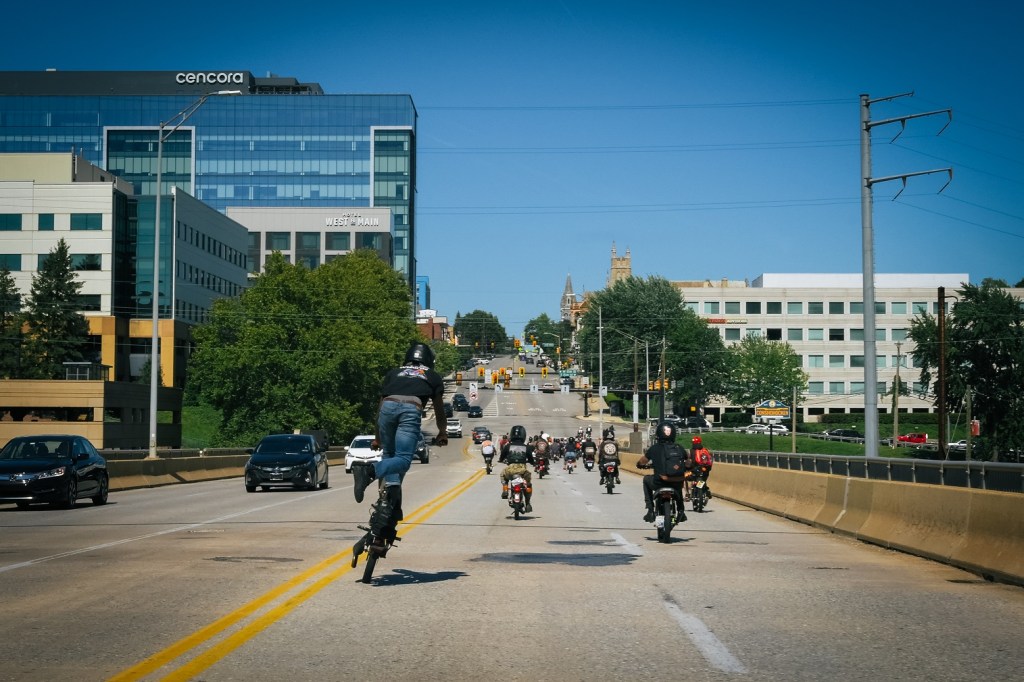
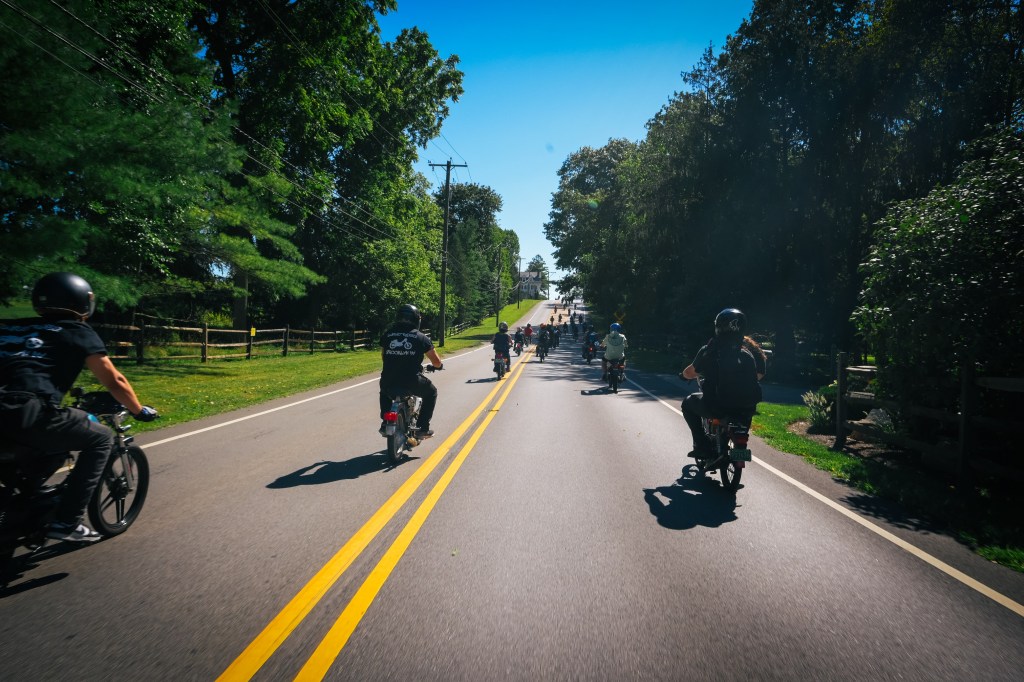
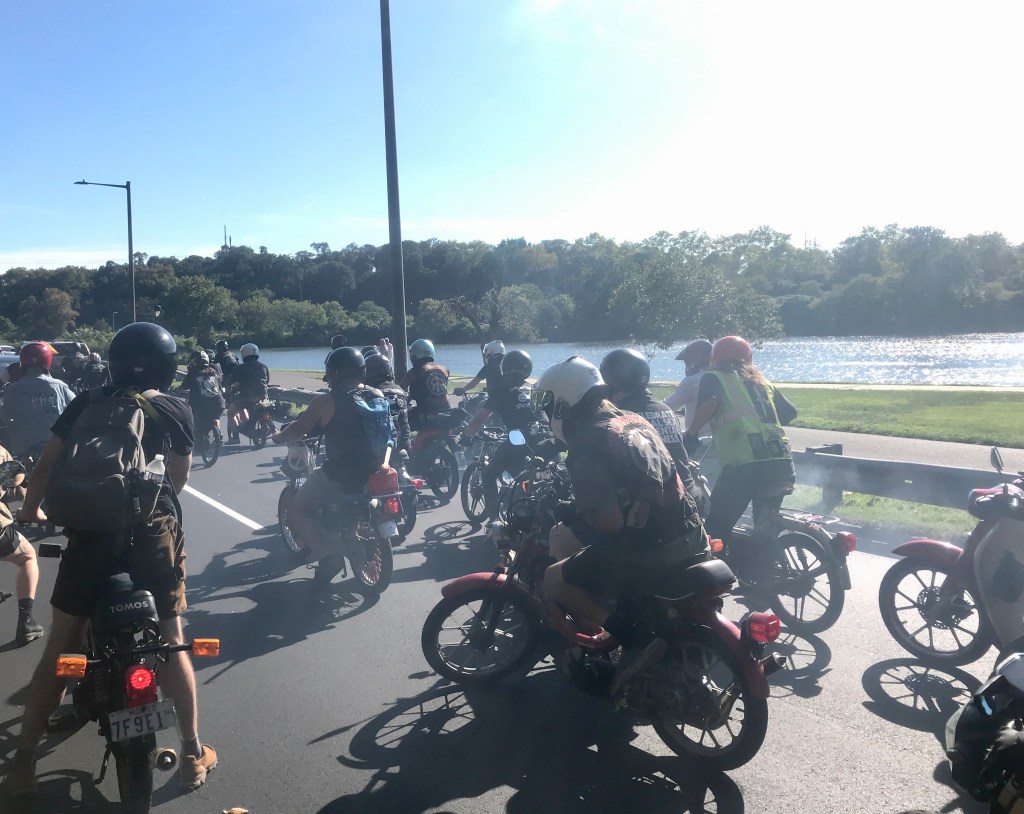
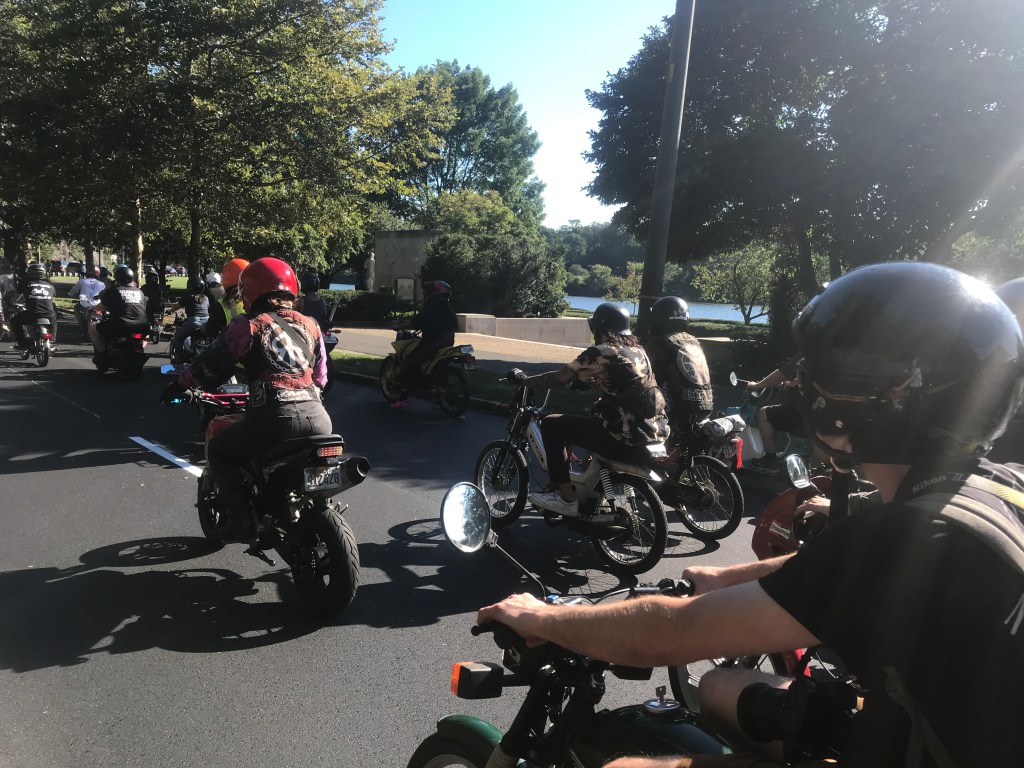
And so on day two of LGN’s three-day rally, we flicked and flung and flew for five hours past gridlock and across downhill descents on country roads. The bottom ends of two-speed mopeds – with flywheels, chains and belts out in the breeze – were spinning about as fast as 26-tooth sprockets could rotate the shafts. Sure, the ascents were a bit more of a slog with horsepower counts in the single digits but, again, it’s about experiences. With printed maps handed out to every rider, rented U-Hauls in chase to carry the casualties back to the shop and point runners blocking opposing cars at traffic signals so the caravan could safely cross, the whole well-planned show went off without a hitch.
‘Some of us want to go 50 miles per hour on a paper clip.’
Life Moves Pretty Fast
Mopeds, for those who haven’t already gathered, can be an acquired taste. Moreover, reasons for acquiring them in the first place is generally a mixed bag. “I had a guy who owed me money, but he couldn’t repay me. He said, ‘I’ll give you a moped and a banjo.’ I knew how to tune the banjo, but not the moped,” LGN’s Test said.
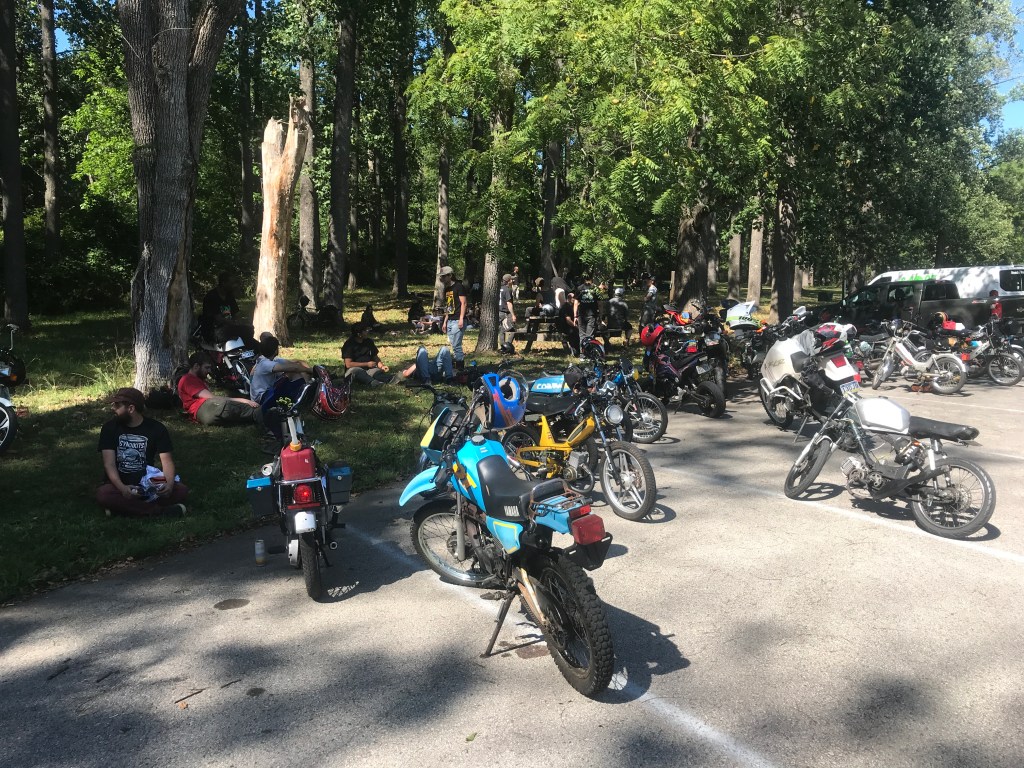
Gus Black, 29, a Daggers club member from Nashville, Tennessee, said he “always wanted to ride a motorcycle, but didn’t have the money.” A relationship ended, he found himself with some extra cash and went the moped route. The low financial barrier to entry (no bone stock mass-produced Piaggio or Peugeot should really run you more than $1,000) could be a fraction of that when selling or swapping with friends.
“It was the community that came and helped me out,” Black said when asked about learning how to ride and repair. “Everyone looks intimidating, but you talk a lot of shop,” he said of trading knowledge and getting to know each other. Indeed, Black and I laughed about a bike with a presumably blown crank seal, which did nothing to deter it soldiering on to finish the job at hand.

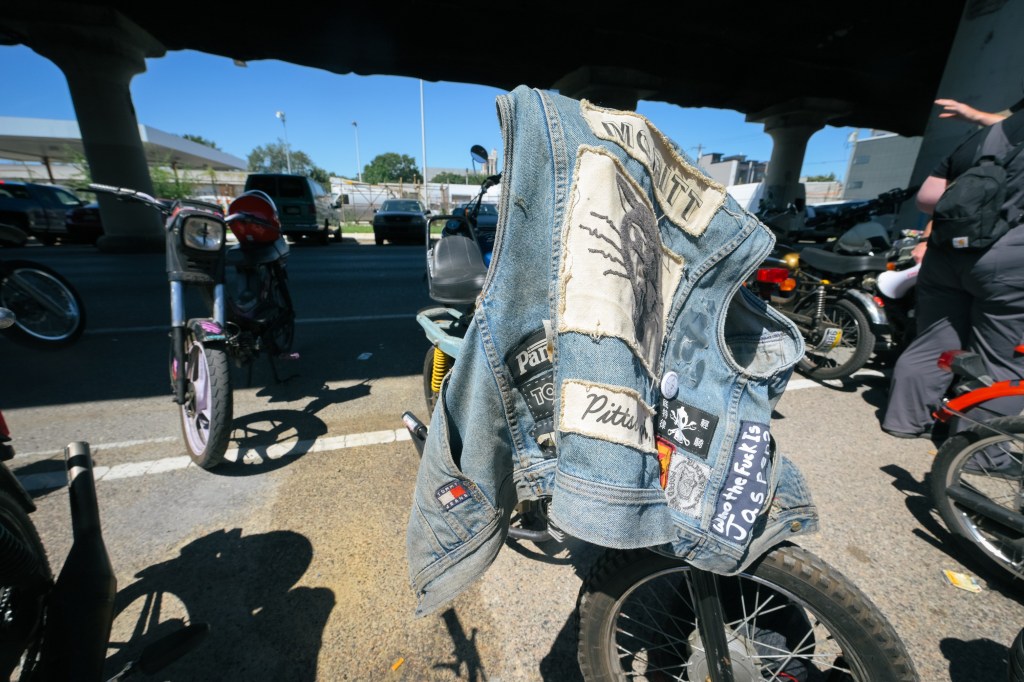
These little exhibits are exemplary of how people get into this thing. It’s not necessarily by choice, but it is that desire to ride something loud and be with the skateboarders, punks and tattoo artists whom you already identify with. Such was the case for Joe Romano, 36, who took a 13-hour drive up from Nashville. He got his first moped around 19 or 20, soon after upgrading to a Puch Maxi. It was the skateboarding community that eventually led him to mopeds, following a tried-and-true path for counter culturists.
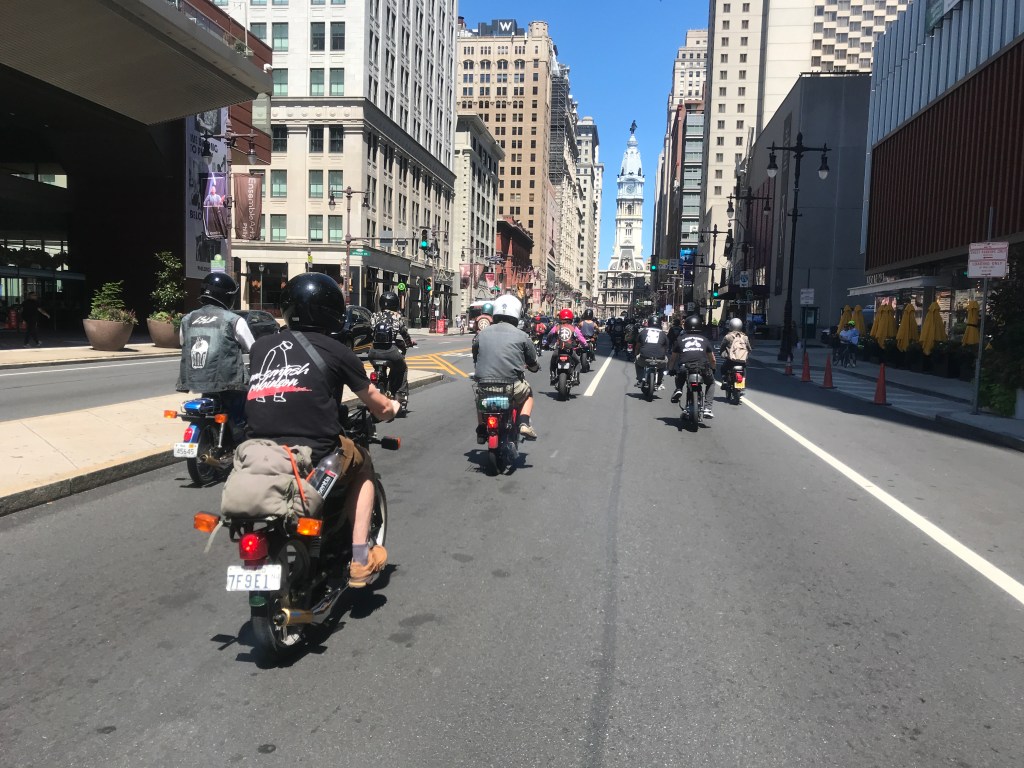
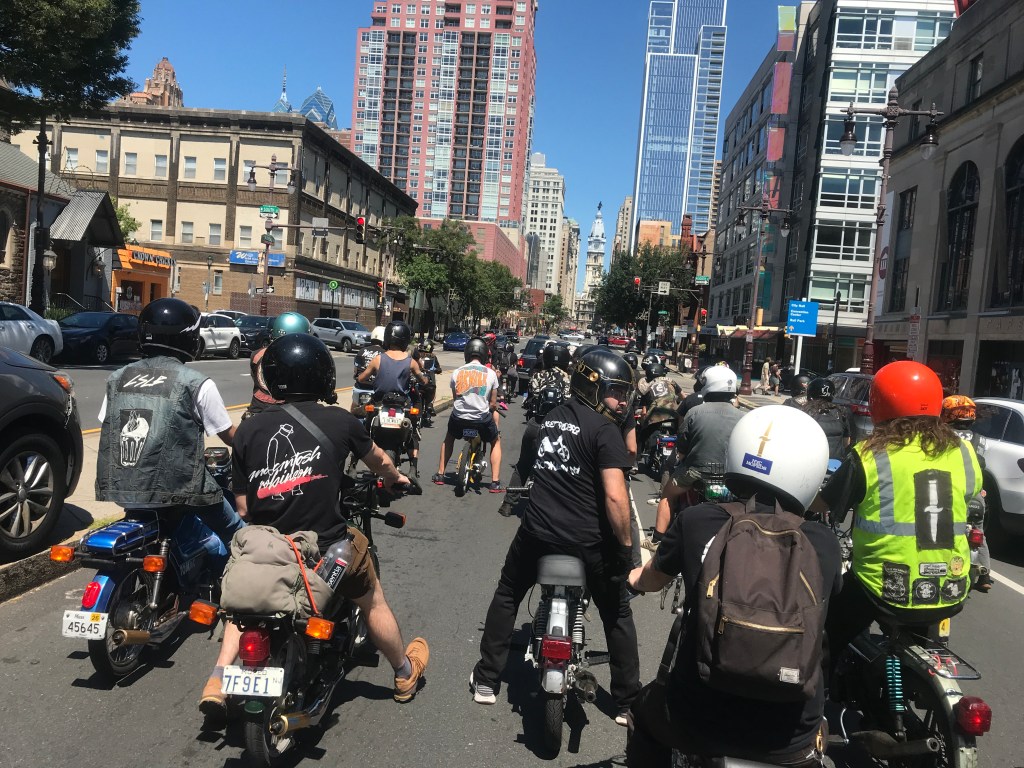
As our 70-deep ride pulled away from red lights up Broad Street, collective power bands of these tiny terrors reverberating off the cavernous masonry walls, the reactions from onlookers was a mixed bag. “They are either so stoked or so bummed,” Romano laughed after the ride. Indeed, many were pulling out their phones to record this squad of angry hornets leaving a blue-tinted smog in its wake. Or, they were covering their ears and clutching nearby children in fear of them one day growing up and living a little.
This was supposed to be a two-part story incorporating comments from the annual two-stroke day at the former Ace Café’ in New Hope, Pennsylvania. Problem there was that about three people showed up… so you tell me which segment of anti-social oil-burners is doing better these days.
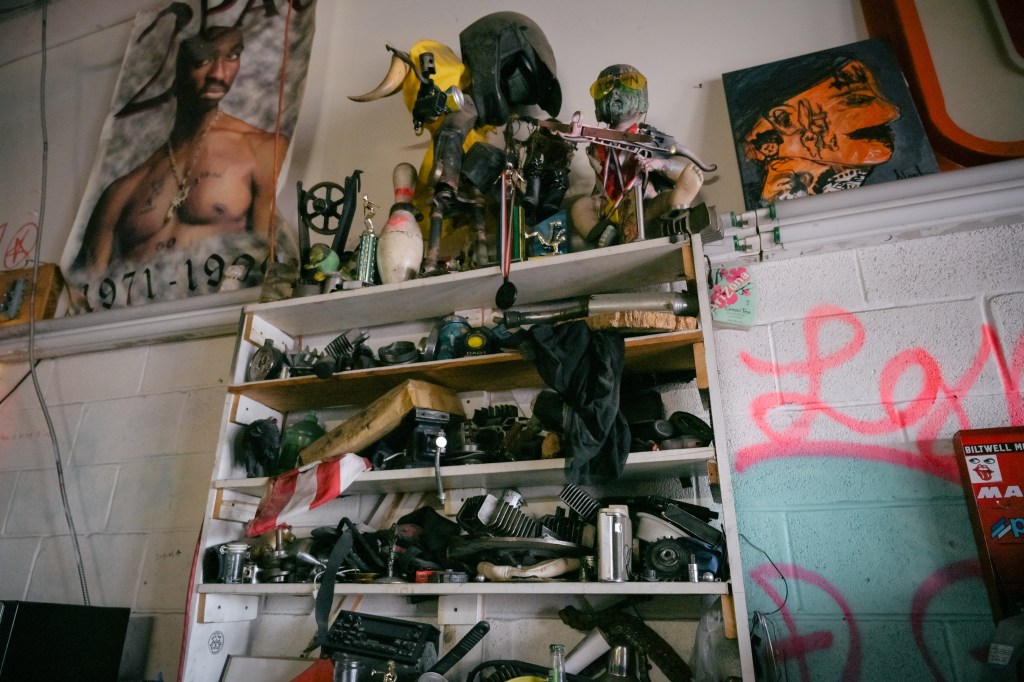
That said, remind me again why mopeds? “It’s about that smile you get. You know, the one when you start to squint,” Test told me inside the LGN shop next to the shelves stacked with sacrifices to the gods of speed. I thought back to the first time I got that long-dormant Tomos running. I remembered hitting the apex at Mid-Ohio for Vintage Motorcycle Days. I looked in the Suzuki’s rear-view mirror then down the road in front and saw nothing but a moving mass of mopeds. God damn if that guy wasn’t right about the grin.
So to paraphrase Mr. Bueller, if you had access to something this liberating, would you take it back right away? I didn’t think so – and if you have the means for a moped, I highly recommend picking one up.

Photo Gallery








 Greg Adomaitis