Love him or loathe him, Ronald Reagan’s nine most terrifying words in the English language have come home to roost up the Garden State: “I’m from the government, and I’m here to help.”
An 11th hour gesture saw outgoing New Jersey Gov. Phil Murphy sign into law new electric bicycle standards that reclassified the long-standing three-tier system recognized in 46 other U.S. states. Moving away from the class 1, 2 and 3 structure – pedal assistance to 20mph, throttle input to 20mph, and pedal/throttle assistance to 28mph, respectively – there are now “low-speed electric bikes,” “motorized bikes” and “electric motorized bikes.”
The devil, as always, is in the details. These new rules also institute new age, licensing, registration and insurance requirements – all of which vary depending on which top speeds the bikes top out at. A six-month grace period will be followed by law enforcement, which prompted no shortage of social media commentary up to and after the bill’s passage. “We are in a new era of e-bike use that requires updated safety standards to help prevent accidents, injuries, and fatalities,” the state’s Senate president and bill co-sponsor said in a press release. “Requiring registration and licensing will improve their safe use and having them insured will protect those injured in accidents.”
On one hand, half of this had to happen. There’s no reason, nor excuse, for teenagers without driver’s licenses to have ever been ripping down roadways on what effectively constitutes an electric motorcycle. Sure, my heart strings sang to see kids out riding and challenging authority – and it does feel a bit “rules-for-thee-not-me” – but facts of the matter must prevail. This clearly lawless gray wolf market in sheep’s clothing was too dangerous for its own good. It was only a matter of time until mounting pedestrian injuries, impacts with moving vehicles and tragic roadway fatalities forced the hands of Trenton.
Now, on the other hand, this blanket law lumping together anything with an onboard battery – no matter how mediocre the motor output – is an emblematic lame duck money grab that pearl-clutching governments are so good at. To better understand how New Jersey now lays claim to strictest electric bike rules in the nation, it’s time to recall where we’ve been, review current-day comparisons and grasp what this means for tomorrow’s generation of two-wheel riders.
The More Things Change…
Ten years ago, I wrote a long-form newspaper piece in reaction to an ATV accident that severely injured two kids on a quad who were struck by a vehicle when they tried to dart across a road. The solution, as offered by police, riders and track owners, was hardly a revelation to those who’ve been in the off-road game for some time:
- Get your kicks on private property
- Ride a properly registered and insured motorcycle on public land
- Pay to play at designated facilities
Given these three scenarios, it’s easier to see how sales are down, the average age of riders is up and bike builders can’t make sense of who to cater to; severe problems with affordability and accessibility are making practical motorcycling increasingly irrelevant to younger generations.
Ten years on and it looked like things were starting to turn a corner. The battery technology that was driving newcomer riders to electric cycling and motorcycling felt full of promise. The bikes were easy to live with, wouldn’t annoy the neighbors with noise and didn’t require complicated mechanical upkeep. According to C.S.M. International, an automotive and motorcycle market research and consulting firm, advances in battery technology were helping to drive up adoption and growth of the electric bicycle segment. These devices were “increasingly viewed as sophisticated mobility solutions rather than traditional recreational vehicles,” a 2025 report states. “This evolution in public sentiment has been particularly pronounced among younger urban professionals, who value the combination of environmental consciousness and practical utility offered by modern electric bicycles.”
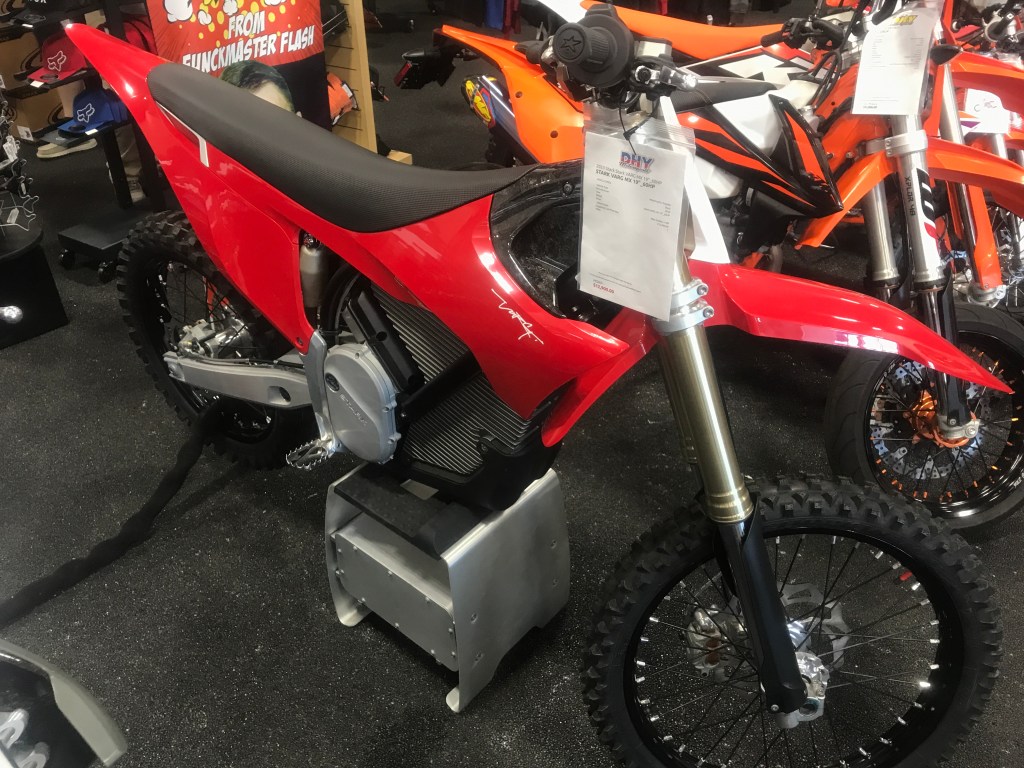
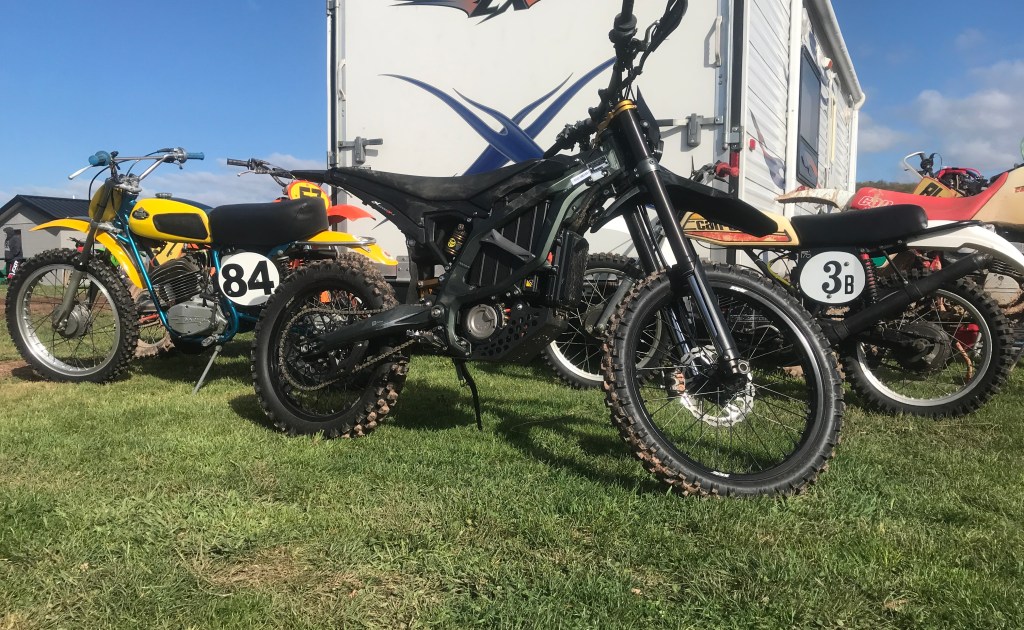
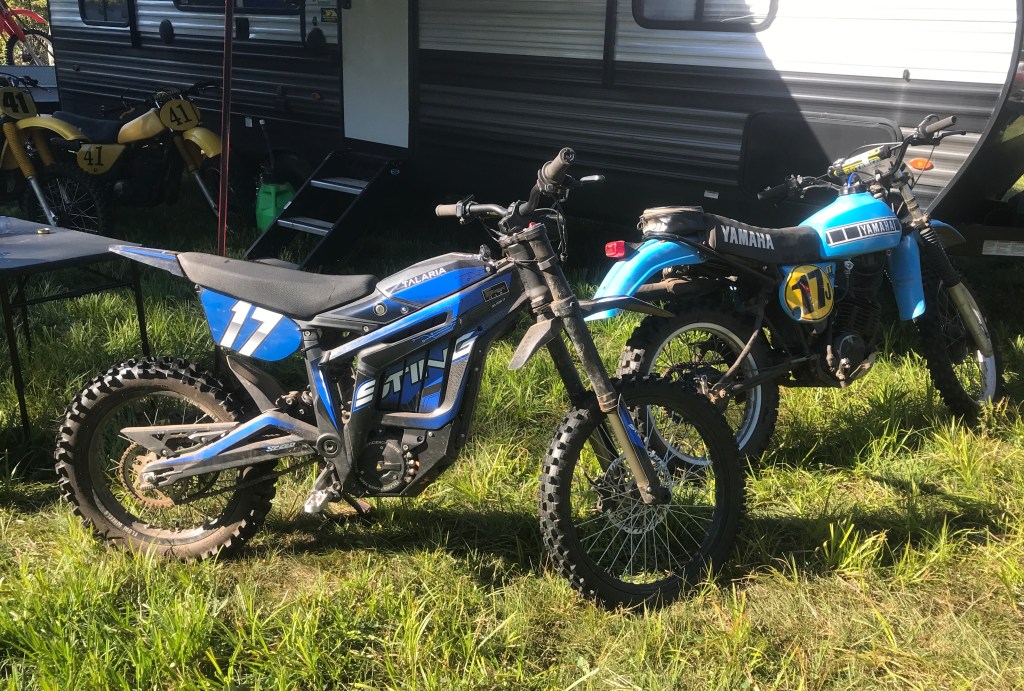
In a relatively short window of time, however, high-speed electric bikes arguably became too popular for their own good. Without the enforcement of explicit rules already on the books, a pack of roving teens on already illegal Surrons, Talarias and other dubious online-ordered EVs clocking car-like speeds quickly proved problematic. As such, New Jersey laid down the literal law on this exact type of behavior. It doesn’t address fair access to where e-motos can be used for recreational purposes, but it does pile on the participation tax. And even this scenario, where free spirit scofflaws were circumnavigating “the system,” is rooted in recent history.
Dodos and Mopeds
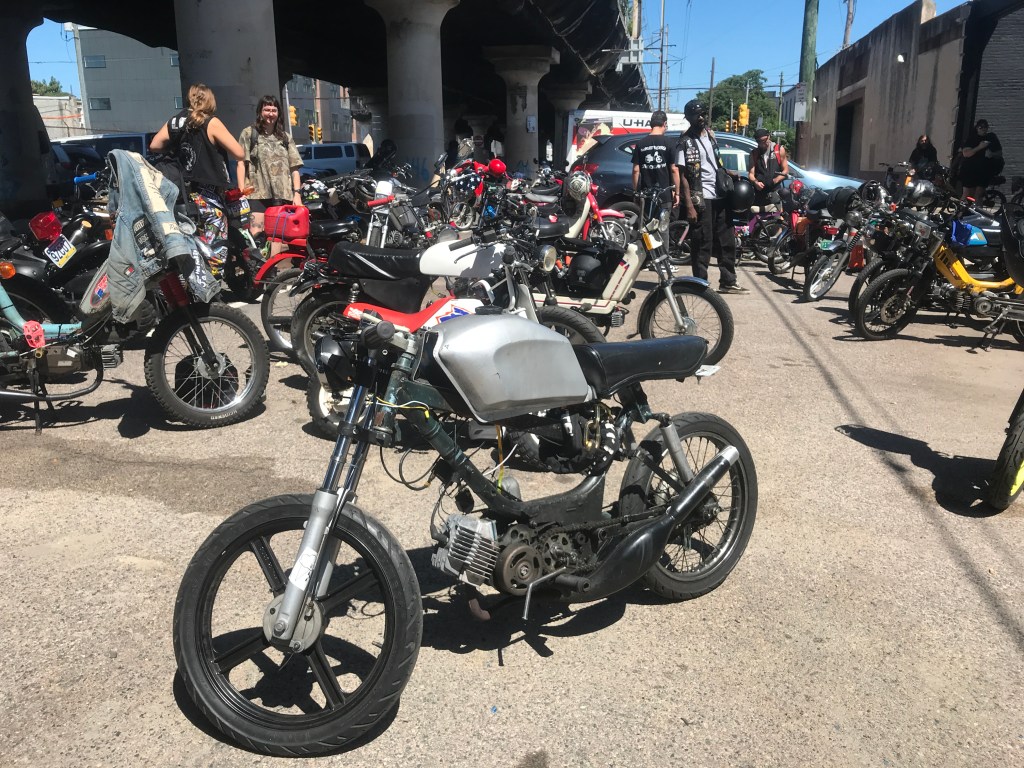
A great many social media comments reacting to the new rule essentially said “tough shit” to the electric cyclist. This was the moped redux from the 1970s and ‘80s, where a license, registration and insurance were all eventually required and closed the gap between motorist and alleged pedestrian commuter. Prior to that point, 50cc two-stroke motors with pedals were skirting the system just like many of today’s electric bikes are. Moped popularity spiked at a time when surging gas prices saw these humble forms of transportation hang around until the cost-benefit analysis drove most back toward traditional cars. A mini-Renaissance during the Great Recession, where personal finances and fuel prices once again didn’t line up, also didn’t last and the moped once again went the way of the dodo: devoured from all sides by forces far stronger than a tiny terror masquerading as a motorcycle.
That extinction event wasn’t entirely complete, though. My own moped, and a hundred others ripping around a 50-mile rally across Philadelphia, carried the plates and insurance that allowed us to use public roadways. The bikes also sported headlights, tail lights, turn signals, mirrors and everything else a road-legal motor-bike is supposed to have. A good many e-motos are not built stock with these critical ingredients that would grant them street-legal status, but they are still a lot closer to being an electric “moped” than a pedal-assist 20mph-capped bicycle. In a sedentary society, these electric bikes were – as author and journalist Micah Toll wrote in The Electric Bike Manifesto – the gateway drug to physical exercise and mental tinkering. The out-of-sight and out-of-mind advantages offered by electric motorcycles are here now and too unique to ignore; dedicated riding parks in suburban settings and other legalized riding avenues for around-town trips should be the counterpoint to this new law. That support structure has yet to arrive, but it must if this segment is to grow into anything of value.
In an interview last year for my forthcoming book on this topic, author and accomplished racer Mark Gardiner told me that an “experienced” cyclist hitting 20mph is a good indicator of their considerable strength, skill and determination. On an electric-assist bike, it’s a Tuesday morning while weighed down with groceries and textbooks. “When the data comes back,” Gardiner said, he felt that it will show the dangers of unchecked “e-bikes” compared to the rate of other motorcycle accidents. “Will electric bikes absorb the part of the market that would have got a small gas bike,” he questioned on our call. The jury is still out on that one, too – but he likes his old school steel road bike just fine.
High Tide
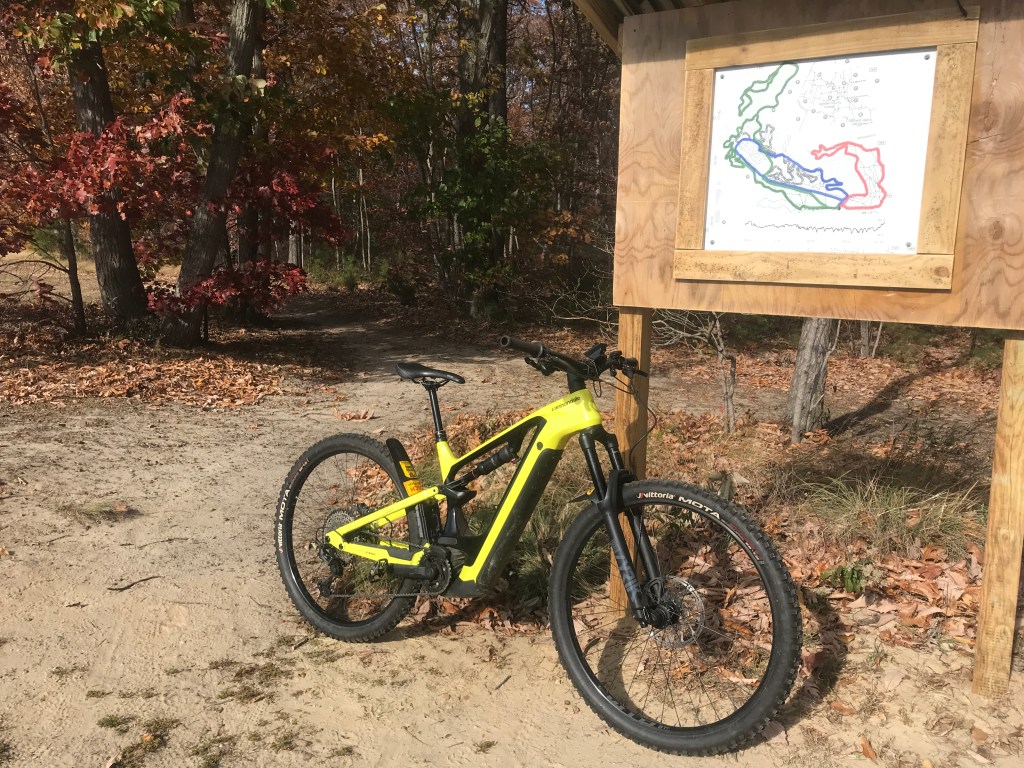
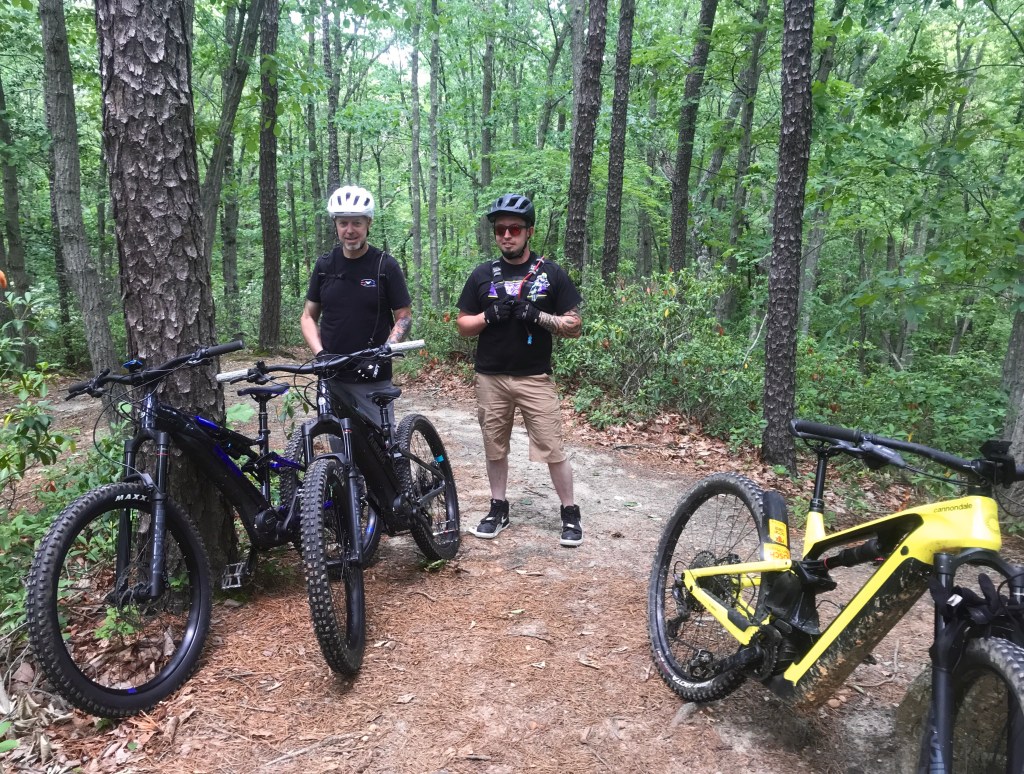
One year ago, I purchased an electric mountain bike (a sport I had zero interest in until the motorized version came along) and have enjoyed 500 miles of toll-free range-extended off-road exploration. I am hardly alone in this trend, where long-time cyclists are experimenting with something a notch above the ol’ 10-speed that once would have been seen as blasphemous – until they feel the first rush of electromagnetic assistance. So, too, are total newcomers to the hobby; food delivery riders; kids commuting to school; adults who need cheap wheels, a farm hack, or niche racer.
At an electric mountain bike race last summer, the promoter of this first-ever event felt that it was just a matter of time until the tide turned and electric bikes became the new norm. He was recovering from a knee injury and could finally ride with gusto again, while the eMTB field was filled with folks who similarly saw the benefits of this new technology. What’s funny here is that the top average speed in the electric class was the same as what the pro “acoustic” racers maintained during their five laps: the pivotal 20mph.
Will electric bikes absorb the part of the market that would have got a small gas bike?
This new law will cut down on kids playing in traffic. Then what? The entire EV segment, from commuter cars and delivery vehicles to golf carts and scooters, was a supposed environmental panacea moving us away from the internal combustion engine era. When legal and financial hurdles are thrown in front of adoption efforts – making uptake difficult for the exact same people these sustainable “micro-mobility” devices were designed to help – what exactly is the point and priority? Look: half of these new rules are better late than never and will hopefully help steer us toward more legalized places and spaces down the line. But the overall message is quite clear: adopting the very thing foisted upon the masses as morally right just means more bills beyond the pittance of electricity from the 120-volt wall outlet.
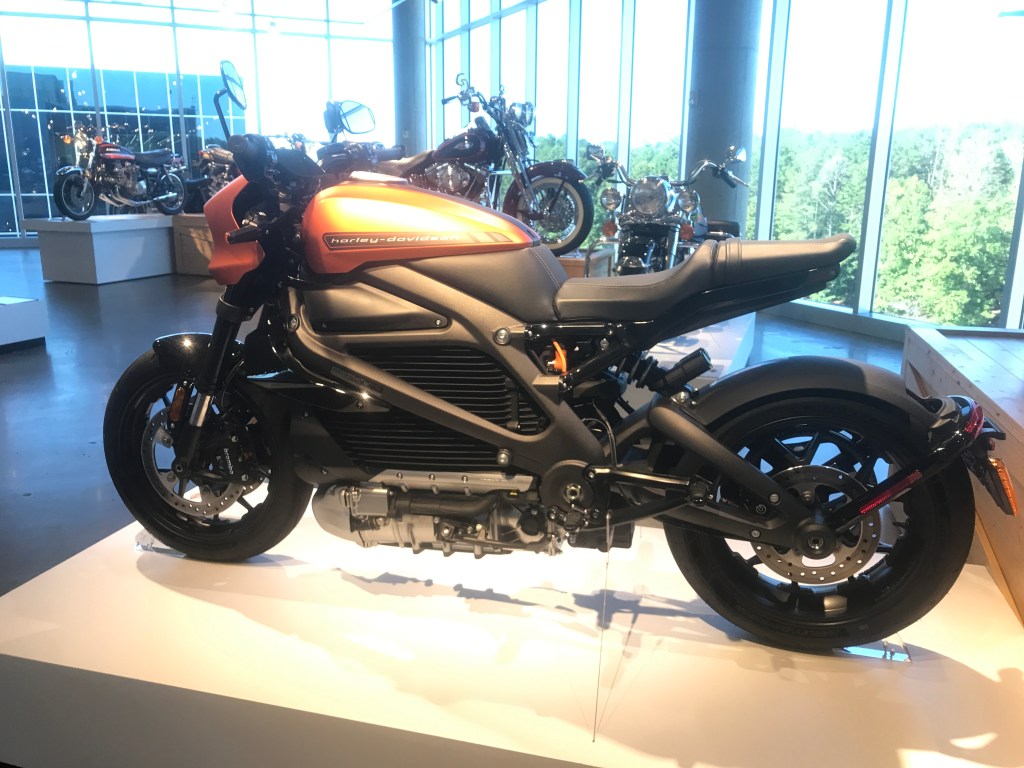
“Won’t somebody please think of the children?” Some legacy and upstart motorcycle builders are trying to address that fact, as more accessible legal electric options enter the market. But New Jersey’s recent move is Murphy’s law run rampant in a rush to judgment, where Reagan’s warning has yielded a terrifying result that’s part harm and only half “help.”
 Greg Adomaitis