Rarer than hen’s teeth. As delicate as mom’s fine china. Listed on eBay for more than your most recent electric bill.
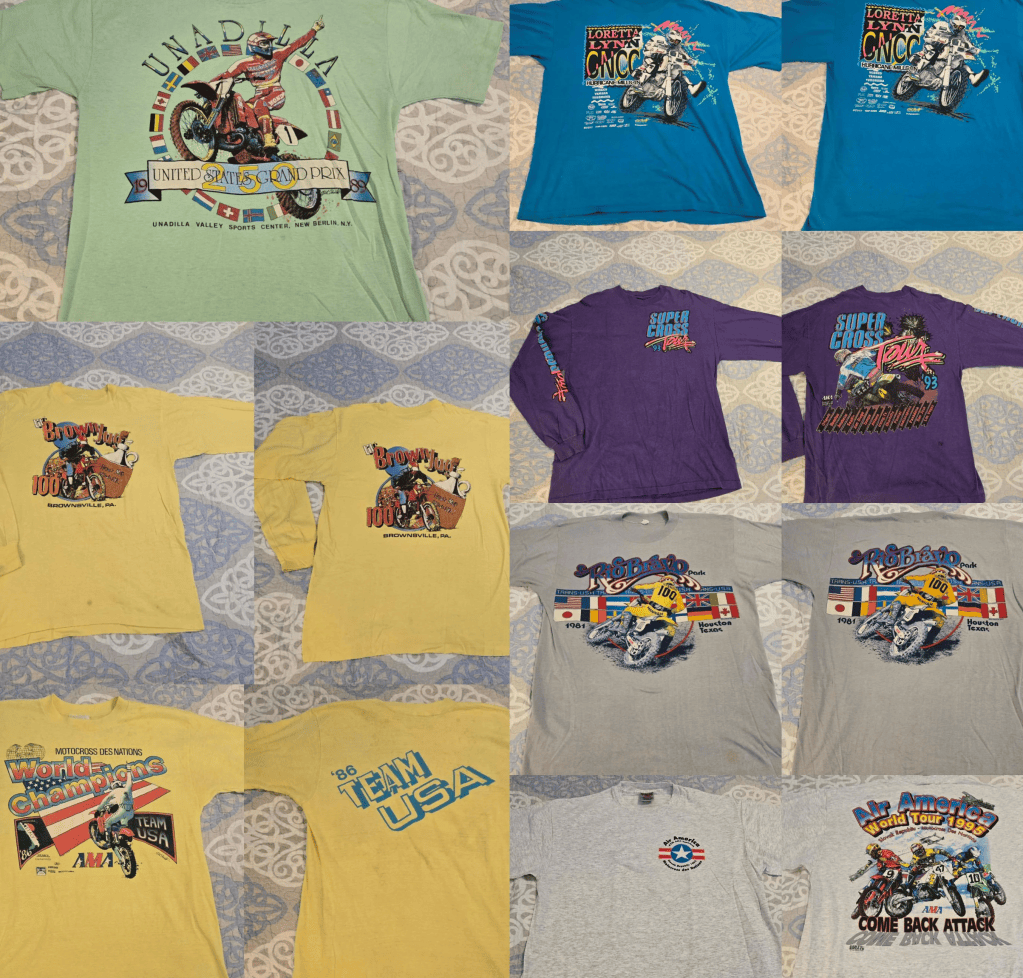
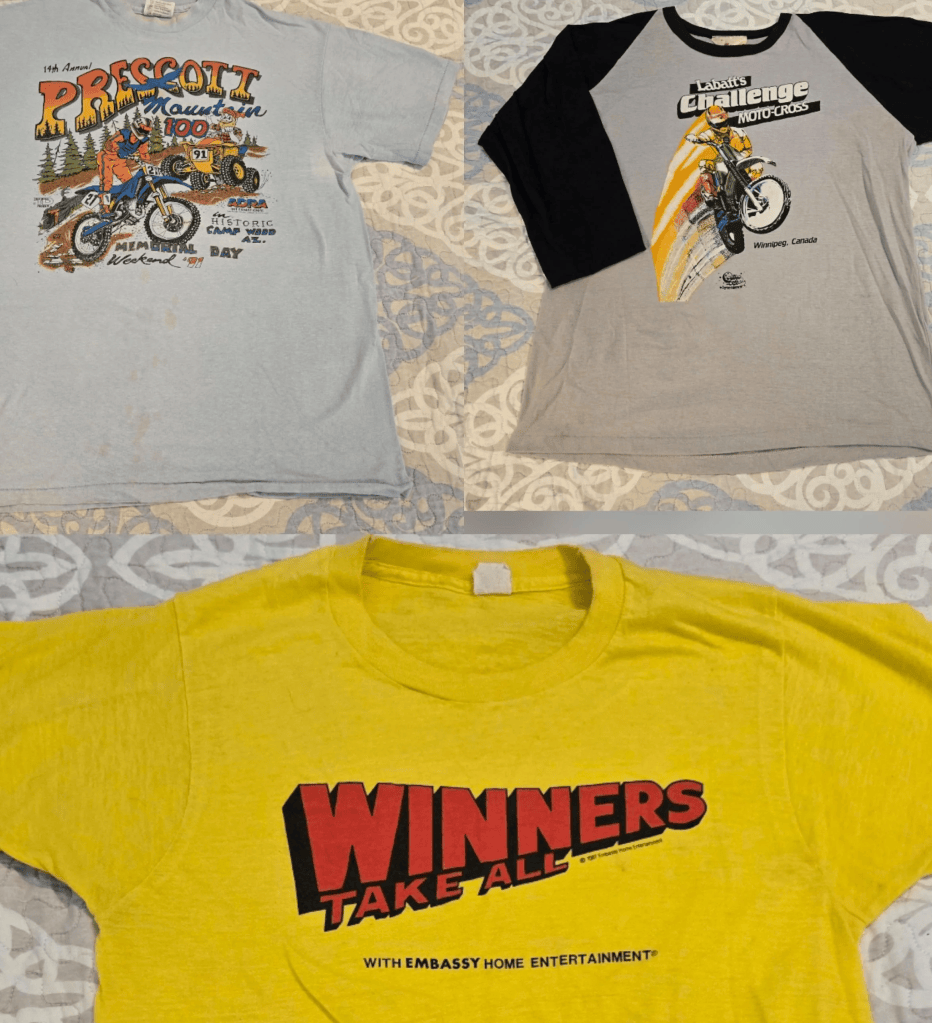
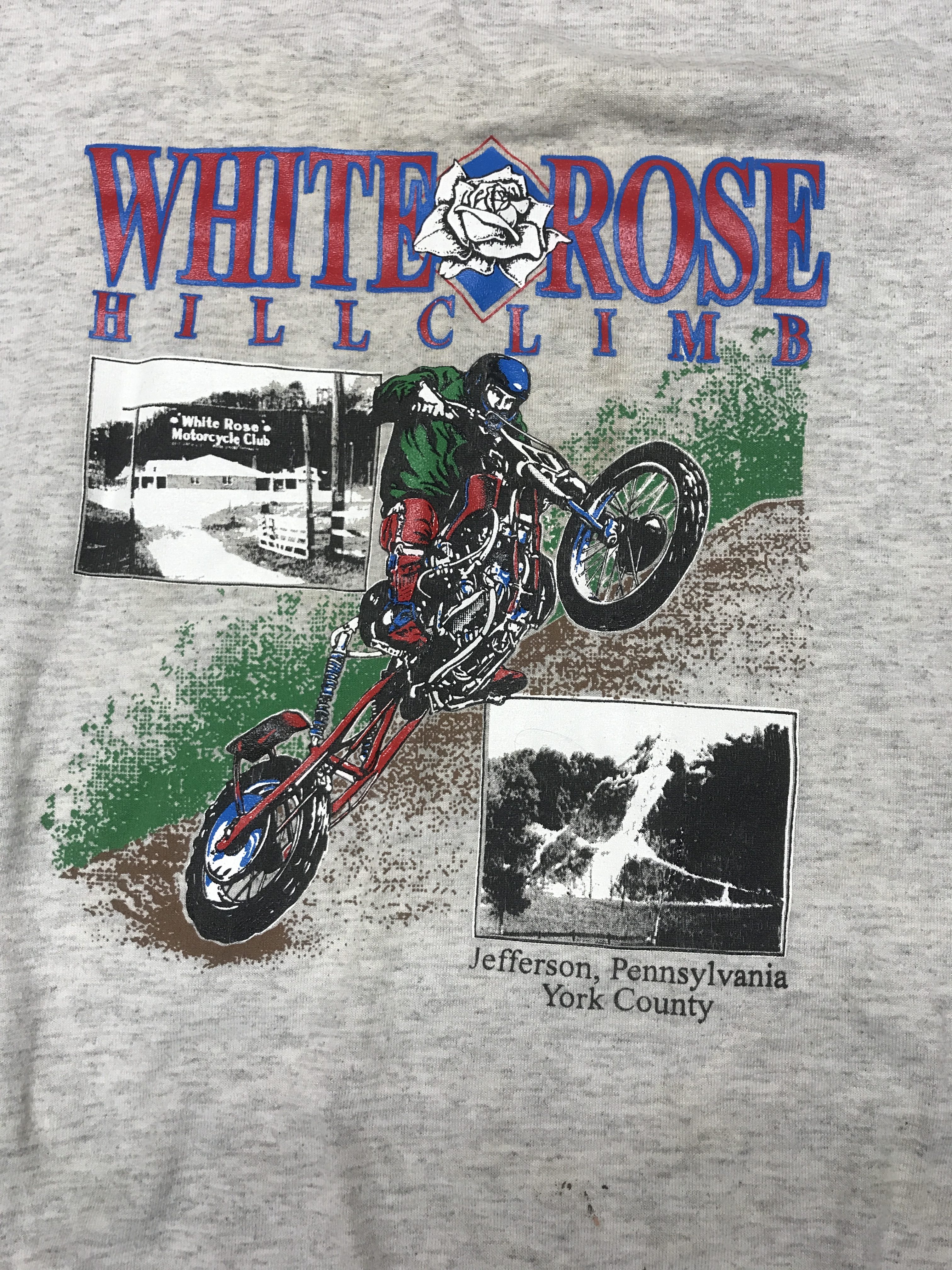
At this point, well-kept motorcycle event t-shirts from the 1970s through the ‘90s have been worn thin on the ground. Some were donned regularly over the decades and inevitably reduced to shreds before being relegated to shop rag and finally getting binned. Others were saved for special occasions, then crisply folded and put away until next year’s big event.
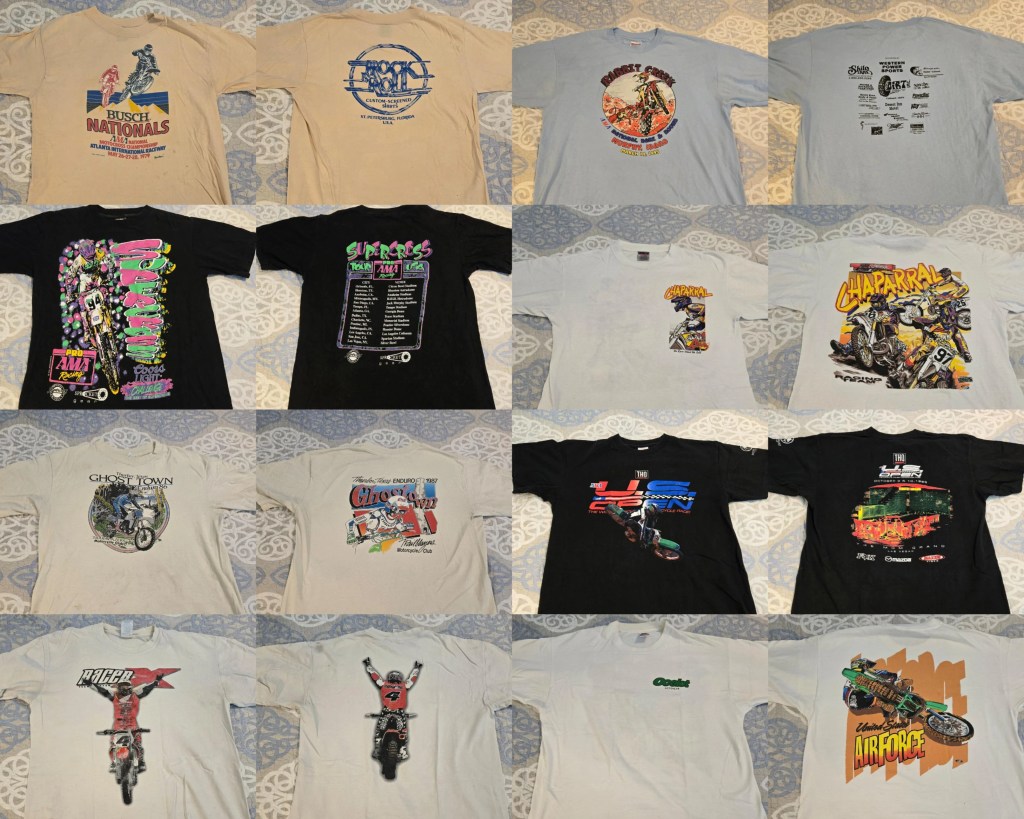
This either/or scenario is exemplary of motorcycle racing’s common thread woven from grit to glamour: Tough people straddling dangerous machines would do battle after donning logo-soaked and rainbow-blasted gear. In solidarity, fans bought into that brash flash with equally loud event t-shirts loaded with glory days branding from long-gone stadiums and sponsors that time has nearly forgotten.
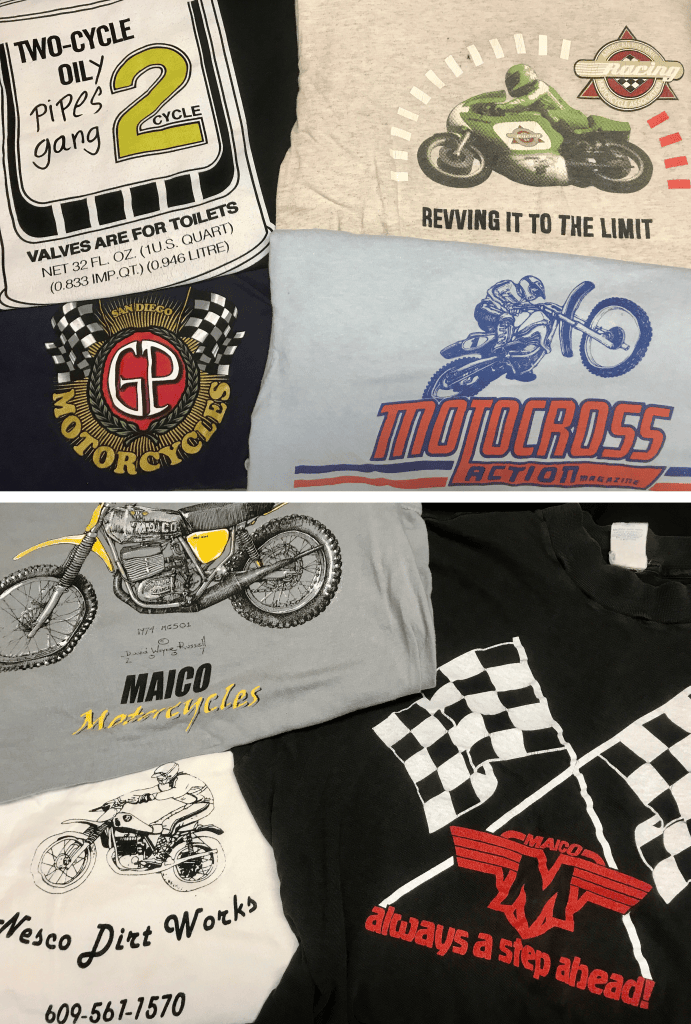
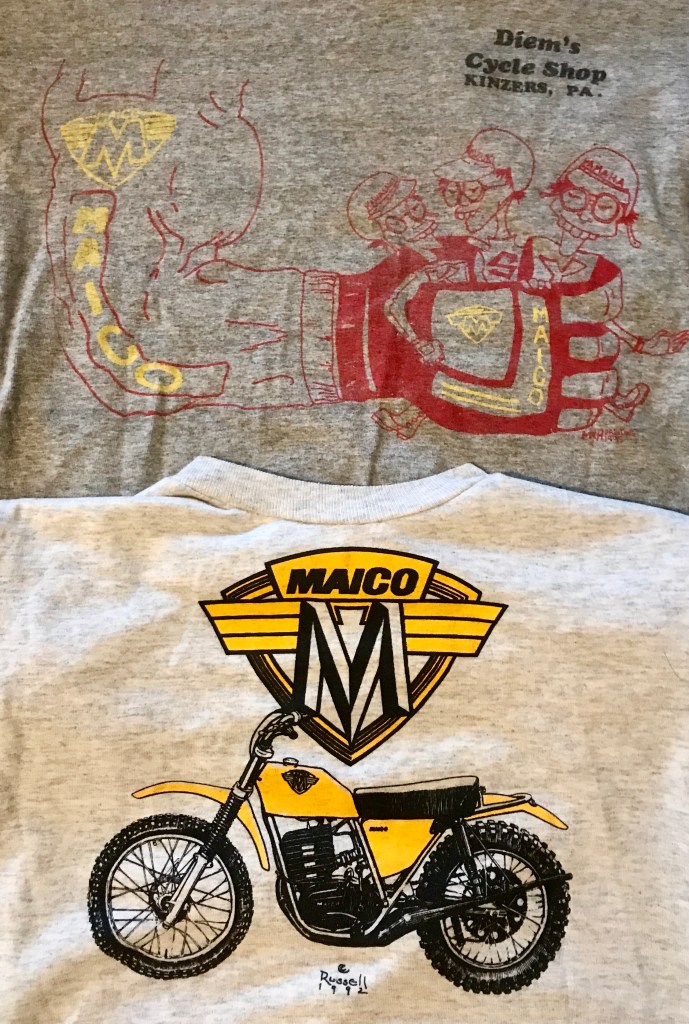
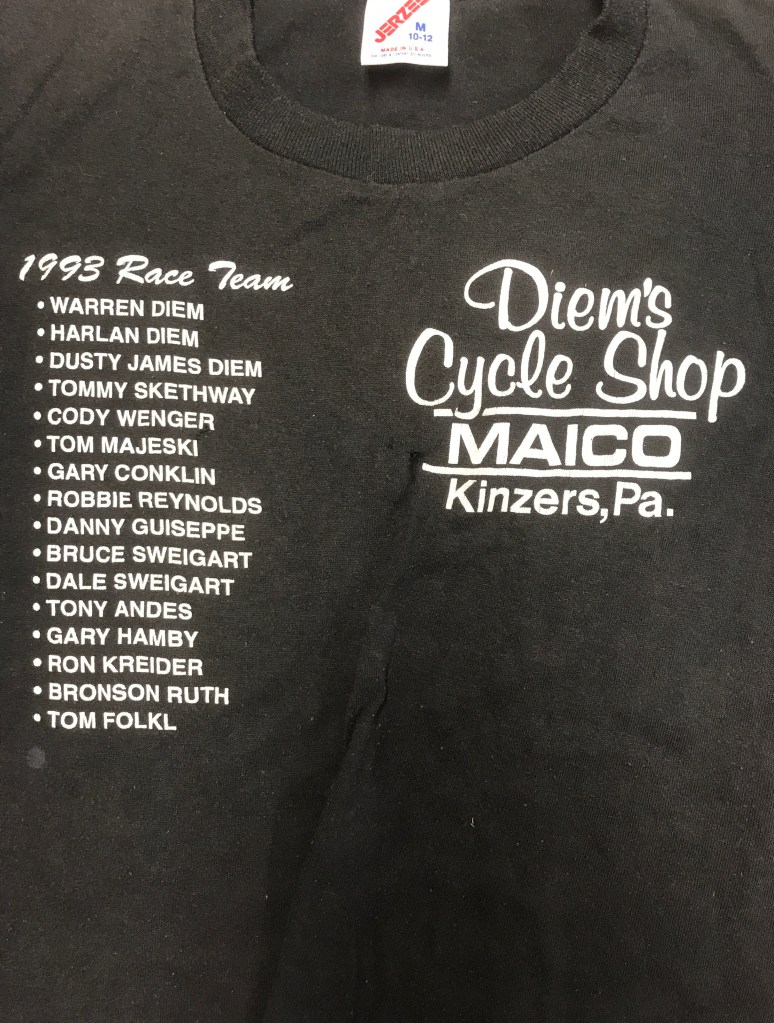
These very shirts were simple things in their time and a means of “proclaiming one’s loyalty to a particular brand of machine,” as Maico historian David Russell wrote in his treatise on tees. These items now exist as important cultural throwbacks that can still stop onlookers in their tracks: “Hey – cool shirt. What year’s that from?”
Well… I’m glad you asked.
Rub Some Dirt On It
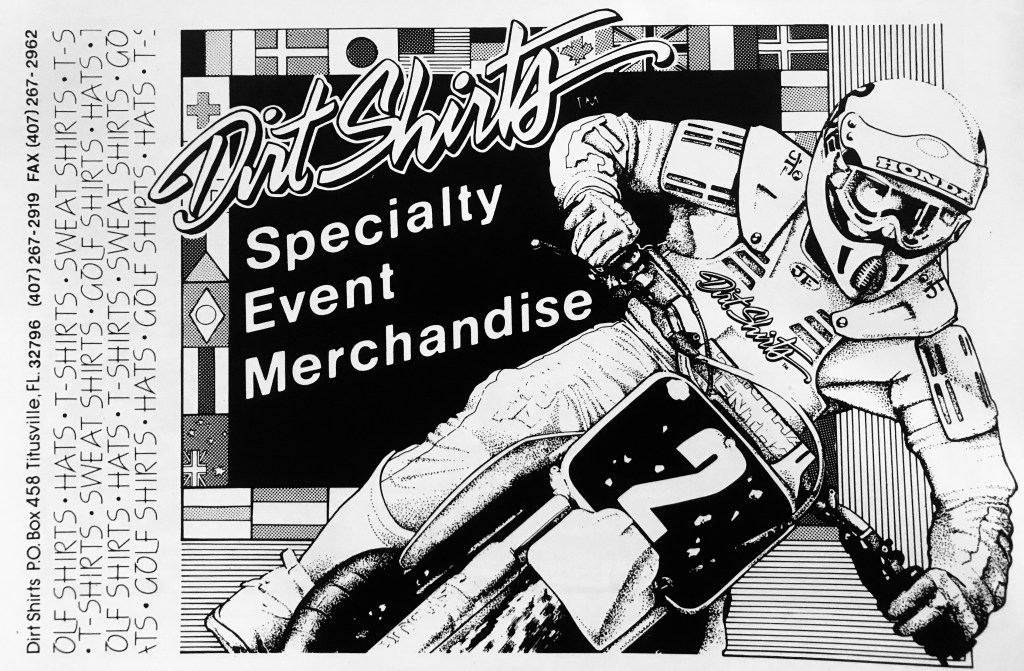
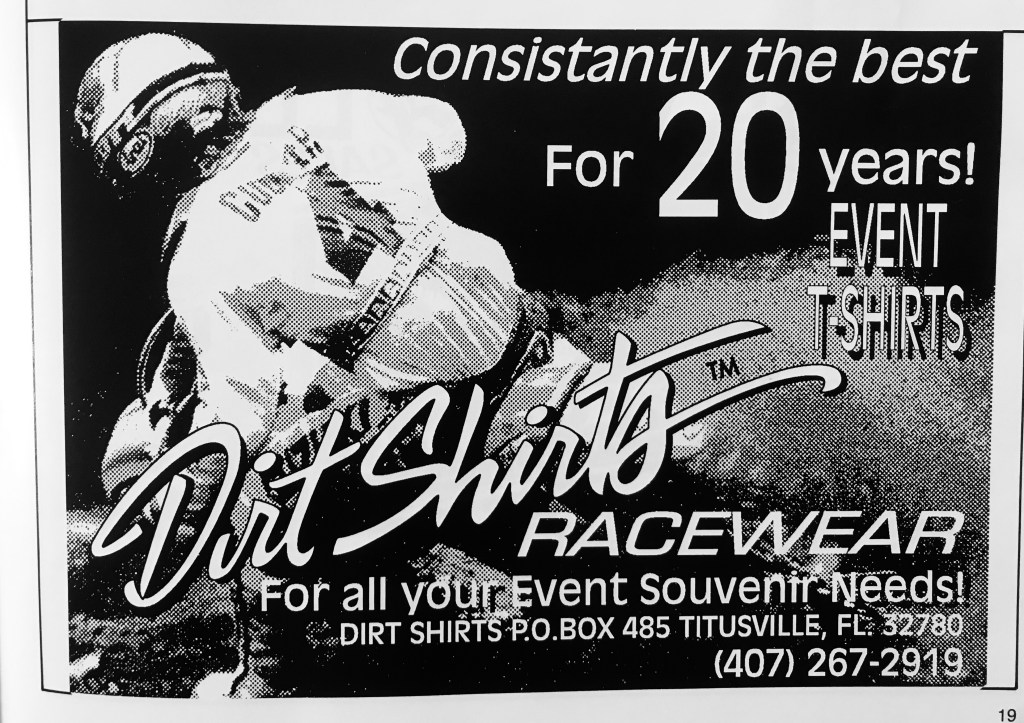
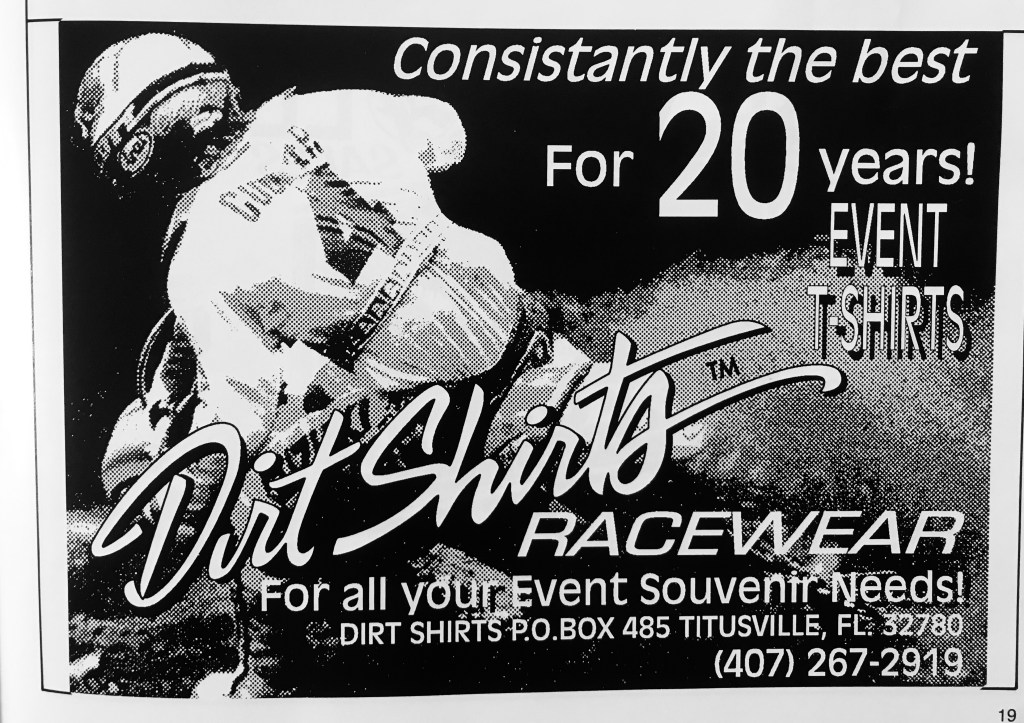
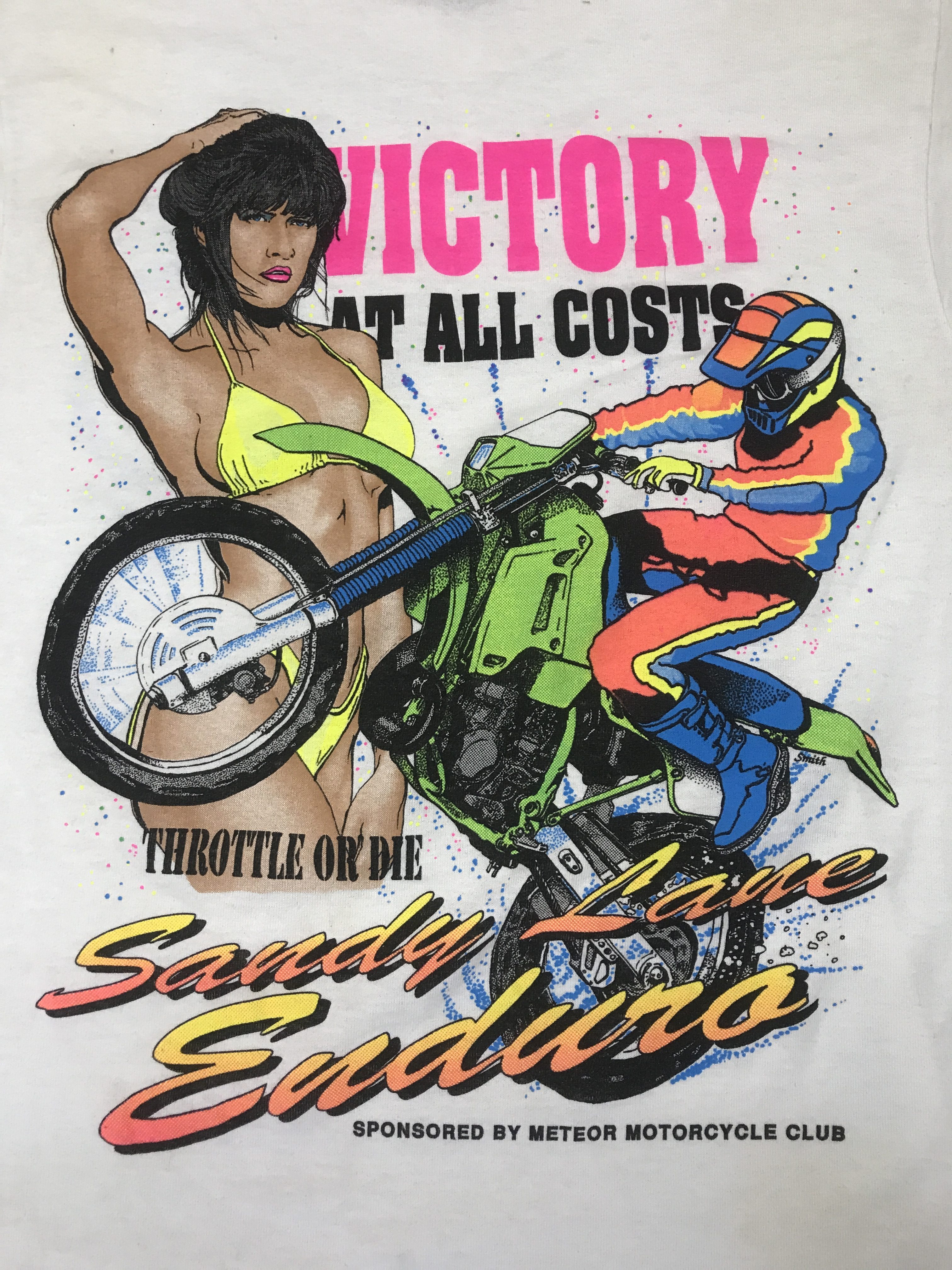
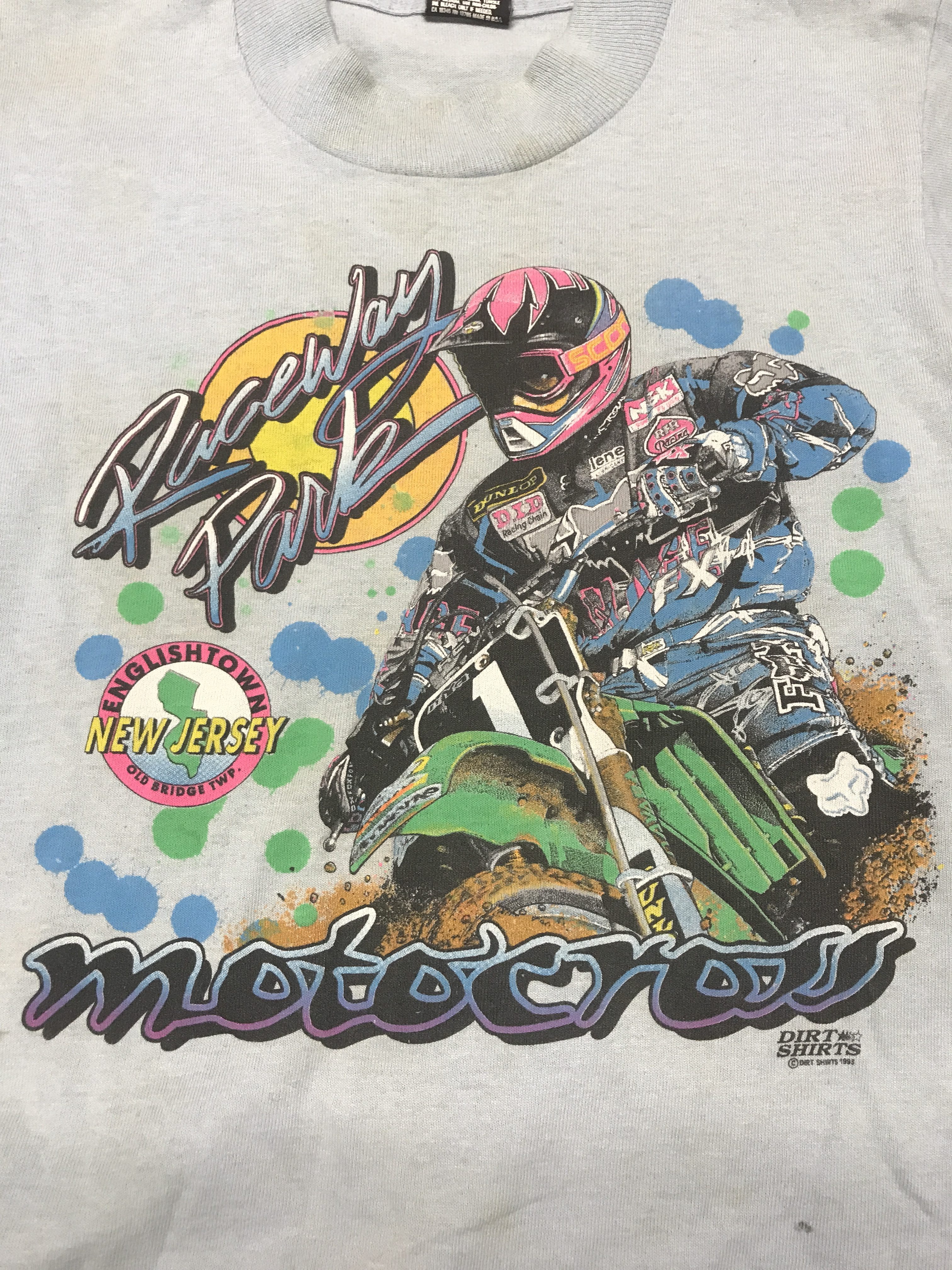
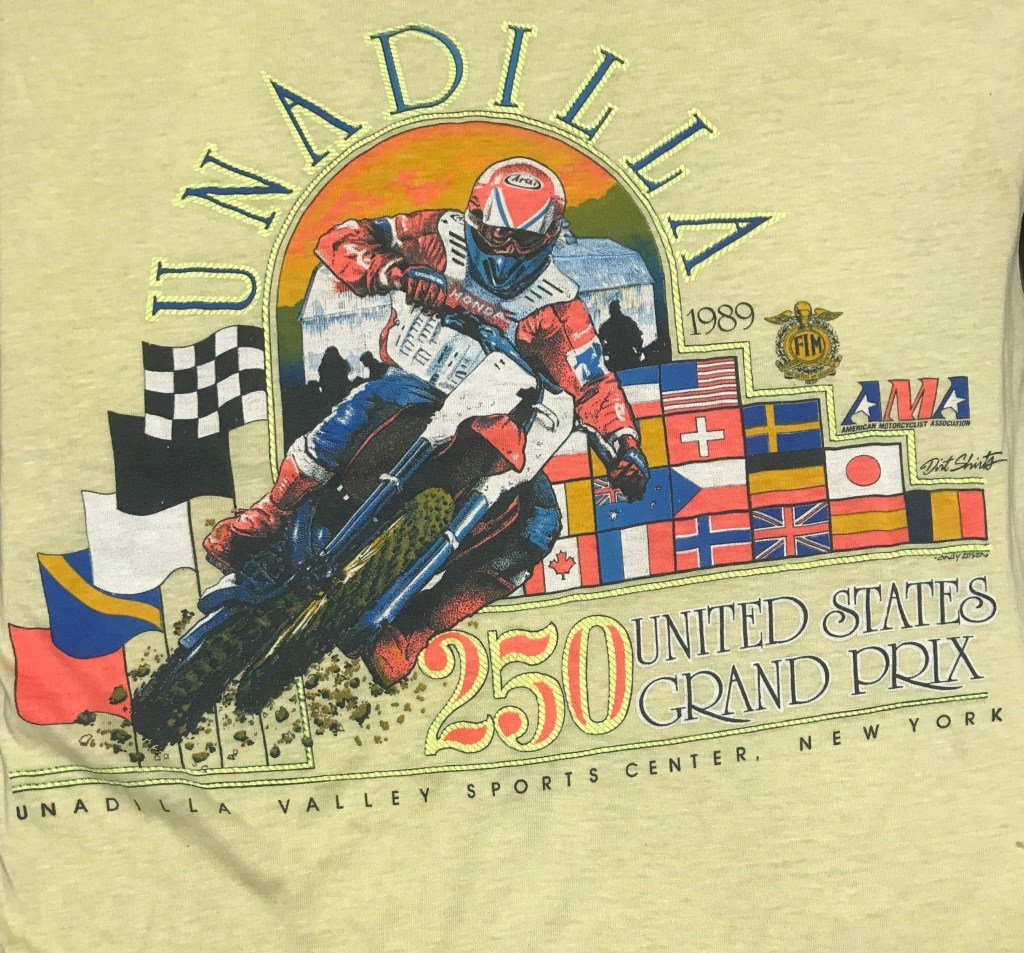
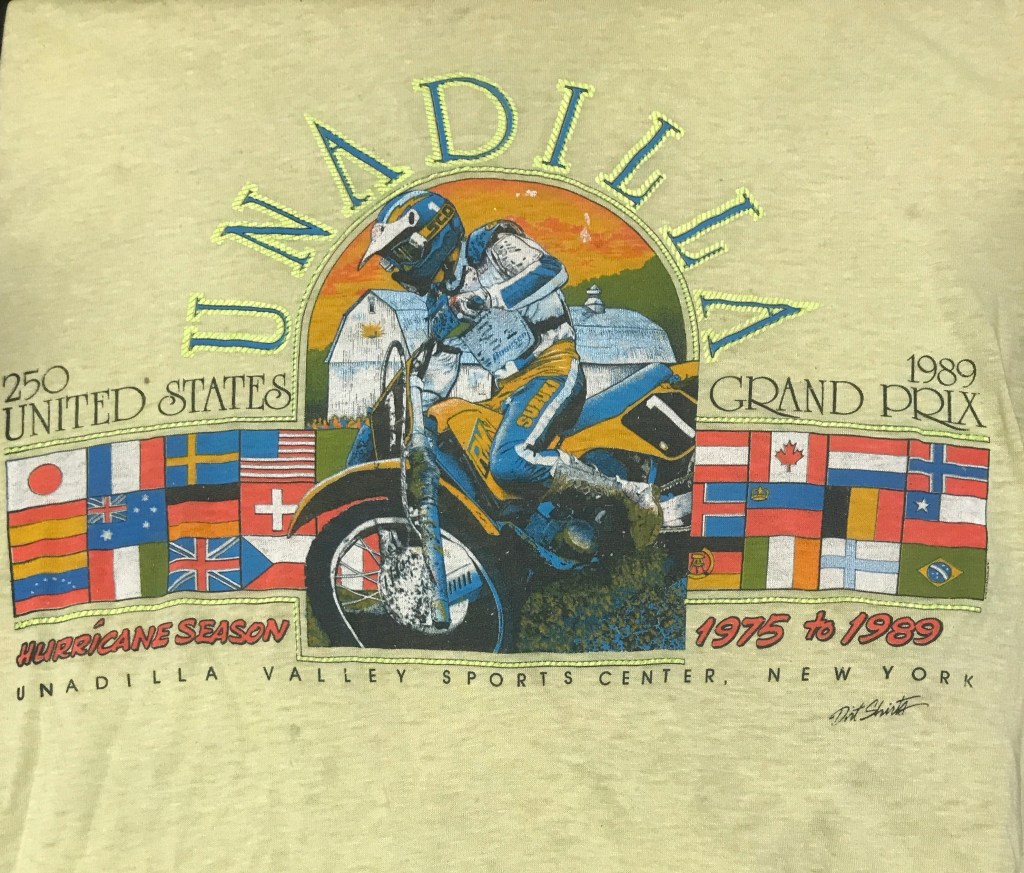
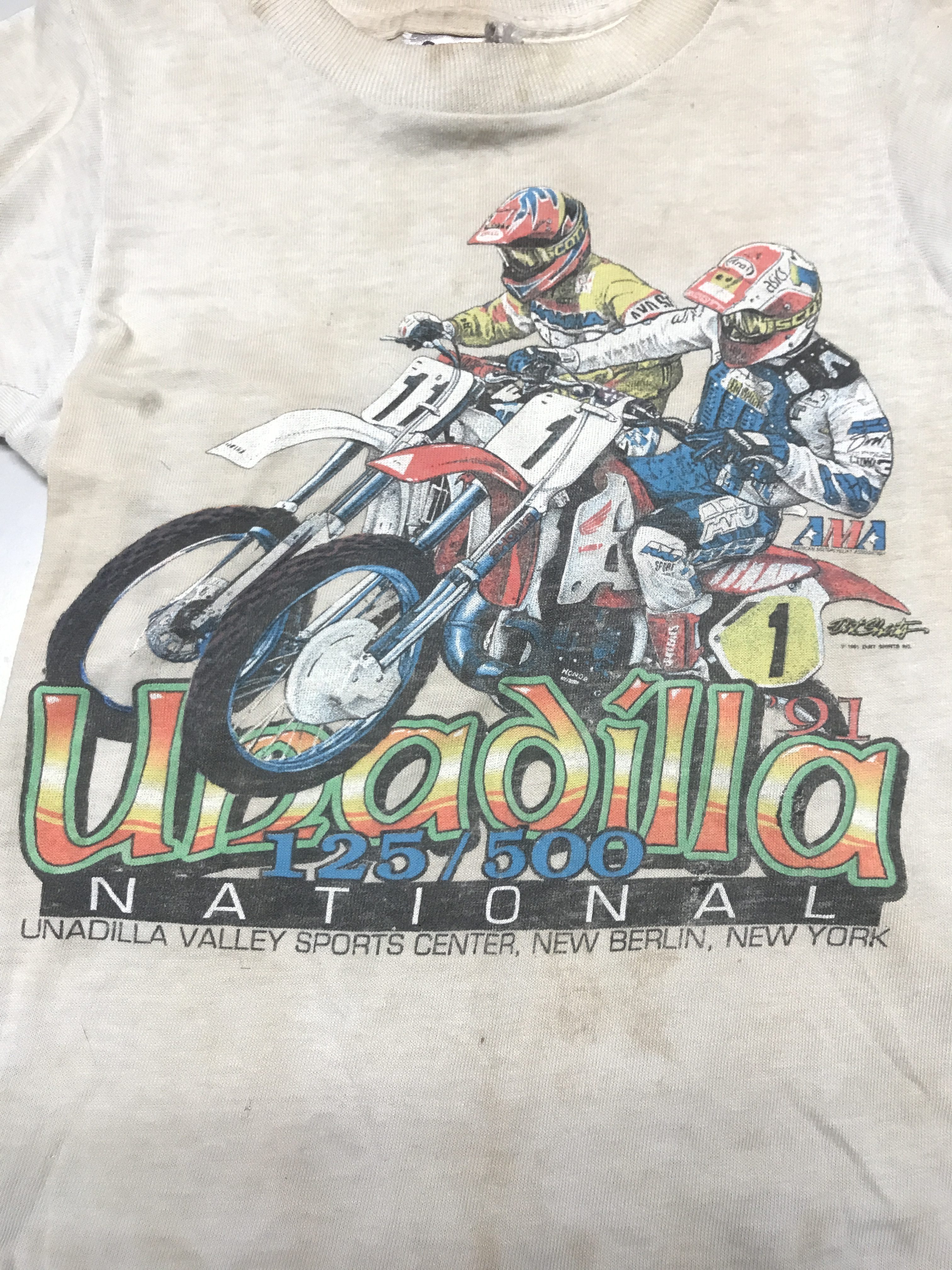
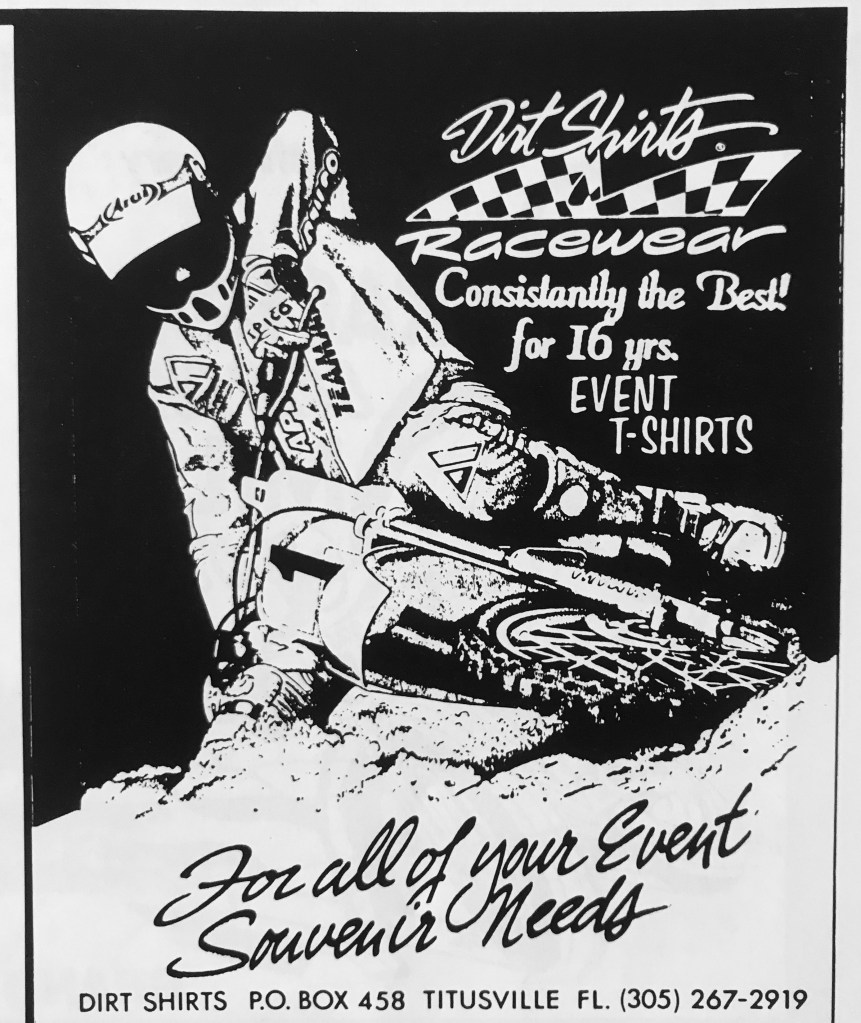
There was arguably no larger player in the event apparel arena than Dirt Shirts International, which operated for some three-plus decades out of Florida beginning in the 1970s. Early promotional material from 1978, with Charles Adams listed as president, touts the company and their “highly detailed sport action designs. The “skilled art department” was “fast, reliable and courteous” utilizing “special coloration techniques” when their direct-screen prints, and “not transfers,” were affixed to fabric.
Former industry employees recalled working at a different contemporary Florida print shop – with ink, presses, film and shirts everywhere – where they “pumped out a lot of volume.” To put product runs into perspective, they recalled producing some 10,000 NASA-branded t-shirts for John Glenn’s 1998 space flight out of Kennedy Space Center when the Mercury-era astronaut was 77 years old. The shirt in question was a six-color print crafted by former graphic design contributor Amy Zofko. “They did all the space/NASA shirts. They did a lot of dirt bike/rally shirts. They were real popular; they had the automatic presses and the big dog stuff,” one former employee, whose mother worked at Dirt Shirts, said.
‘All you had to do was give them some ideas and they would develop a concept. They were very easy to work with and very reasonably priced.’
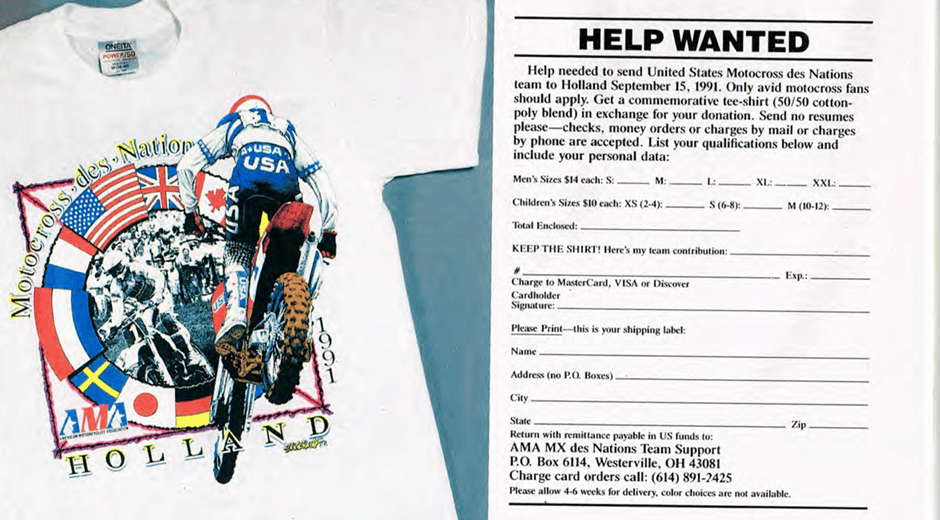
Dirt Shirts’ former “Space Coast” headquarters in Titusville, Florida was a stone’s throw shy of the Kennedy Space Center, which made the bleed over into shuttle launch and airshow garments (not to mention design work for Ron Jon Surf Shop in Cocoa Beach) a good fit. The company’s roots in the sandy soil of the Sunshine State were on display again when they produced a strong-selling charity benefit shirt in response to massive wildfires in central Florida that forced the postponement of a July 4th race at Daytona International Speedway – which Dirt Shirts had naturally also produced a run of tees for. “It’s a gesture of appreciation for true heroes,” Adams told the Orlando Sentinel in 1998. By the early 2000s, the company had re-branded itself as “Designs Alive USA,” which was highlighted in an article on an aerospace trade show. In a vein similar to the Florida wildfire fundraiser tee, Dirt Shirts was credited with the design for a commemorative shirt sold to support American riders as they sought to compete in the 1991 Motocross des Nations in Holland. As the advertisement on page 28 of the September 1991 edition of Dirt Bike magazine notes, “only avid motocross fans should apply,” with their $14 being sent to the then-AMA headquarters in Westerville, Ohio.
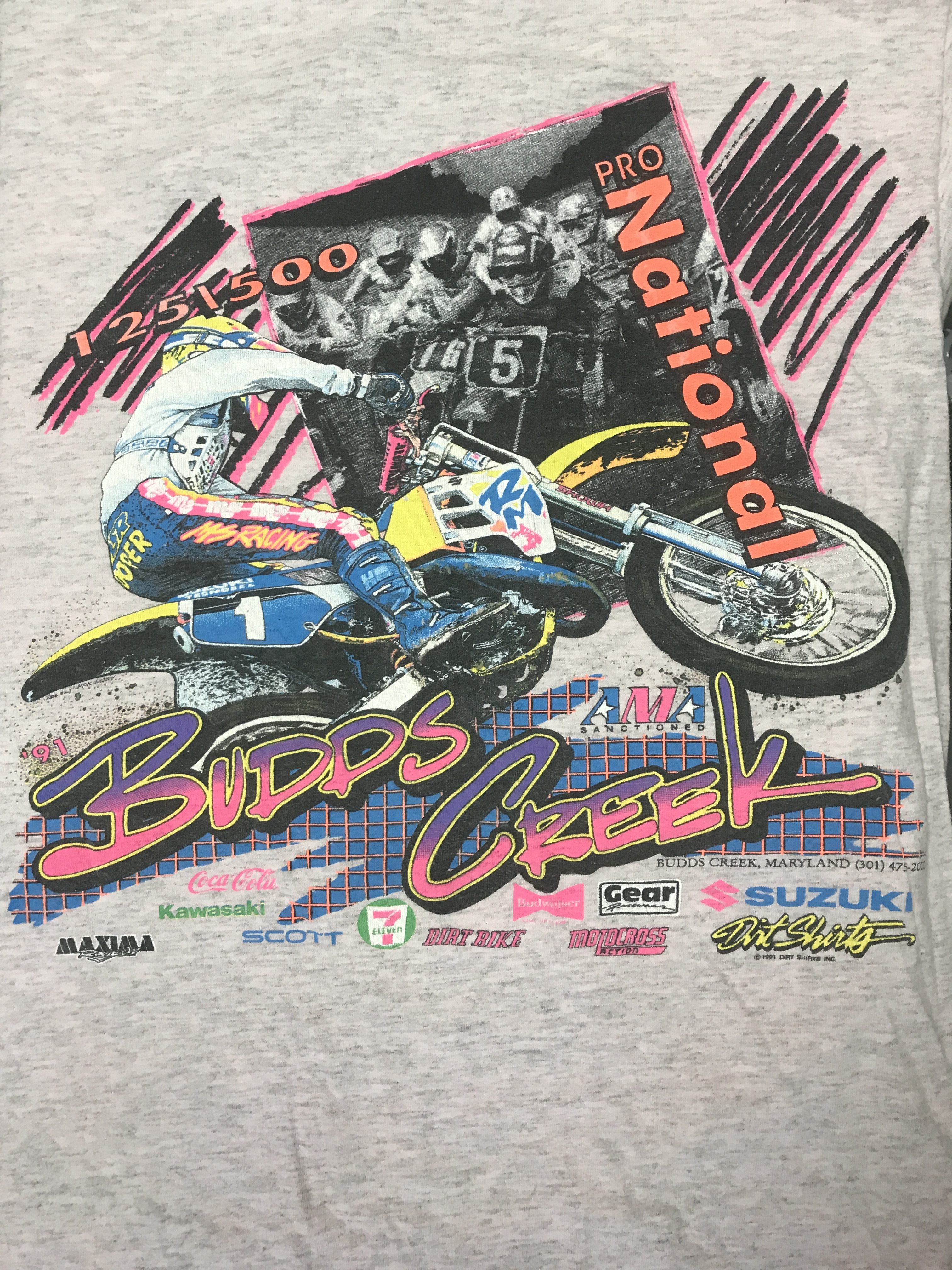
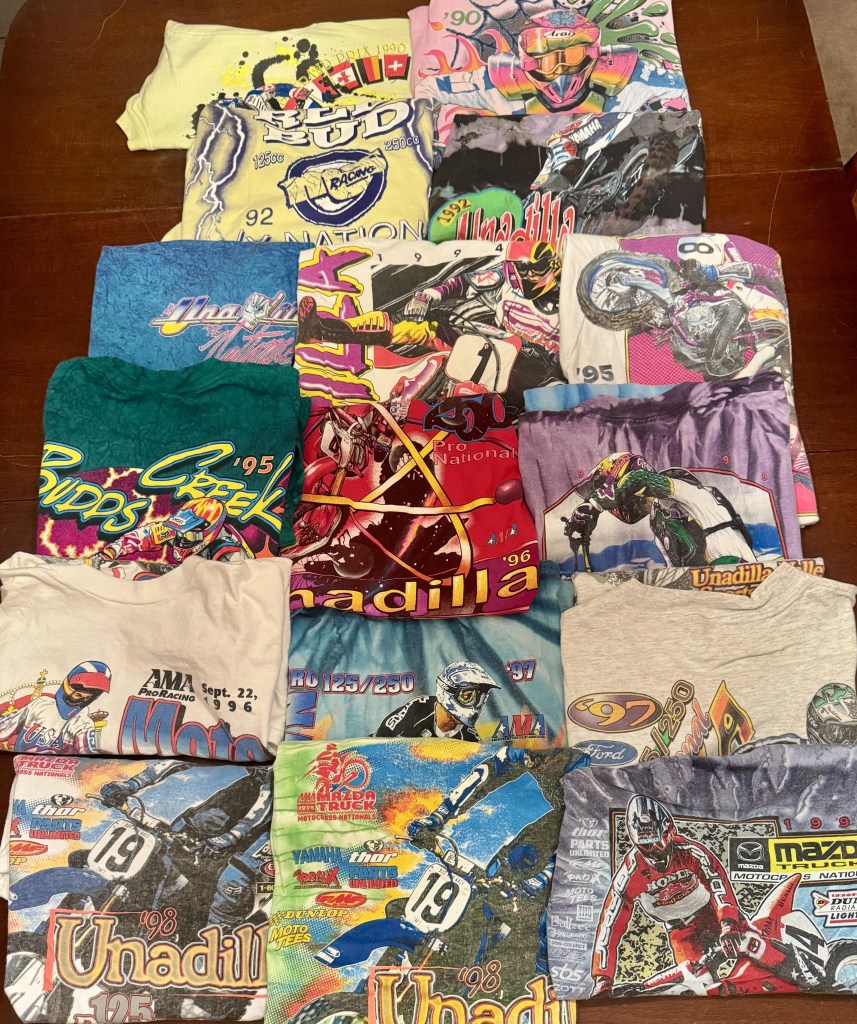
One former Dirt Shirts client, who connected with the company in the mid-1980s to produce the first-ever event tee for a long-running regional enduro competition, recalled their art department as being “super easy to deal with,” the club’s long-time trail boss said. “All you had to do was give them some ideas and they would develop a concept. They were very easy to work with and very reasonably priced.” At larger national motocross races, such as those at Maryland’s Budds Creek or Southwick in Massachusetts, he added that Dirt Shirts booths with designs for that very day’s race were regularly up for grabs (see the 7:48 timestamp here for a booth at Unadilla in 1990).
Worn and Torn
Rich Dombey, who for the past 16 years has done all the design and merchandising work for the Legends and Heroes of Motocross tour, was a “budding artist” in 1979 when he launched a custom vehicle lettering and signage design company. As a gear head and race fan, he “couldn’t get enough” of what Dirt Shirts was doing throughout the 1980s and borrowed some bits of their “second-to-none” layout, lettering and composition when doing work for his own company. “I was turning out all this amazing work thanks to the inspiration that I was feeding off of,” he said of that finest form of flattery.
Dombey, in a maybe-meet-your-heroes encounter, would eventually be introduced to Adams, the former Dirt Shirts president. The encounter at Unadilla was thanks to a marketing chief at New Jersey’s Raceway Park – former home of NHRA Summernationals drag racing and a great place to see Dombey’s decades of logo, lettering and signage handiwork. “We became somewhat of friends,” Dombey said of Adams. “I learned a lot just from having a conversation with him and how they produced their designs.” He noted that “not many realize that all their art was hand-drawn” and the color separations for each of the inks were hand-cut by Dirt Shirts employees from Rubylith, a type of two-layer transparent masking material. “Each shirt must have had 50 to 60 hours in each design.”
Dombey purchased some 300 original Dirt Shirts tees over the years and has stored them away in plastic container bins. “Some are still in the original bags. When you open the lid of the bin, the smell of silk screen ink just fills the room.” Many moons ago while vacationing in Florida, he stopped by the old business address in hopes of checking in with his old friend and source of artistic inspiration. A “CLOSED” sign met him at the door; Dombey was “absolutely crushed” to have missed the connection. At present, he’s cataloging his personal collection for a spiral-bound book that will display the front and back prints adorning his hundreds of Dirt Shirts tees.
Looking Forward, Throwing Back
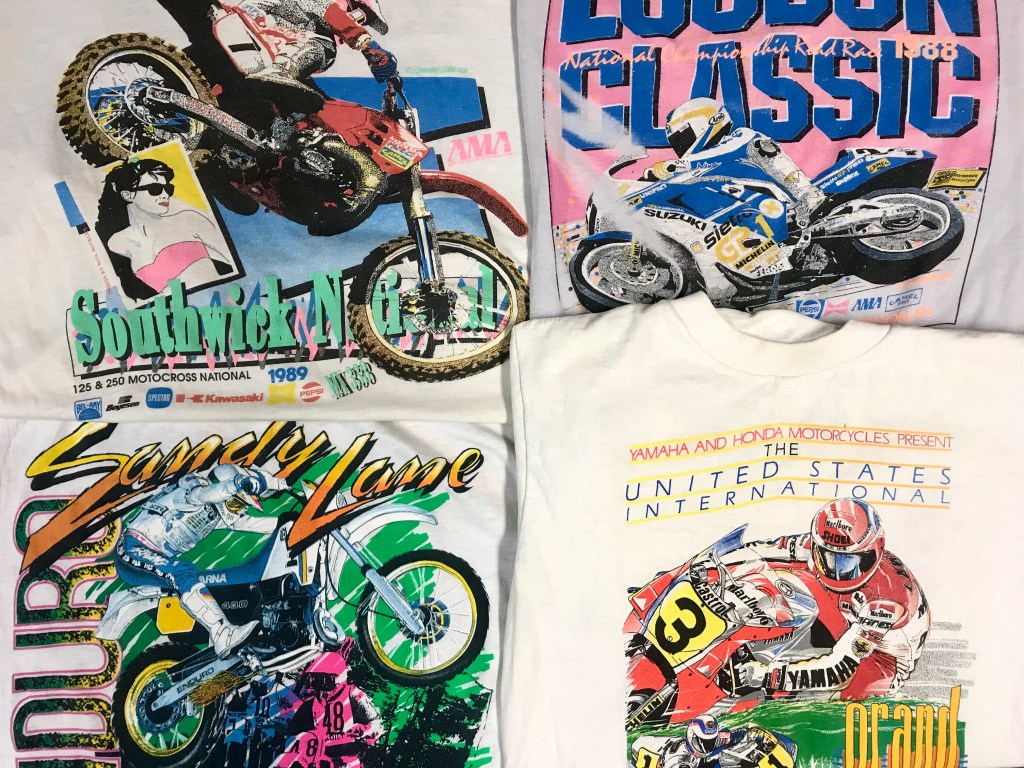
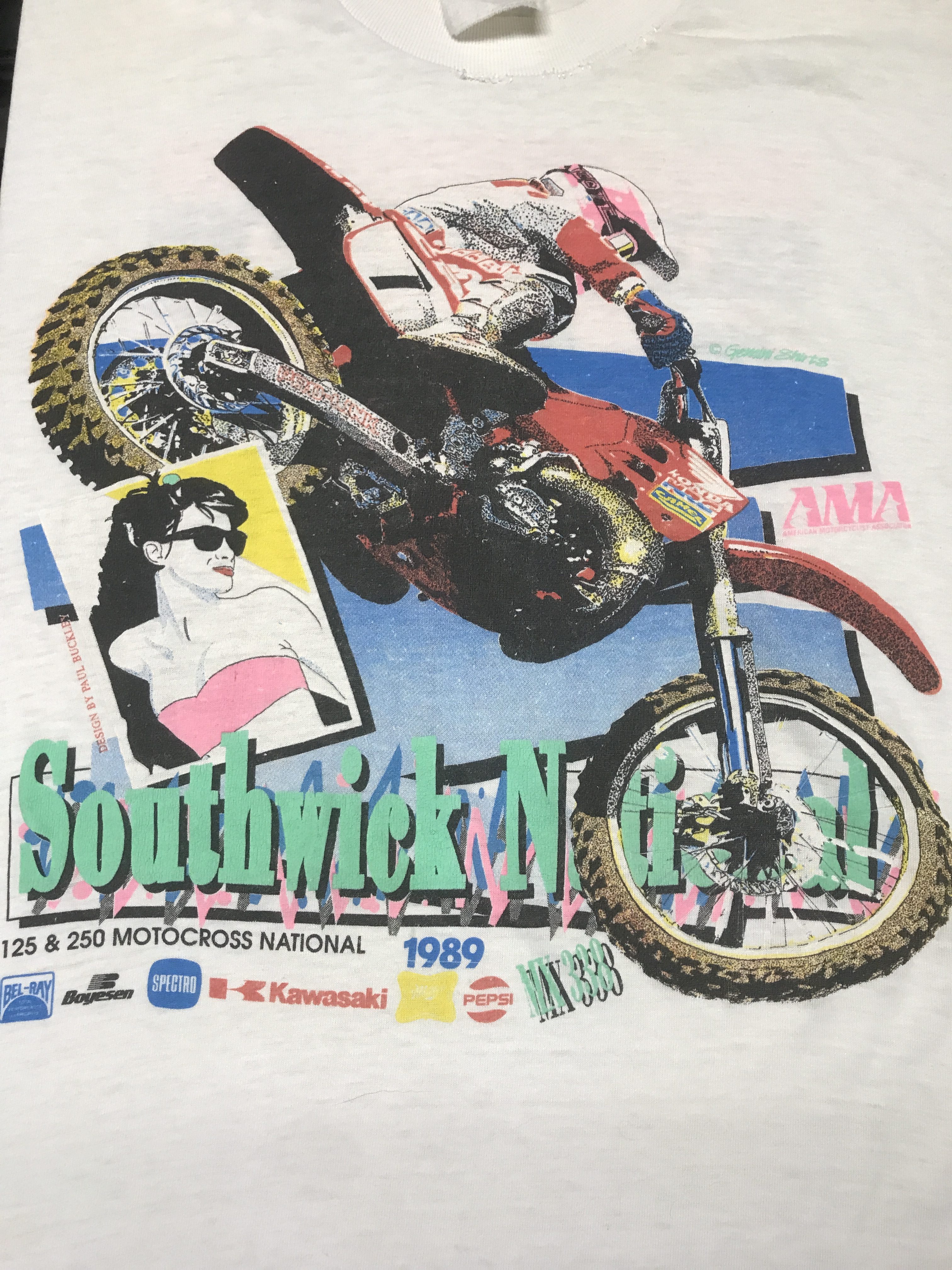
Dirt Shirts was hardly the only outlet producing vivid tops for exciting events. Other credits include offerings from capitalization-prone AXO, XTREME, JT USA and TURN One among others. A personal favorite from Southwick’s 1989 pro national 125/250 race features a photo by legendary New England motocross photographer Paul Buckley. The design by Gemini Shirts features an airborne Honda CR against a classic cassette tape-era color palette and “new wave” interpretation of a girl with a high ponytail and Ray Ban sunglasses interlaced against geometric shapes.
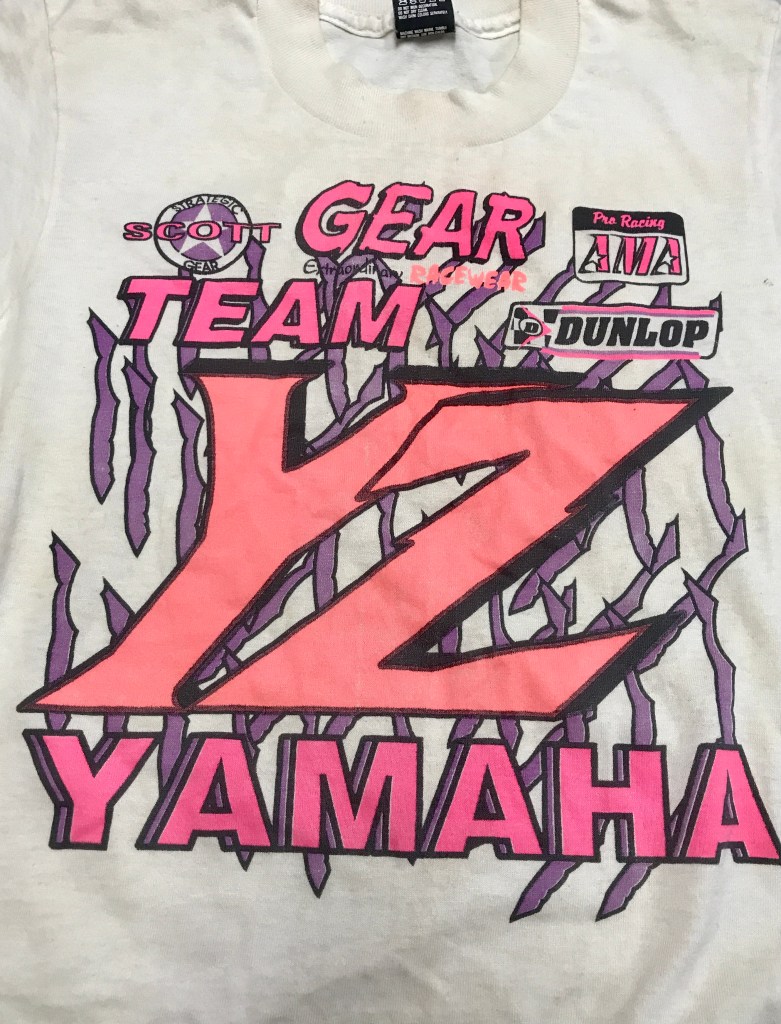
In a 2021 PulpMX.com retrospective on 1980s and ‘90s gear lines, writer Tony Blazier commented that the masculine majority of motocrossers generally “have no problem showing up to the track in a set of skin-tight Day-Glo pink pants.” Race day fashion, which would look “completely absurd in nearly any setting other than a motocross track,” Blazier wrote, “is just weird like that.”
Current-day companies like Dirt Studios and White Knuckle Motorsports have stepped up to fill the flashy neon void and captured this visual interpretation of very specific points in time and place to a (pardon the pun) “tee.” Offerings from either brand incorporate many of the block and sharp shape-heavy Mondrian and Memphis design elements seen on popular prints from the 1980s and ’90s. This accuracy continues right on through to the emulation of early 2000s Frutiger Aero and Y2K-inspired exhibitions, with swirling and swooping letters conveying playful possibilities.
But what separates quality new stock, with a boxy fit and beefy high-rise collars, from the old and rare time capsule – and is it worth getting all torn up over? For those who appreciate prized pieces of preservation, nothing but true vintage will do and that’s where the common thread guides us next.
A Stitch in Time
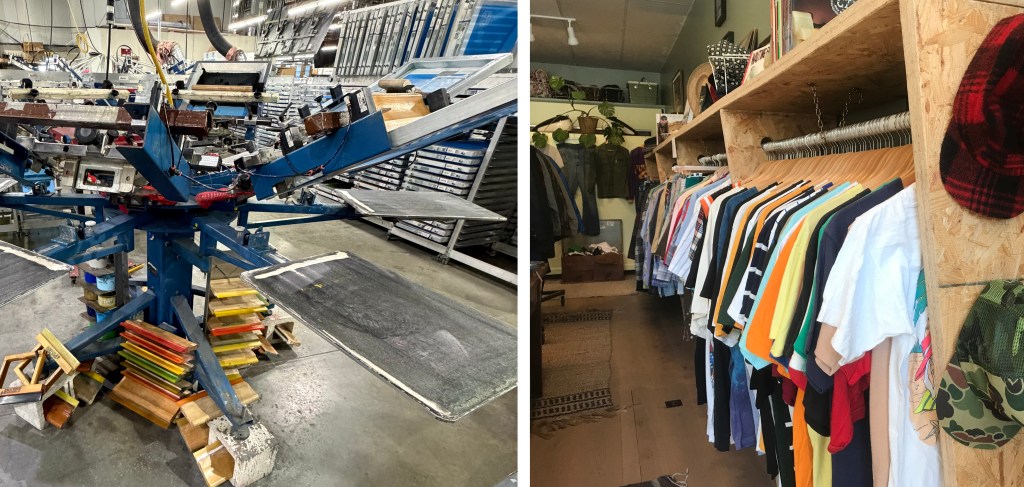
Sean Magee, who runs Collingswood, New Jersey’s Odd Folk vintage apparel shop with partner Rachael Smith, is also an avid motorcyclist. For the store to truly provide vintage clothes, his self-imposed cut-off is 2001 at the 25-year mark. “They aren’t making any more of this shit,” he joked of the durable denim jackets, Screen Stars-tagged old tees and camo trucker caps. The Daytona Beach native’s first motorcycle simply “had to be a Harley” and a 1980 H-D Shovelhead helped to fulfill the personal prophecy. Still, Magee is a multi-disciplined rider with experience with everything from BMX racing to off-road trail rides and the aforementioned H-D street touring.
“Riding bikes the way that I did for so long, and just trashing clothes and not having a ton of money, I gravitated toward vintage” and it’s there and then that he started to realize that older apparel simply lasted longer than their contemporary counterparts. “It’s the way cotton was grown and milled. It’s the textiles themselves,” he said. “Shirts now that start soft are just ‘done.’ It’s like we’ve manufactured out the ‘wear.’ I want to be able to wear something new and wear it in myself,” he said of brand-new items where the production process has been optimized to such a fine point that we have essentially traded earned longevity for immediate comfort.
‘Looking at vintage moto shirts makes you realize how dull everything is now. The amount of time and effort that were put into vintage moto designs will never be replicated.’
A good enough graphic hung on the official merchandise rack inside the venue – and the herd of crappy counterparts slung on the street by scalpers next to the stadium – will keep some kid happy or serve as a decent souvenir. Maybe that’s all these items are meant to be then; a token to say “I was there” until that memory doesn’t matter anymore? It’s right at this moment – when the original owner is ready to donate it to the local thrift store – that inherited nostalgia comes full-circle as someone younger can’t take ownership of these common threads fast enough.
Just as millennium-era gear has come back around to have its day, the latest crop of shirts will certainly see their own era of scarcity and desirability. Thing is, these direct-to-garment prints or heat transfers seem to so rarely measure up to a good old single stitch, Skimmers tag, 50/50 cotton and polyester blend tee, which online vintage tee authority Defunkd notes as the 1980s norm. But why?
“Looking at vintage moto shirts makes you realize how dull everything is now. The amount of time and effort that were put into vintage moto designs will never be replicated. Each piece was real, hand-drawn, and entirely unique,” an online commentator and collector said. Further refusing to mince words: “Modern day dirt shirts are absolute fucking garbage from the designs down to the quality of the shirts they are printed on.” It’s also why some of us, who might not have even been alive for the race day printed on the vintage shirt, will pay many pretty pennies for a well-kept example in their size.
Hidden By Rags
As another dirt bike shirt collector and graphic designer offered, the artists who “used to hand-draw each design have been replaced with computer-based graphic designers and that ‘old school’ look is just hard to replicate digitally. Not impossible, but it takes a really talented artist to get that same look,” he said, adding that the price of doing this right adds up fast with decent shirt blanks, screen printing chops, shipping and all the other ancillary details of running a cottage industry out of the local boutique.
Personally, this path began as an interest in old band shirts – something sold on tour at the merch booth by bands long since broken up – and eventually grew to include vintage motorcycle shirts that would occasionally pop up on eBay for comparatively less eye-popping prices. Like anything else sub-culture-related, this anorak behavior is all a matter of taste not worth boring strangers with until striking up that unexpected conversation.
“Hey – cool shirt. What year’s that from?”
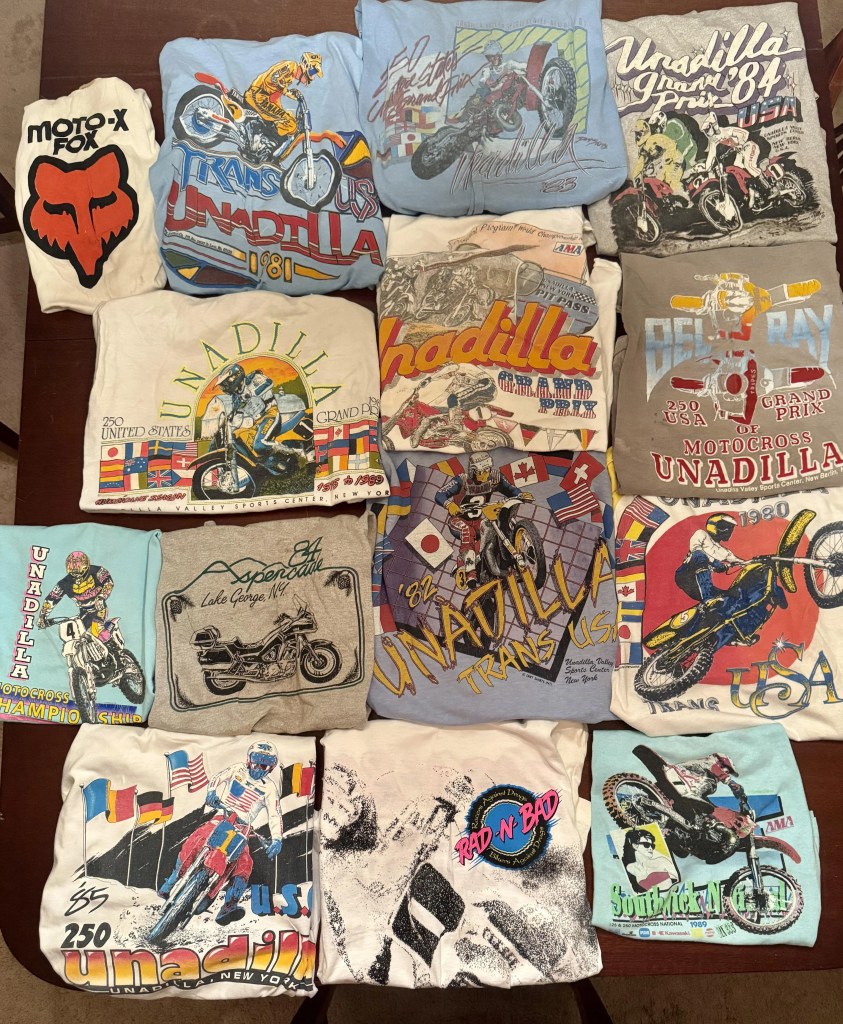
Well… since you asked, it’s Unadilla ‘82, Laguna Seca ‘89, or Daytona ‘87. You’re right, I wasn’t at that race. But I wish I had been – and that’s the real common thread running through these old rags as it joins generational seams.
- If you enjoyed this article: My debut non-fiction book, Twilight of the Gods: Vintage Motorcycling’s Race Against Time, investigates classic motorcycle culture in a contemporary setting as it faces changing demographics, harsh economics and rapidly advancing technology.
Photo Gallery
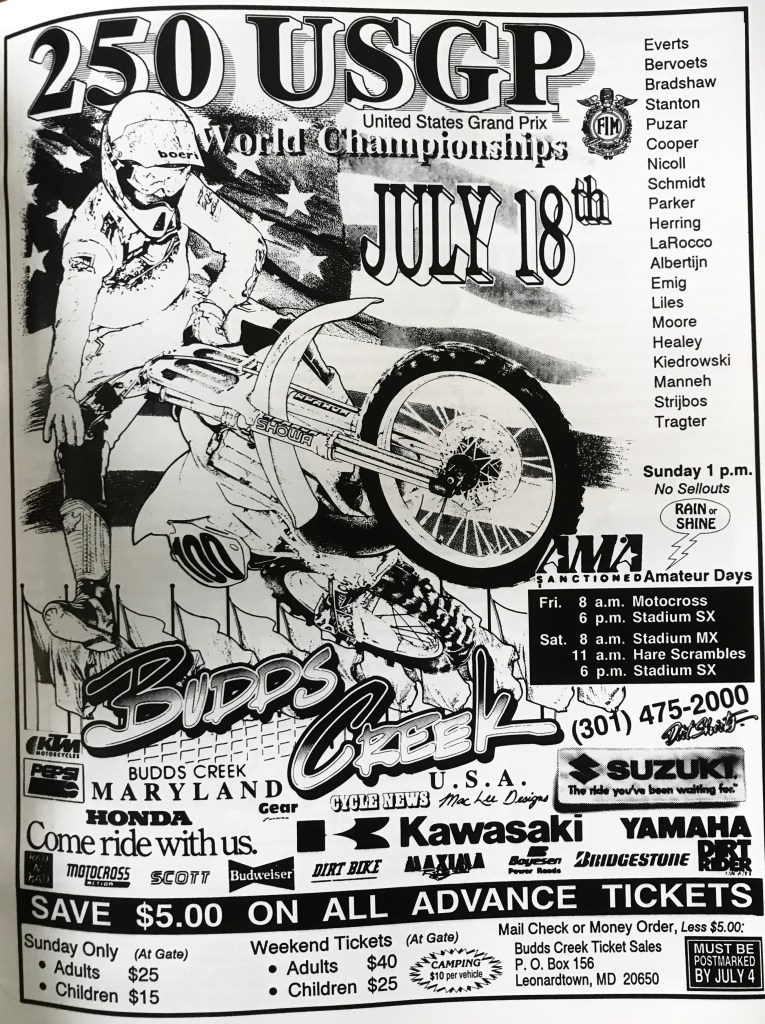
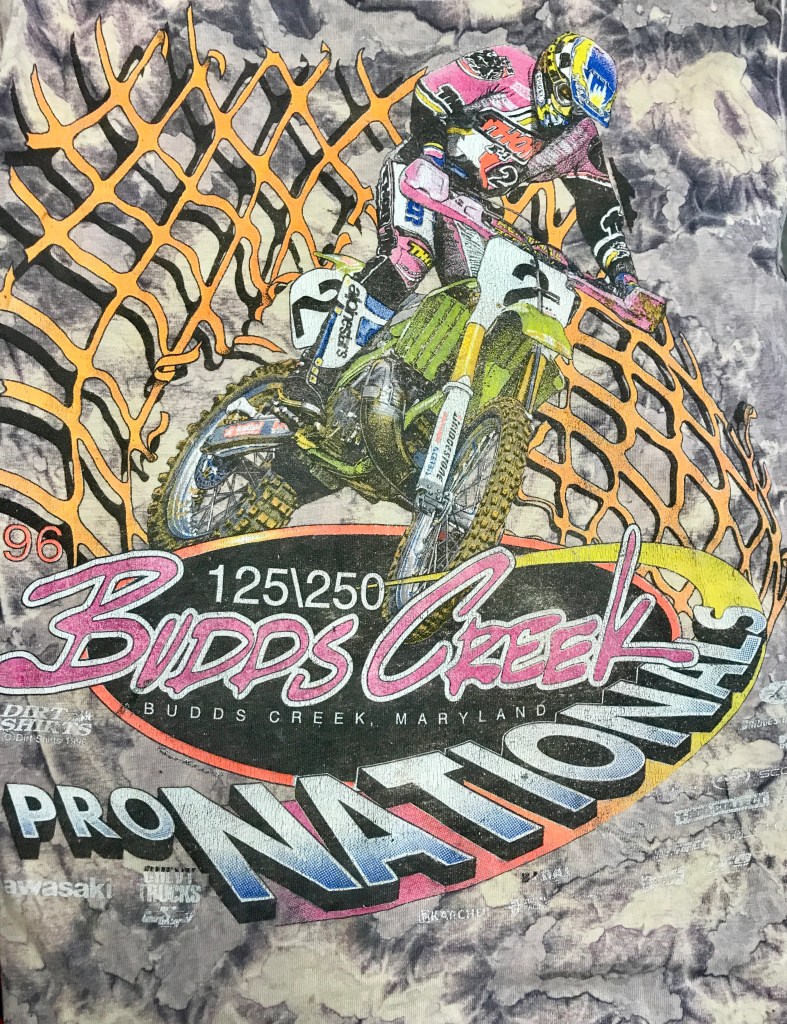
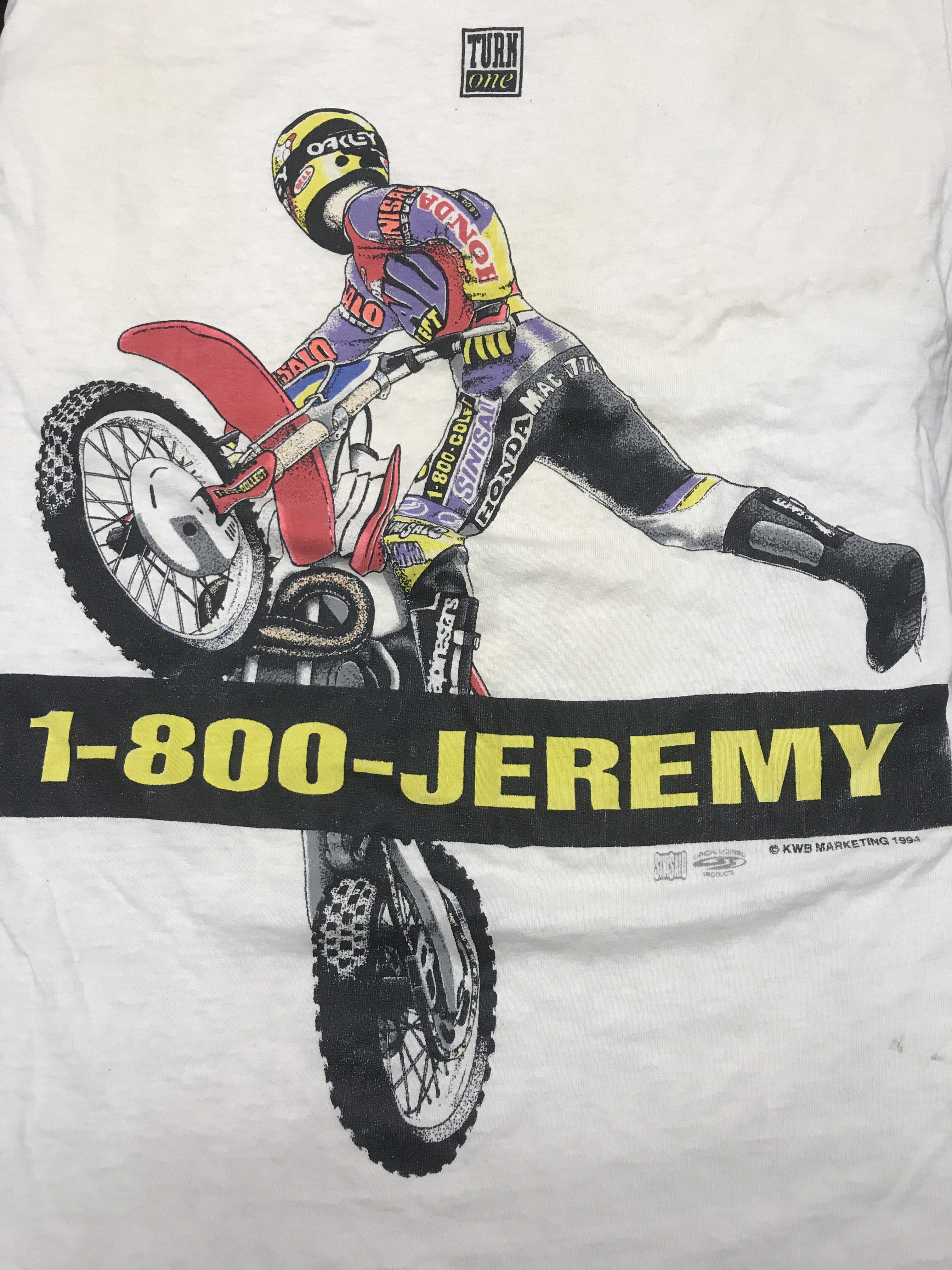
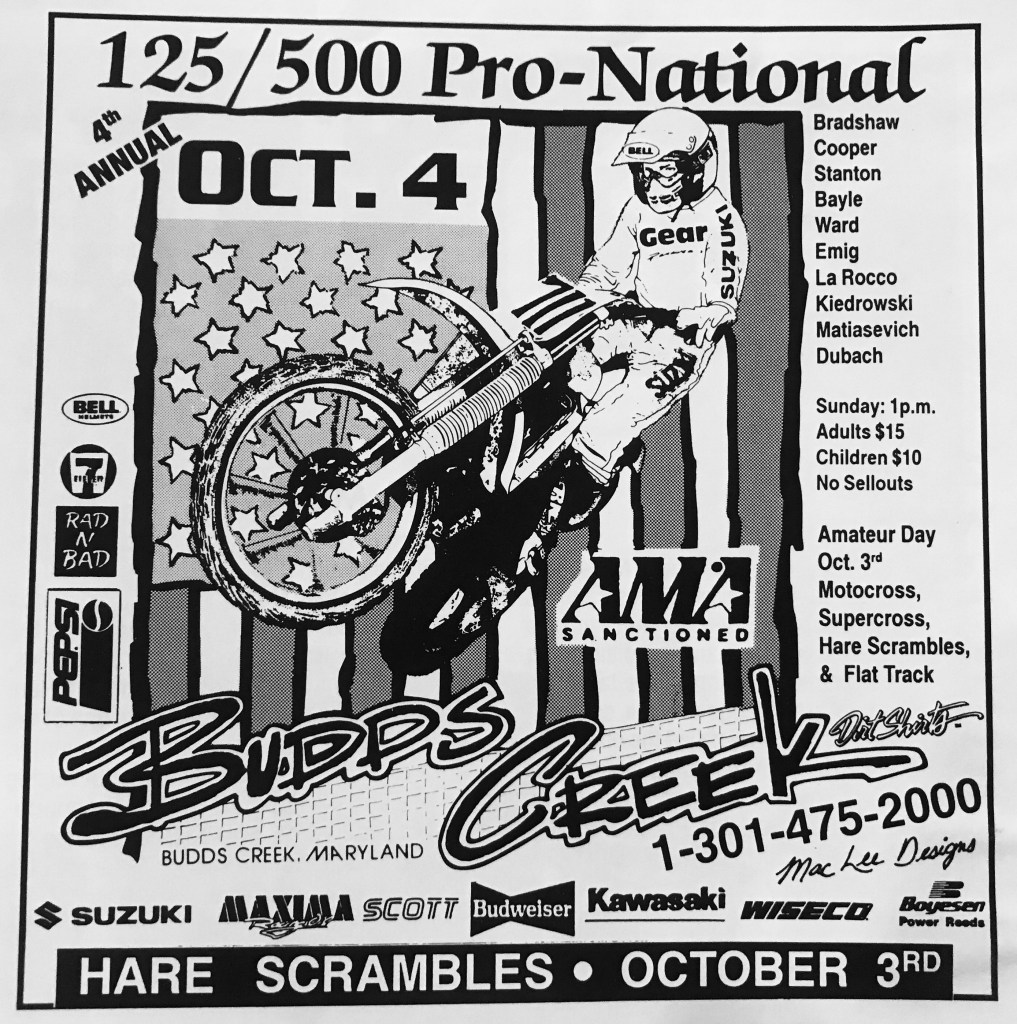
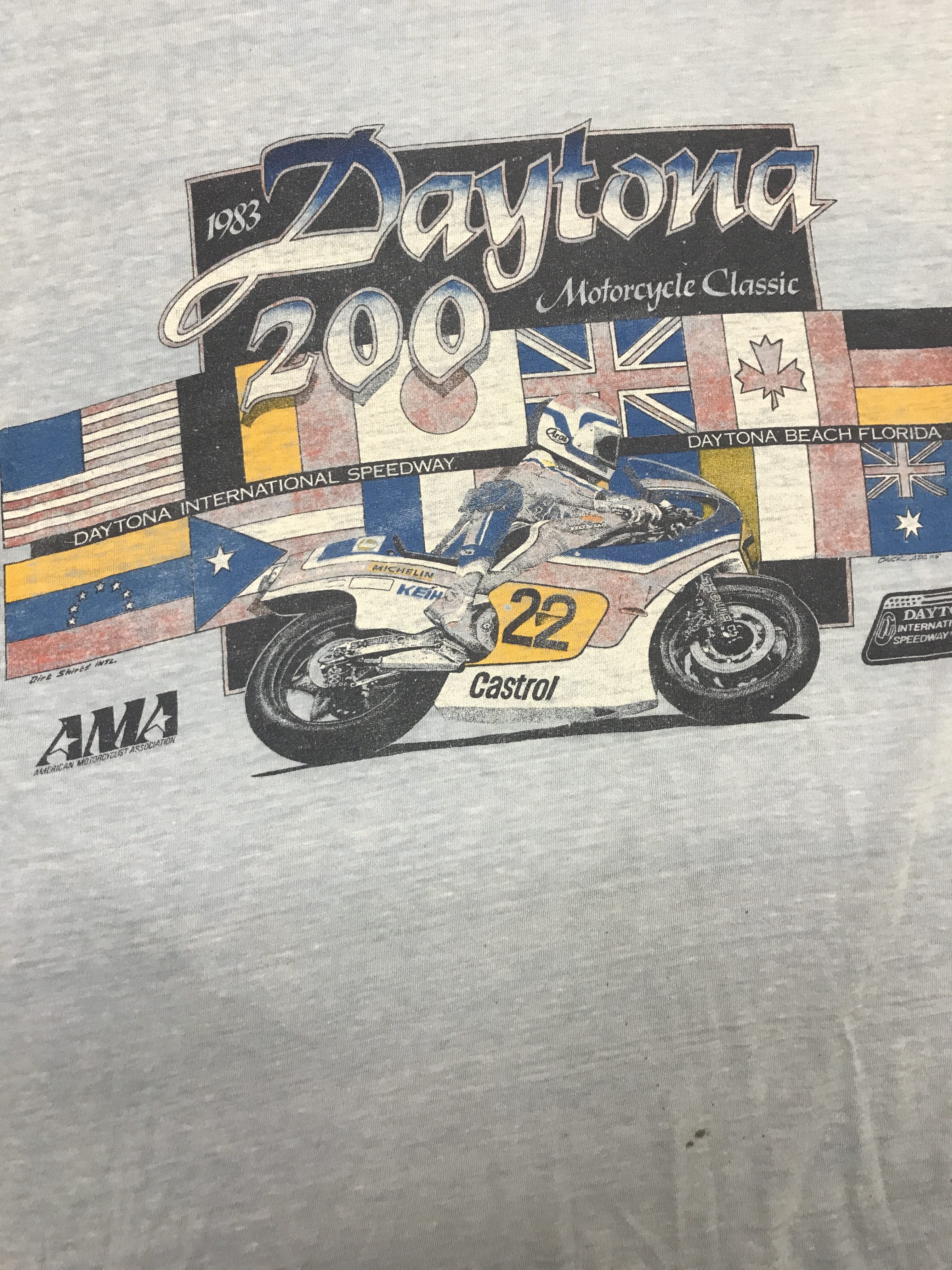
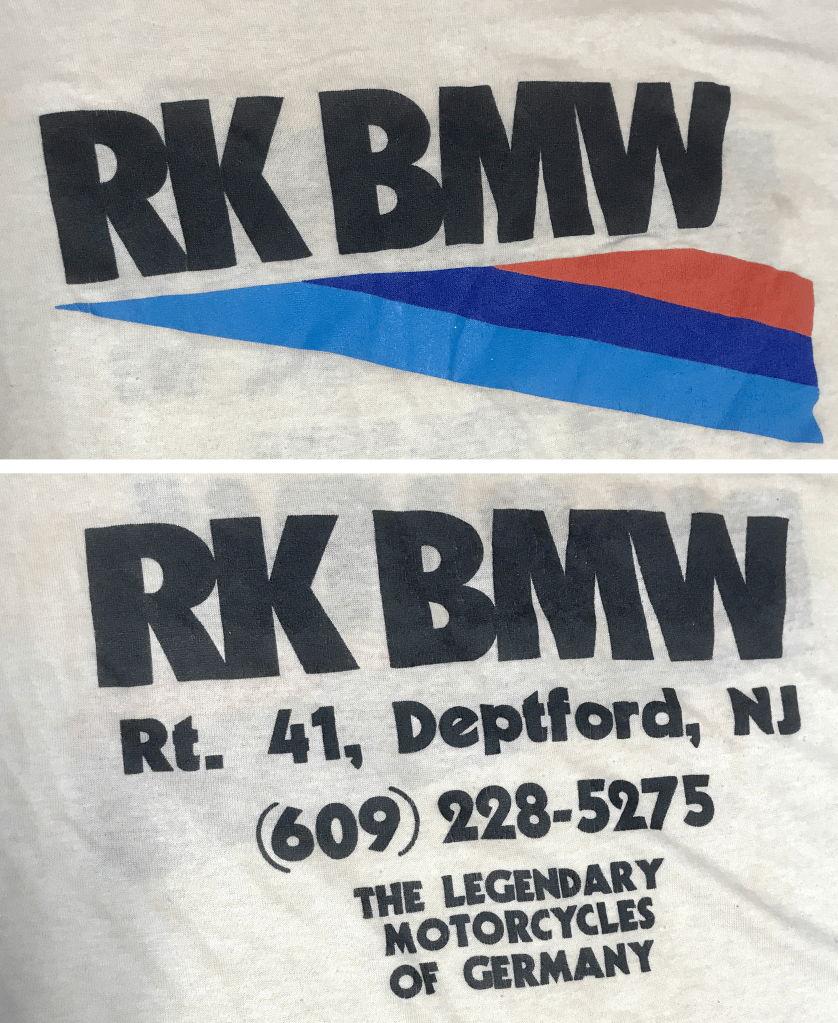
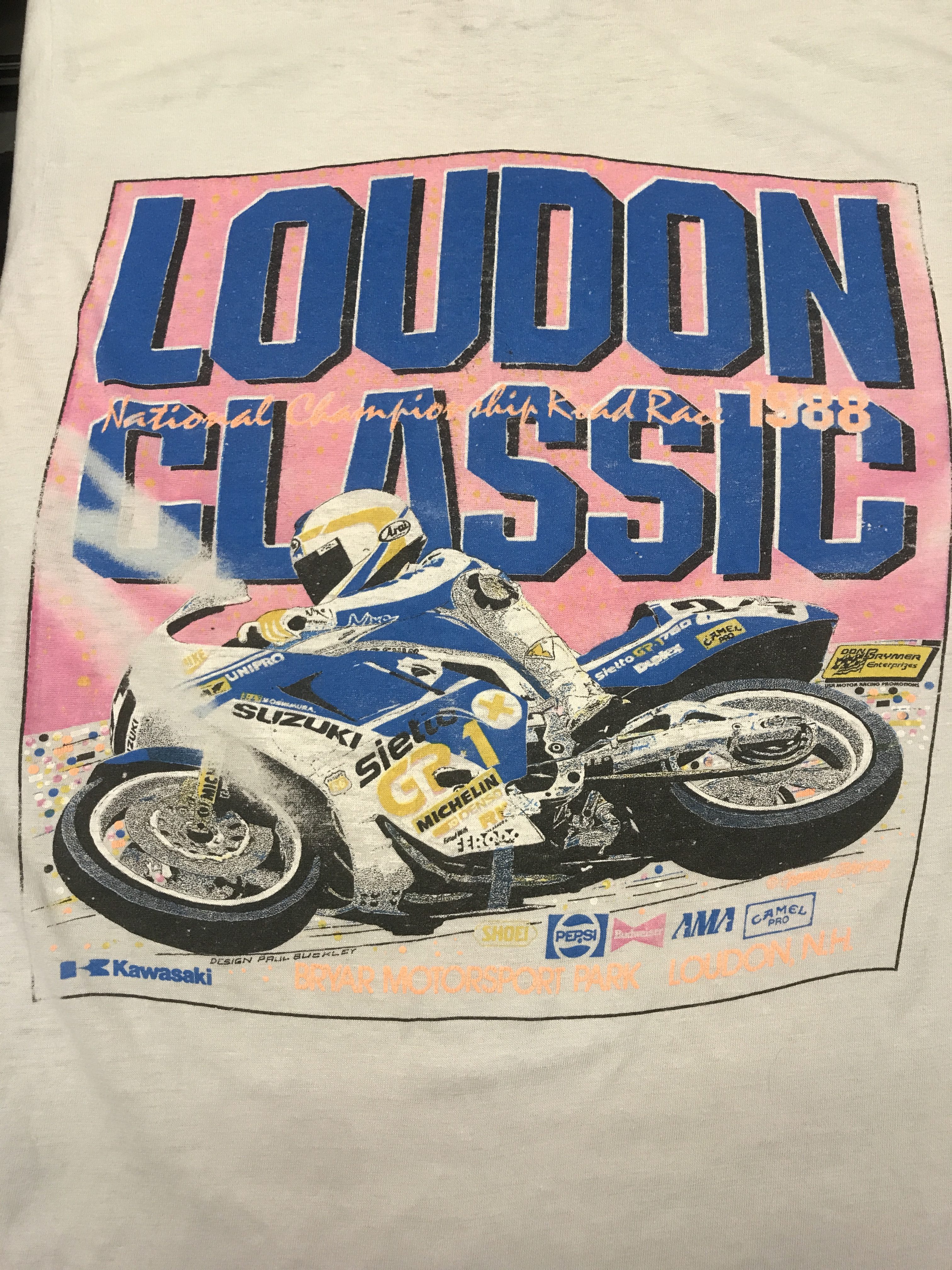
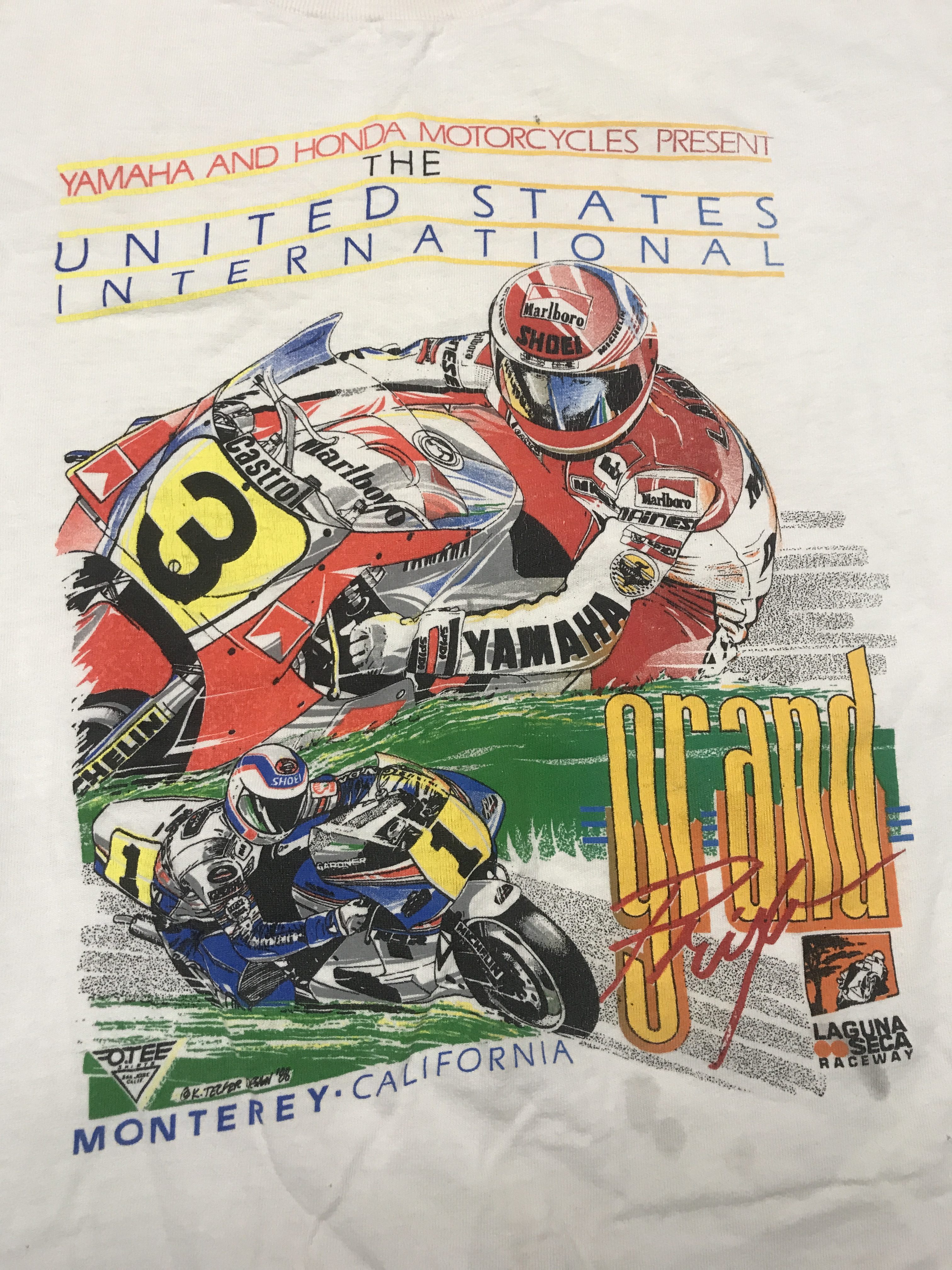
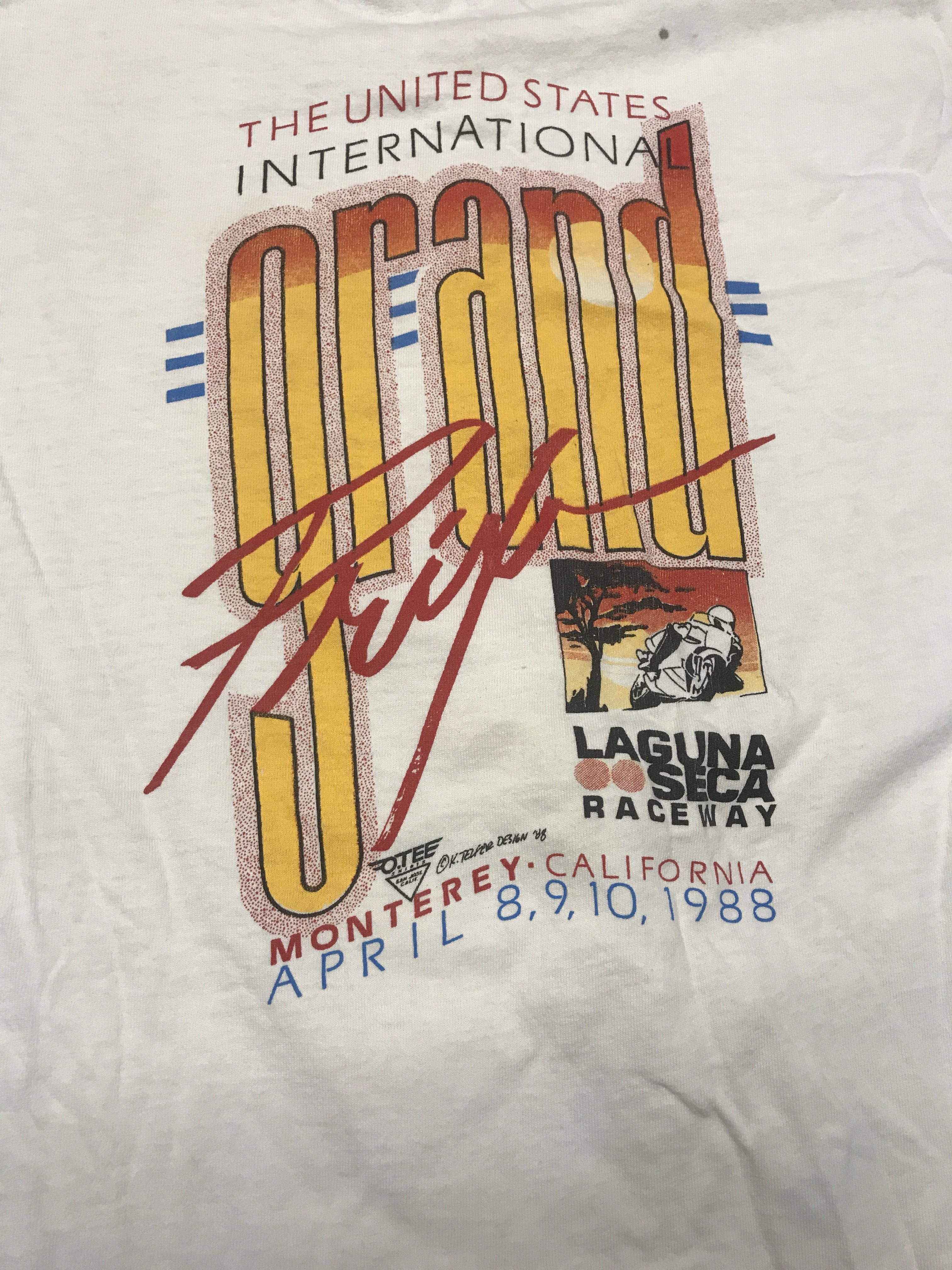
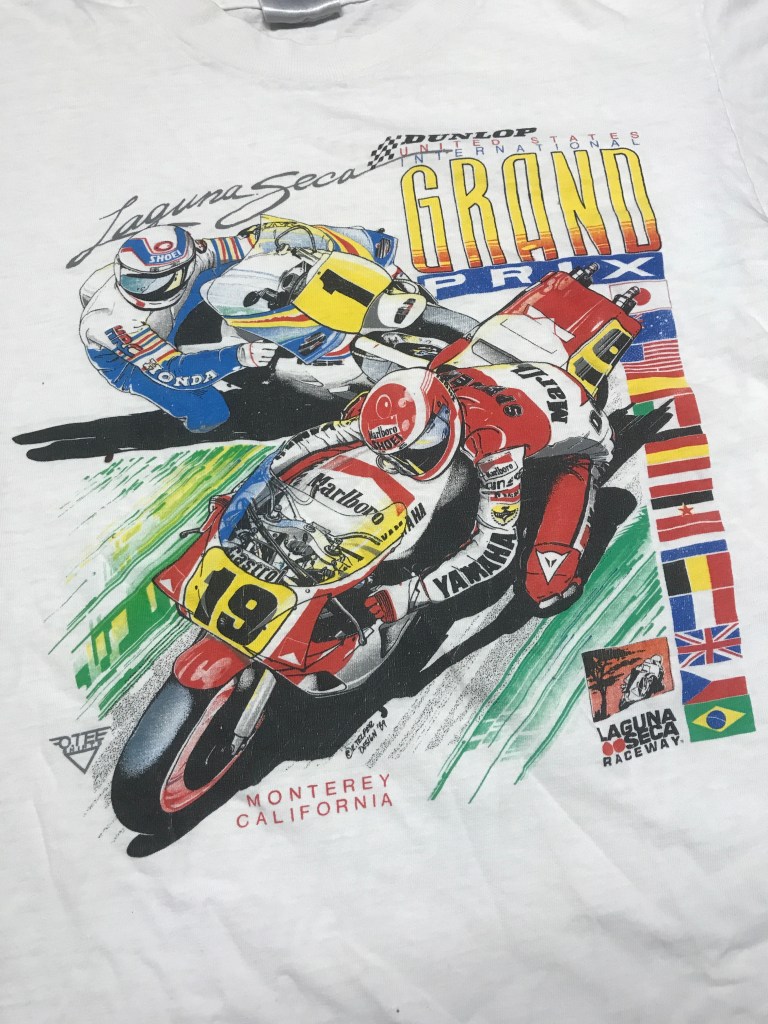
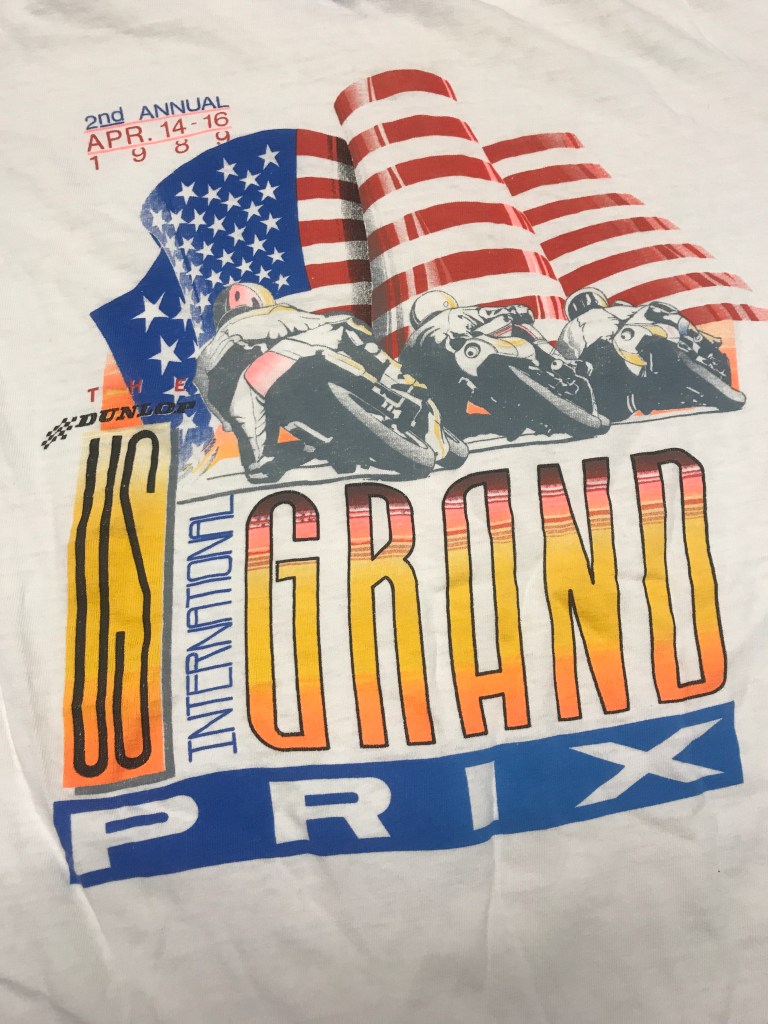
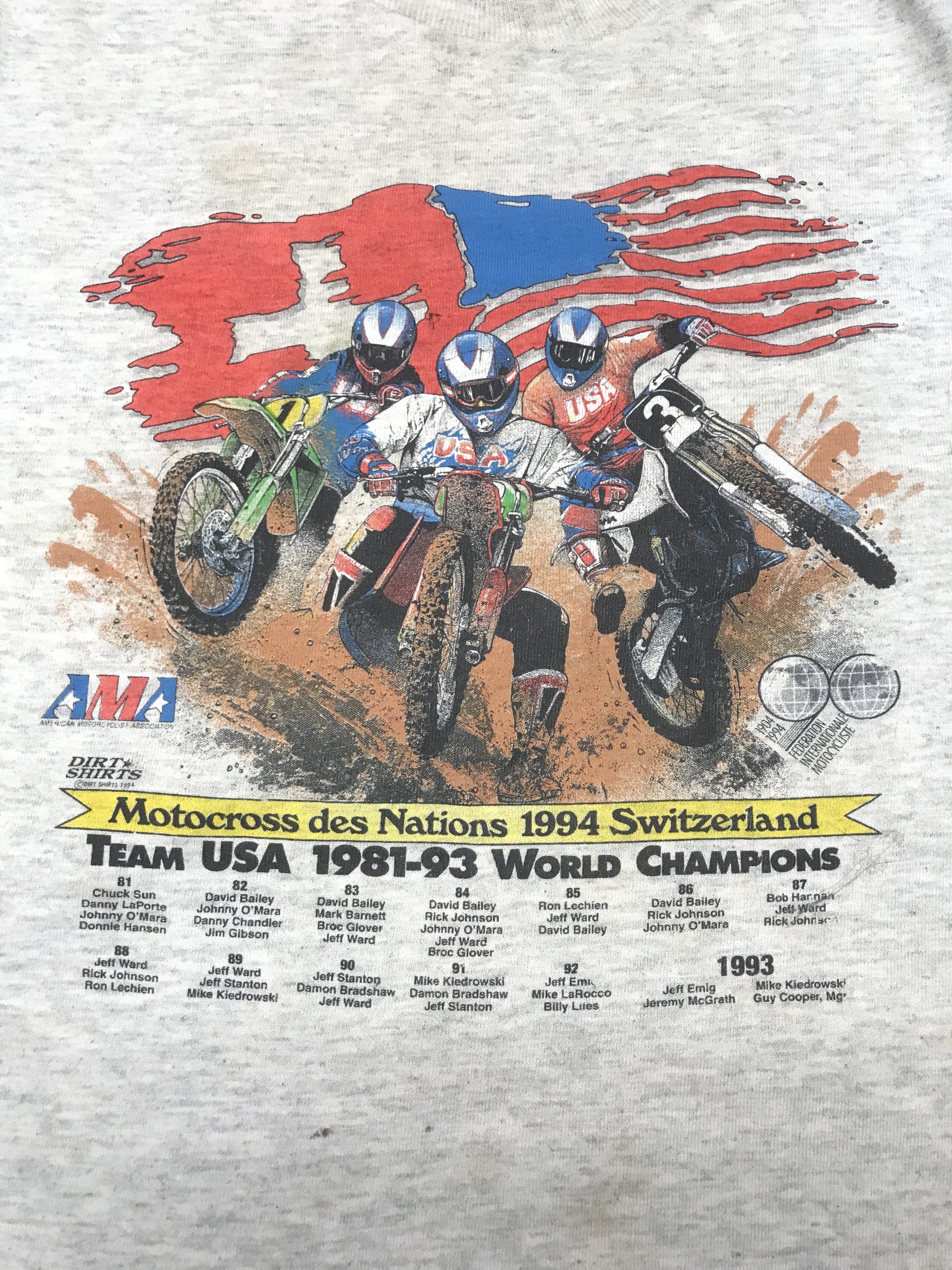
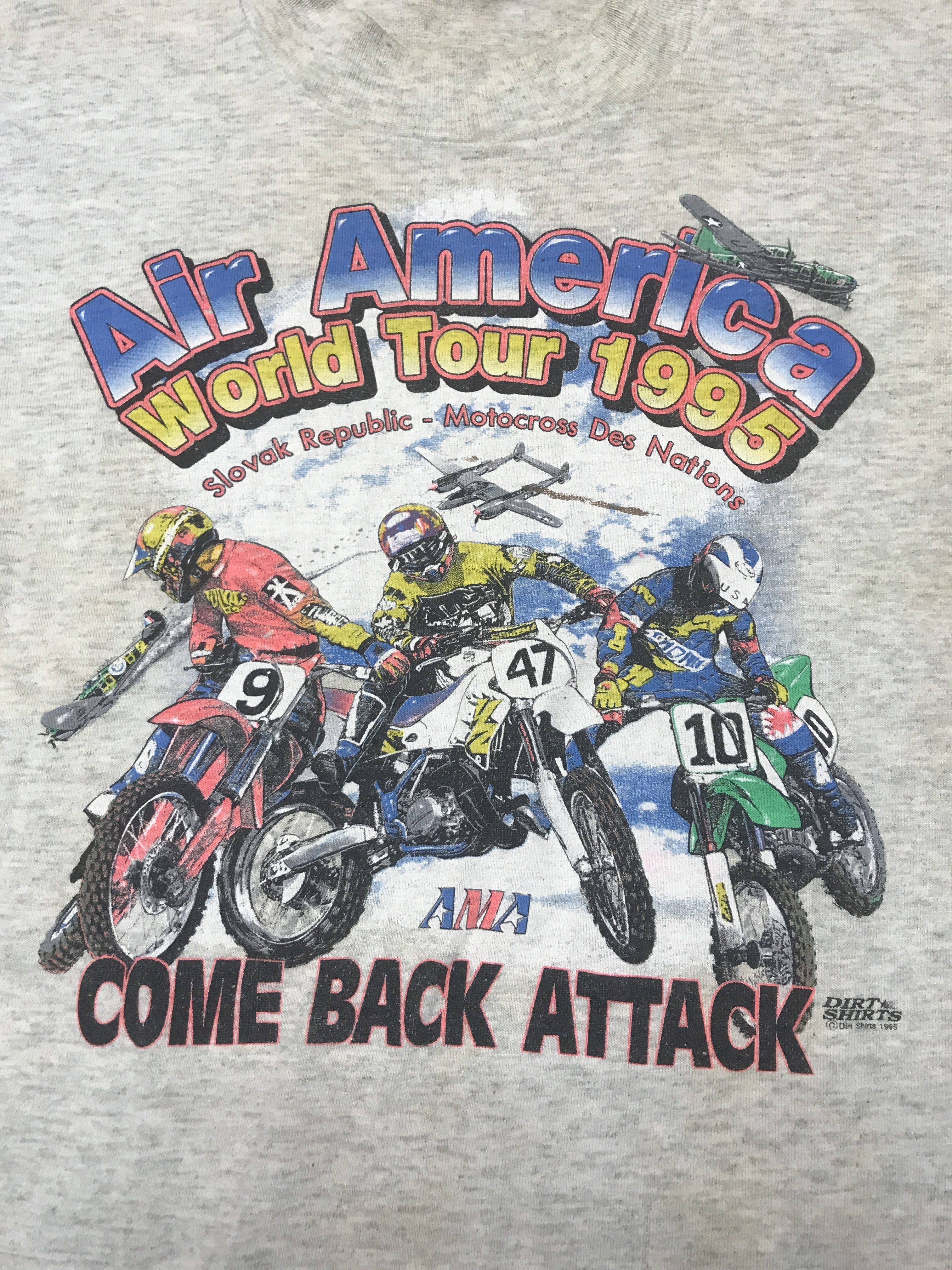
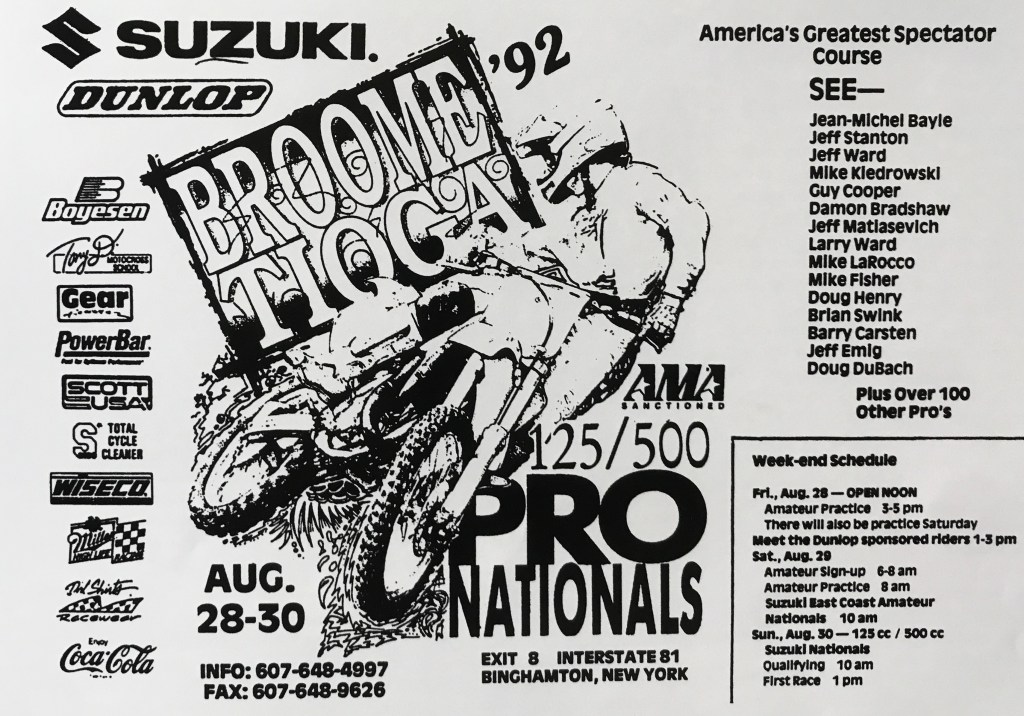
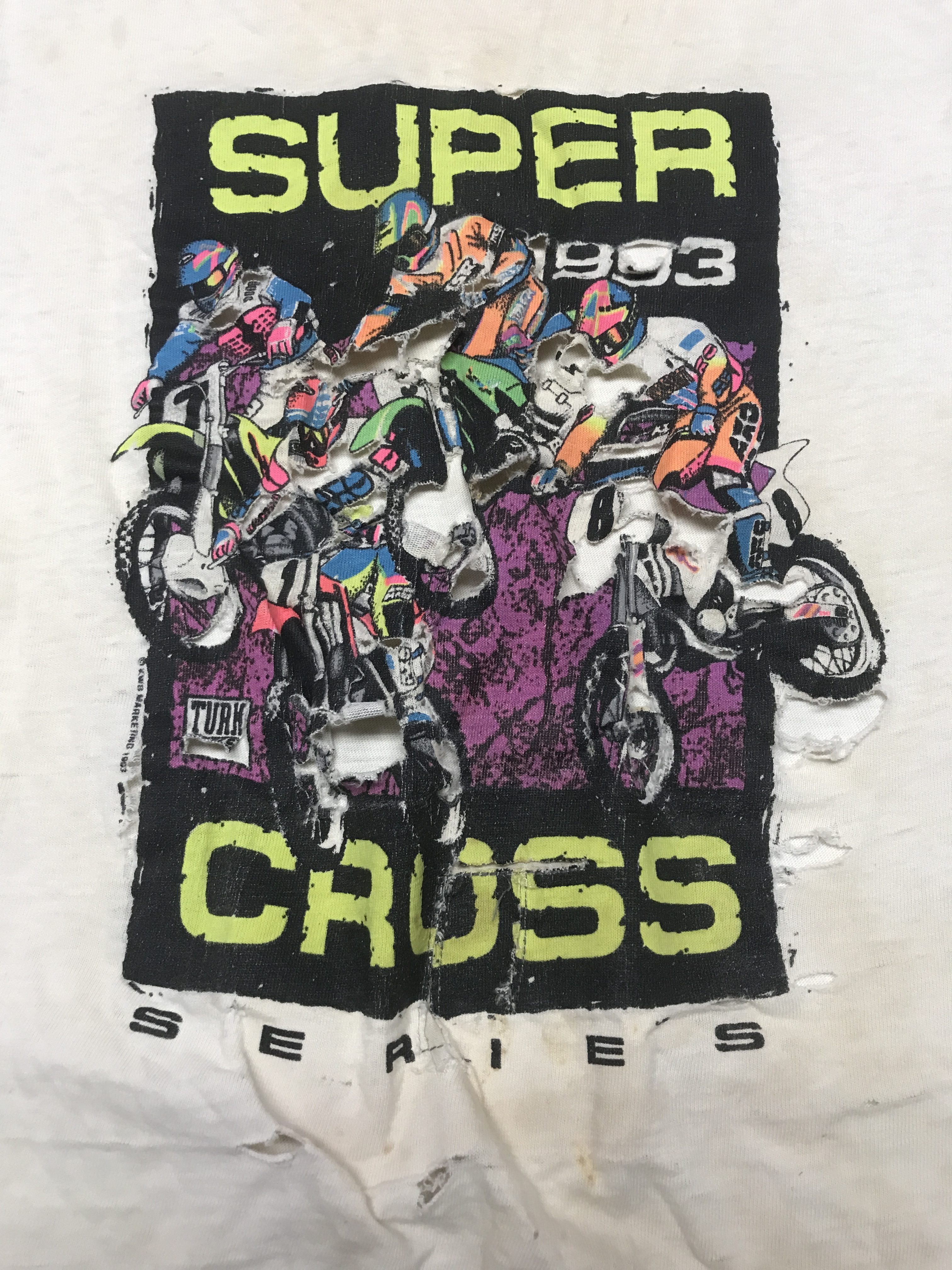
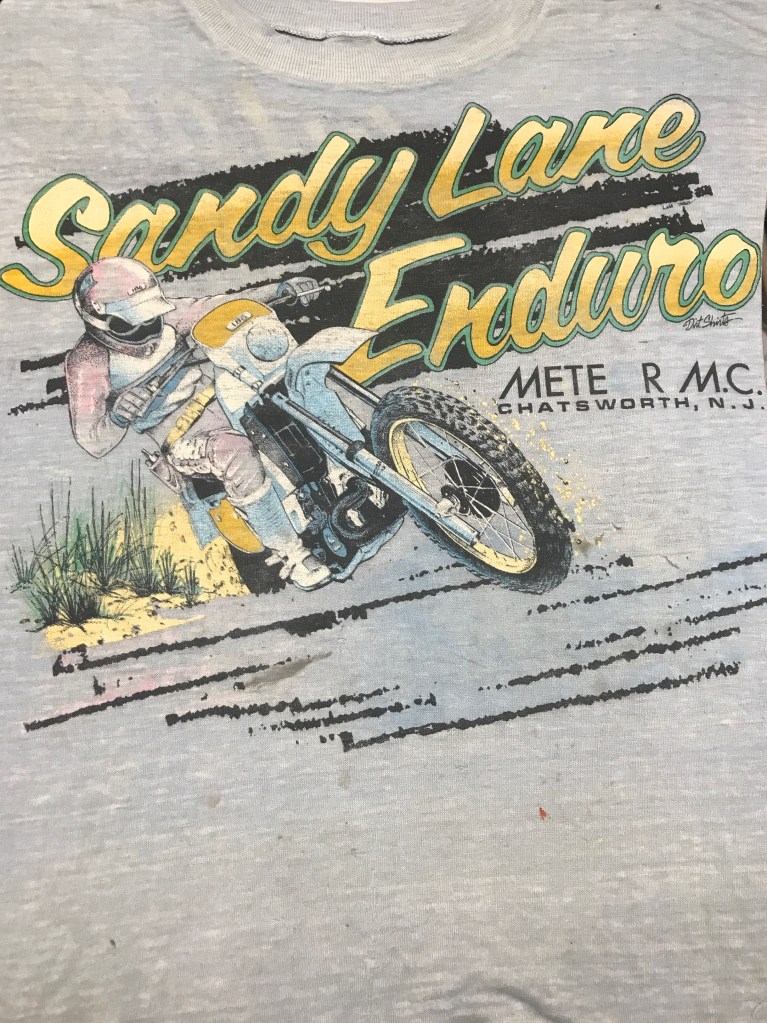
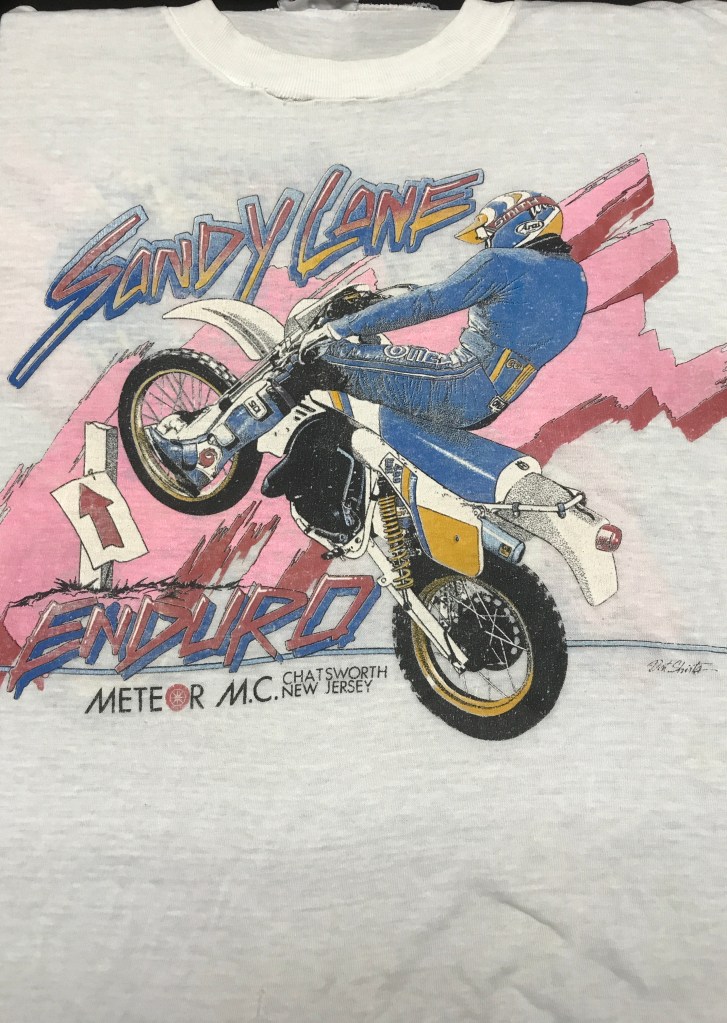
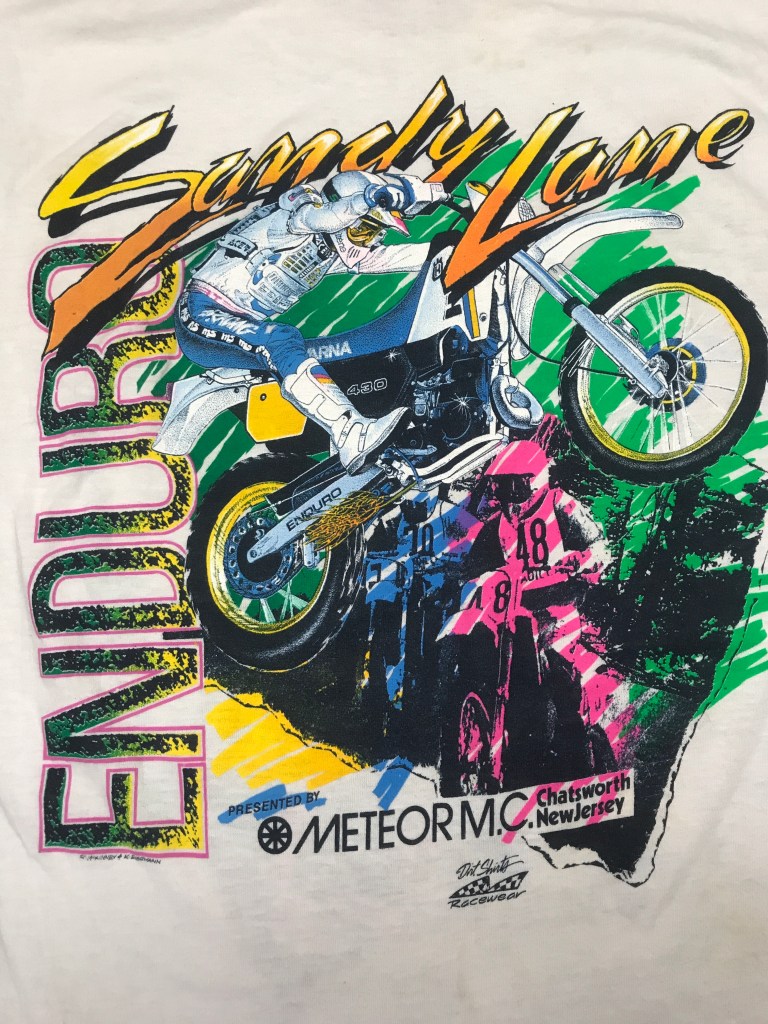
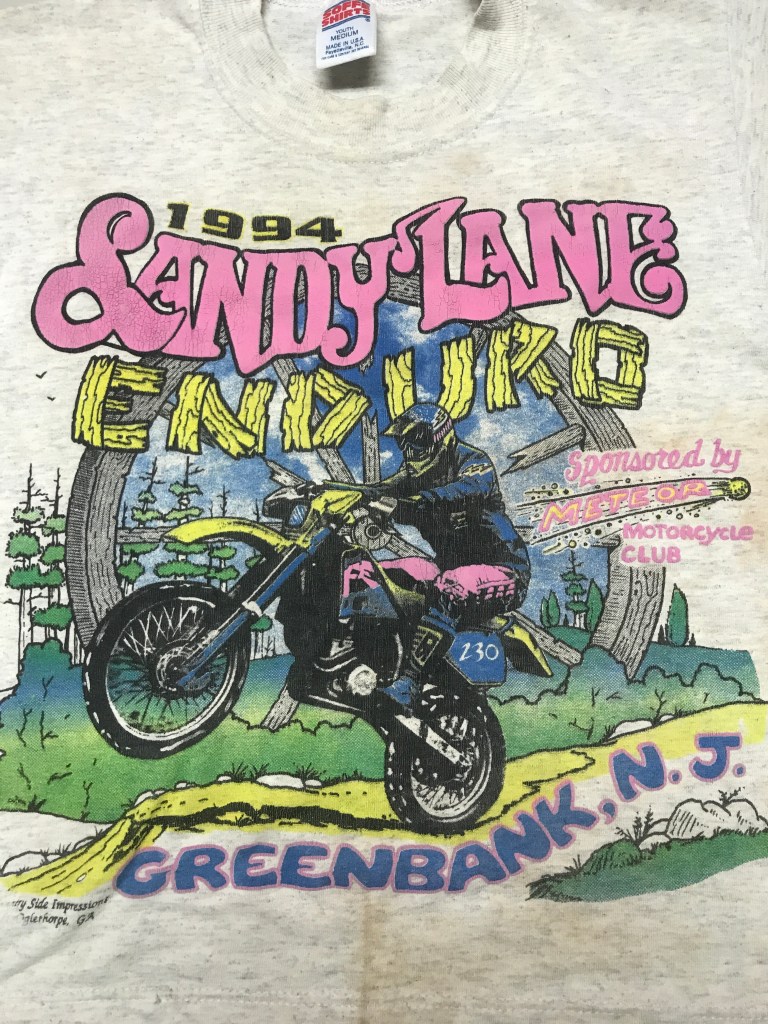
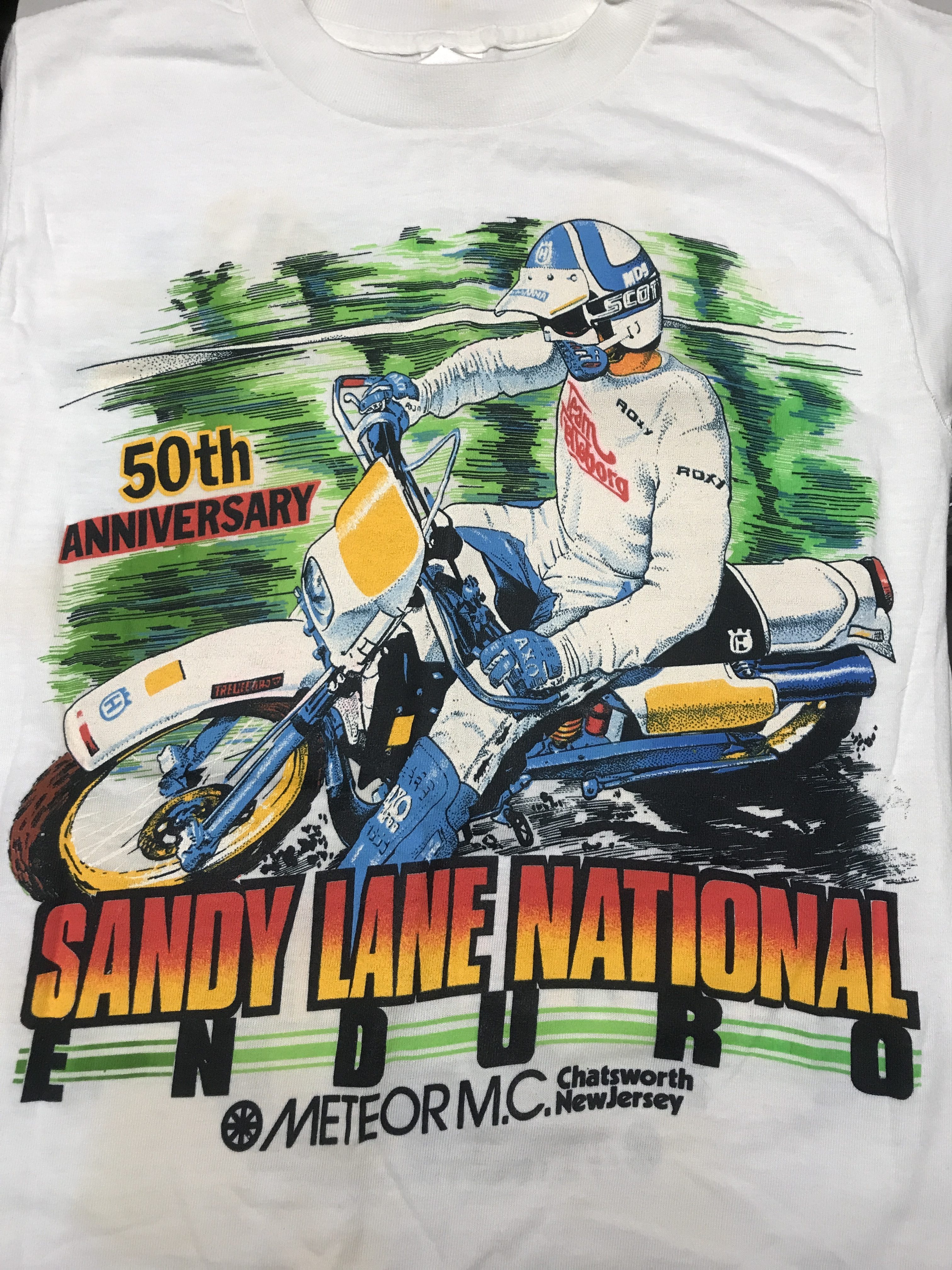
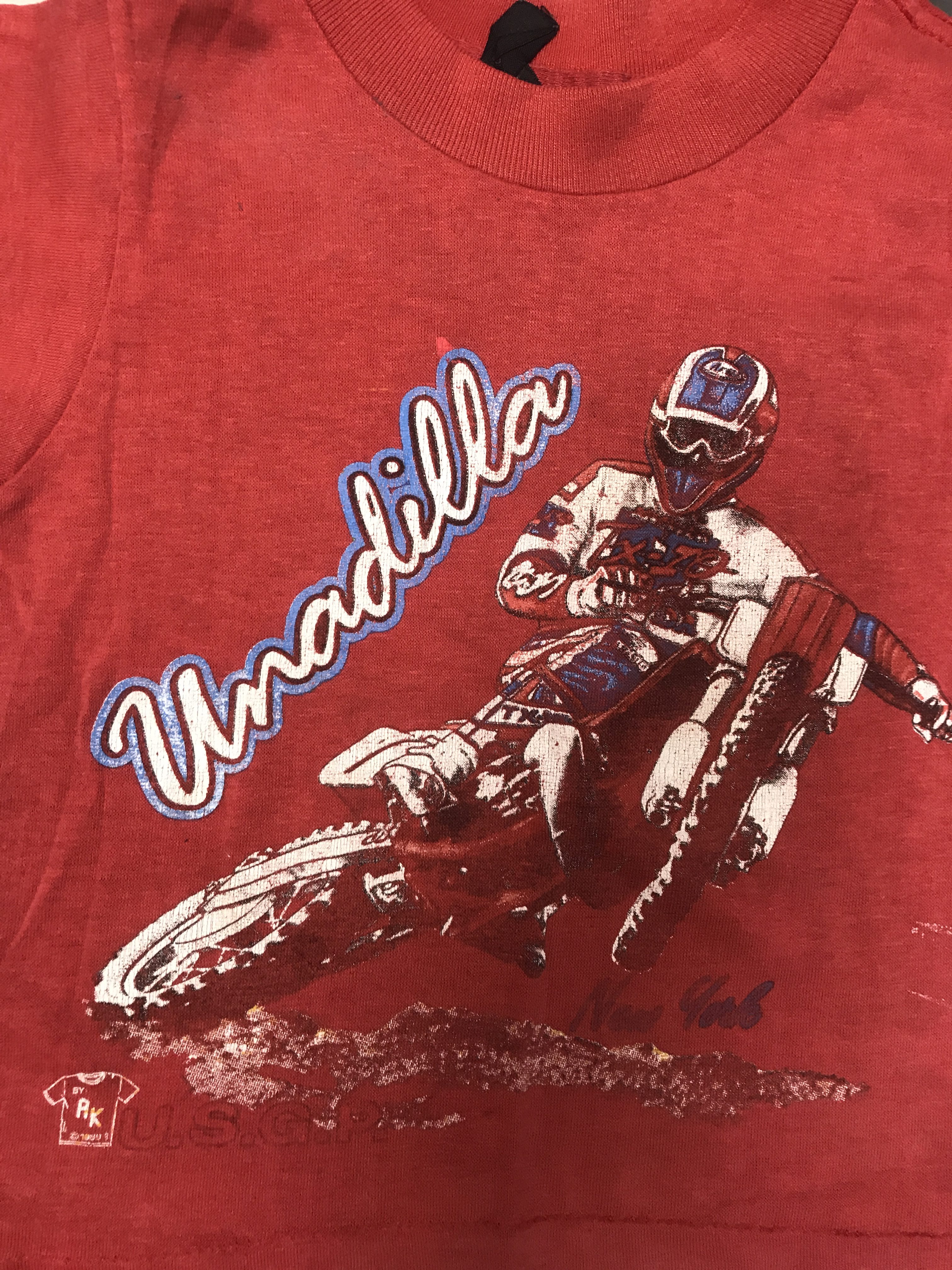
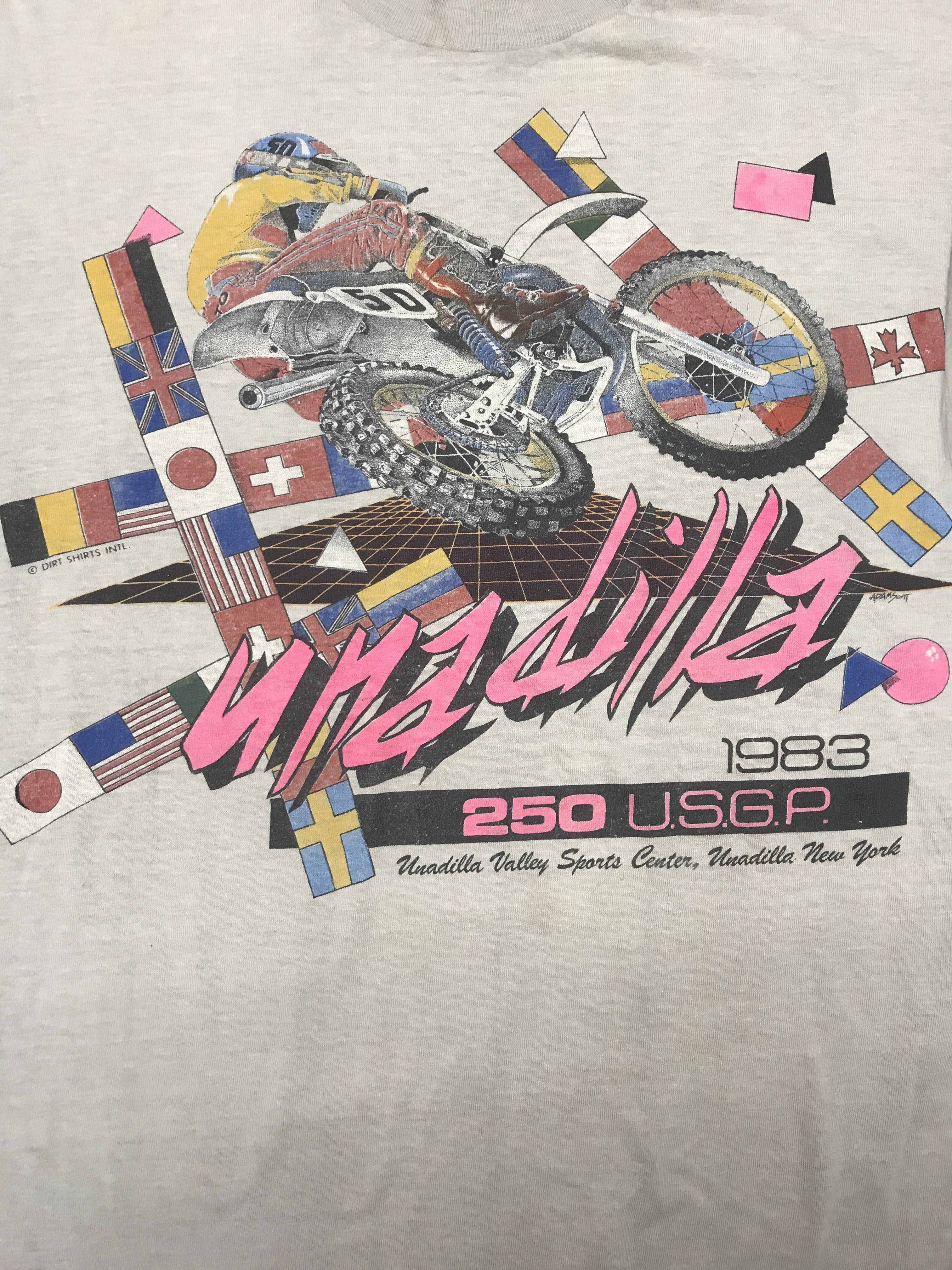
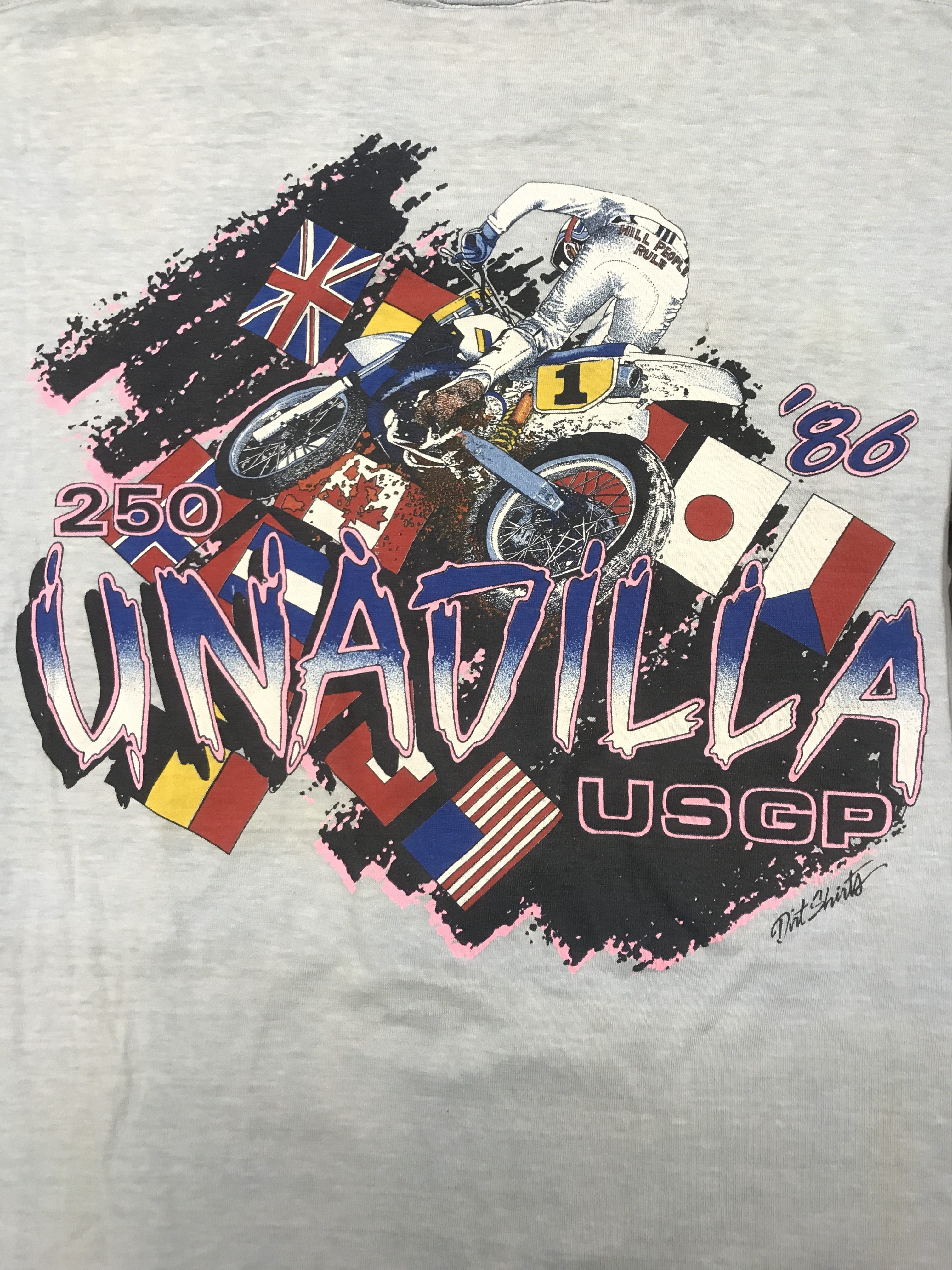
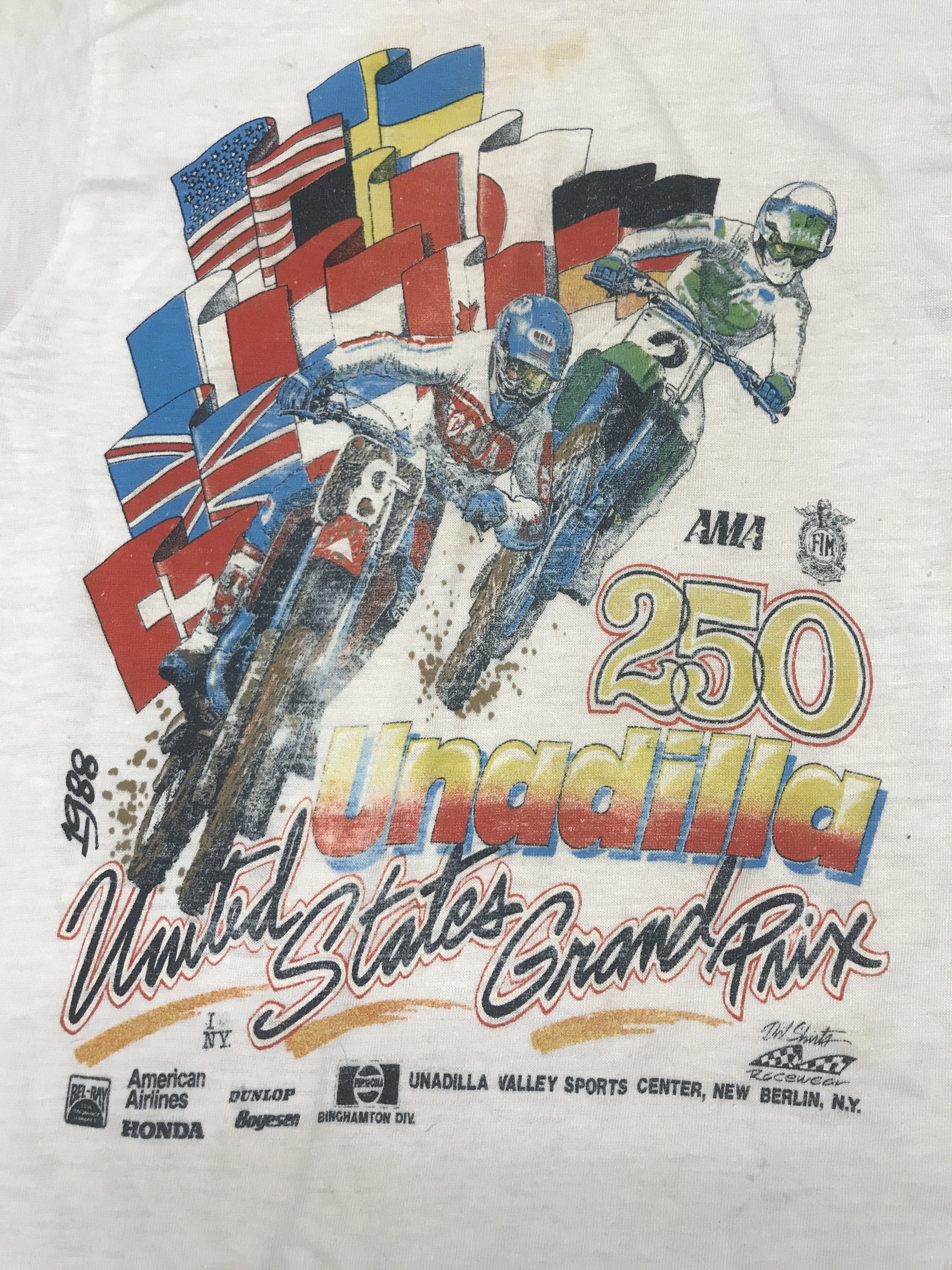
All photo rights reserved. Any subsequent reuse of these images for profit is strictly prohibited.

